
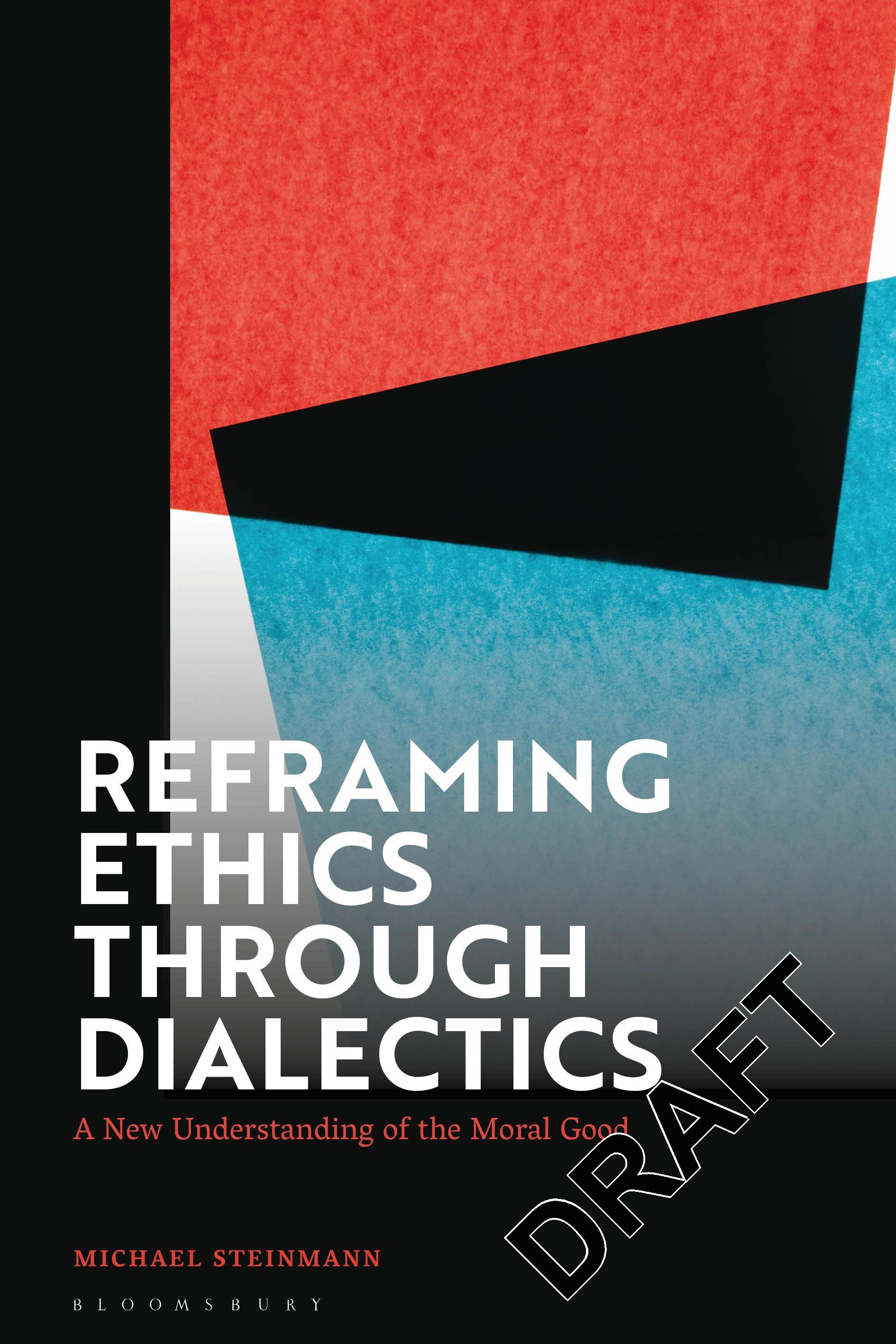
A provocative approach to the possibility of philosophical ethics, this study argues that all moral positions and theories are bound to fail. Using the dialectical tensions inherent to competing moral claims as his starting point, Michael Steinmann explains what he terms the “failure of morality” both in classical and contemporary positions.
As moral claims lead in various ways to contradictions, the history of morality presents itself as an endless series of controversies. By using dialectical thinking, which has gone out of favour in current philosophy, Steinmann shows how we can capture the limitations of moral theories in a more holistic way. Without embracing skepticism about moral claims, a non-naturalistic and non-relativistic understanding of the good emerges as the fundamental notion of moral thought.
Reframing Ethics Through Dialectics reinvigorates the classical notion of “the absolute good” as a fruitful conceptual structure through which to understand competing moral claims, without simply reproducing neo-Aristotelian literature on the good life. From the perspective of the good, the study allows us to take non-traditional theories more seriously, making space for moral philosophy to acknowledge and embrace the contradictions that all positions incur.
As moral claims lead in various ways to contradictions, the history of morality presents itself as an endless series of controversies. By using dialectical thinking, which has gone out of favour in current philosophy, Steinmann shows how we can capture the limitations of moral theories in a more holistic way. Without embracing skepticism about moral claims, a non-naturalistic and non-relativistic understanding of the good emerges as the fundamental notion of moral thought.
Reframing Ethics Through Dialectics reinvigorates the classical notion of “the absolute good” as a fruitful conceptual structure through which to understand competing moral claims, without simply reproducing neo-Aristotelian literature on the good life. From the perspective of the good, the study allows us to take non-traditional theories more seriously, making space for moral philosophy to acknowledge and embrace the contradictions that all positions incur.
Pay easily by card, Klarna, Apple Pay or Google Pay. Not happy? You always have a 14-day money-back guarantee. Read more in our terms. If you have any questions, email us at hello@memmo.org.
Memmo makes studying easier – wherever you are in the world. We bring your course books and smart study tools together in one place: summaries, quizzes, podcasts and flashcards. Plus Ted, your study buddy who answers anything you wonder. Over 50,000 students already study here – built to help you learn faster and stress less.