
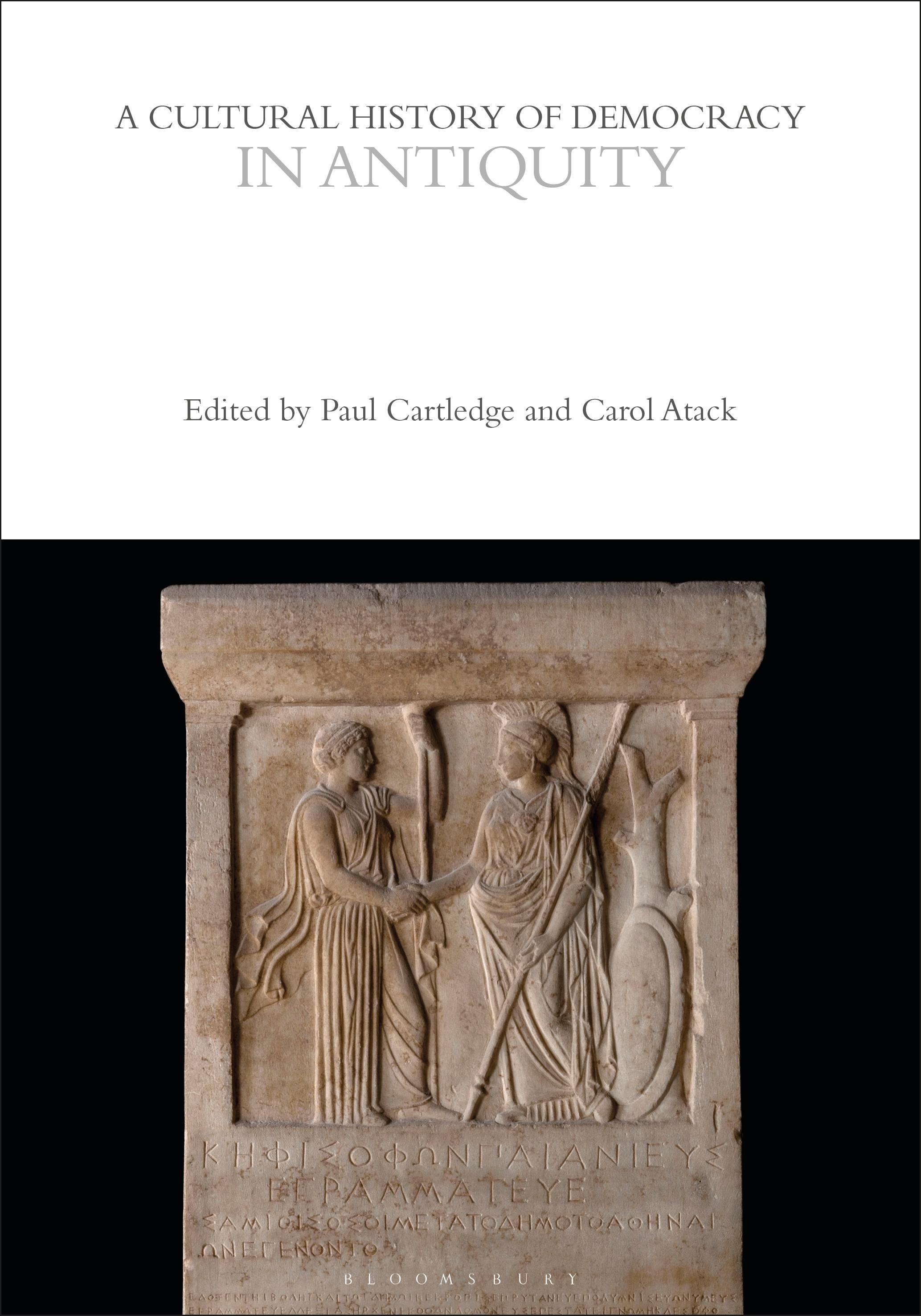
This volume surveys democracy broadly as a cultural phenomenon operating in different ways across a very wide range of ancient societies throughout Antiquity. It examines the experiences of those living in democratic communities and considers how ancient practices of democracy differ from our own.
The origins of democracy can be traced in a general way to the earliest civilizations, beginning with the early urban societies of the Middle East, and can be seen in cities and communities across the Mediterranean world and Asia. In classical Athens, male citizens enjoyed full participation in the political life of the city and a flourishing democratic culture, as explored in detail in this volume. In other times and places democratic features were absent from the formal structures of regimes, but could still be found in the participatory structures of local social institutions.
Each chapter takes a different theme as its focus: sovereignty; liberty and the rule of law; the “common good”; economic and social democracy; religion and the principles of political obligation; citizenship and gender; ethnicity, race, and nationalism; democratic crises, revolutions, and civil resistance; international relations; and beyond the polis. These ten different approaches to democracy in Antiquity add up to an extensive, synoptic coverage of the subject.
The origins of democracy can be traced in a general way to the earliest civilizations, beginning with the early urban societies of the Middle East, and can be seen in cities and communities across the Mediterranean world and Asia. In classical Athens, male citizens enjoyed full participation in the political life of the city and a flourishing democratic culture, as explored in detail in this volume. In other times and places democratic features were absent from the formal structures of regimes, but could still be found in the participatory structures of local social institutions.
Each chapter takes a different theme as its focus: sovereignty; liberty and the rule of law; the “common good”; economic and social democracy; religion and the principles of political obligation; citizenship and gender; ethnicity, race, and nationalism; democratic crises, revolutions, and civil resistance; international relations; and beyond the polis. These ten different approaches to democracy in Antiquity add up to an extensive, synoptic coverage of the subject.
Pay easily by card, Klarna, Apple Pay or Google Pay. Not happy? You always have a 14-day money-back guarantee. Read more in our terms. If you have any questions, email us at hello@memmo.org.
Memmo makes studying easier – wherever you are in the world. We bring your course books and smart study tools together in one place: summaries, quizzes, podcasts and flashcards. Plus Ted, your study buddy who answers anything you wonder. Over 75,000 students already study here – built to help you learn faster and stress less.