
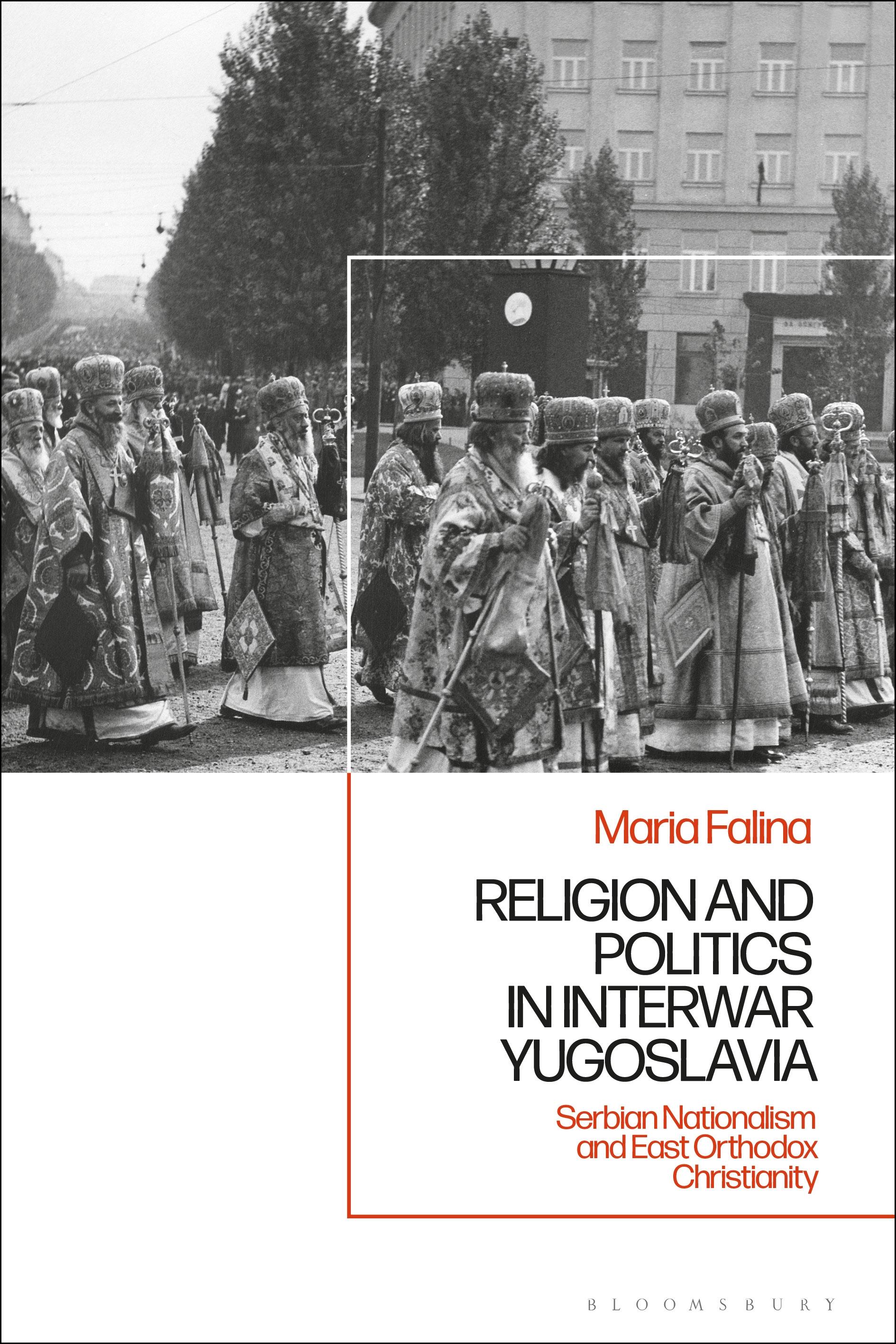
Religion and Politics in Interwar Yugoslavia explores the interaction between religion, nationalism, and political modernity in the first half of the 20th century, taking the case of the Serbian Orthodox Church as an example. This book historicizes the widely held assumption that the bond between religion and nationalism in the Balkans is a natural one or that this bond has been historically inevitable. It tells a complex story of how East Orthodox Christianity came to be at the core of one version of Serbian nationalism by bringing together the themes of religion, nationalism, politics, state-building, secularization, and modernity.
Maria Falina reconstructs how the ideological fusion between Serbian nationalism and East Orthodox Christianity was forged. The analysis emphasizes ideas and ideologies through a close reading of public discourses and historical narratives while paying attention to individual actors and their personal histories. The book argues that the particular political vision of the Serbian Orthodox Church emerged in reaction to and in interaction with the challenges posed by political modernity that were not unique to Yugoslavia. These included establishing the modern multinational and multi-religious state, the fear of secularization, and the rise of communism and fascism. Religion and Politics in Interwar Yugoslavia makes an important contribution to understanding the history of interwar Yugoslavia, 20th-century Europe, and the ties between religion and nationalism.
Maria Falina reconstructs how the ideological fusion between Serbian nationalism and East Orthodox Christianity was forged. The analysis emphasizes ideas and ideologies through a close reading of public discourses and historical narratives while paying attention to individual actors and their personal histories. The book argues that the particular political vision of the Serbian Orthodox Church emerged in reaction to and in interaction with the challenges posed by political modernity that were not unique to Yugoslavia. These included establishing the modern multinational and multi-religious state, the fear of secularization, and the rise of communism and fascism. Religion and Politics in Interwar Yugoslavia makes an important contribution to understanding the history of interwar Yugoslavia, 20th-century Europe, and the ties between religion and nationalism.
Pay easily by card, Klarna, Apple Pay or Google Pay. Not happy? You always have a 14-day money-back guarantee. Read more in our terms. If you have any questions, email us at hello@memmo.org.
Memmo makes studying easier – wherever you are in the world. We bring your course books and smart study tools together in one place: summaries, quizzes, podcasts and flashcards. Plus Ted, your study buddy who answers anything you wonder. Over 50,000 students already study here – built to help you learn faster and stress less.