
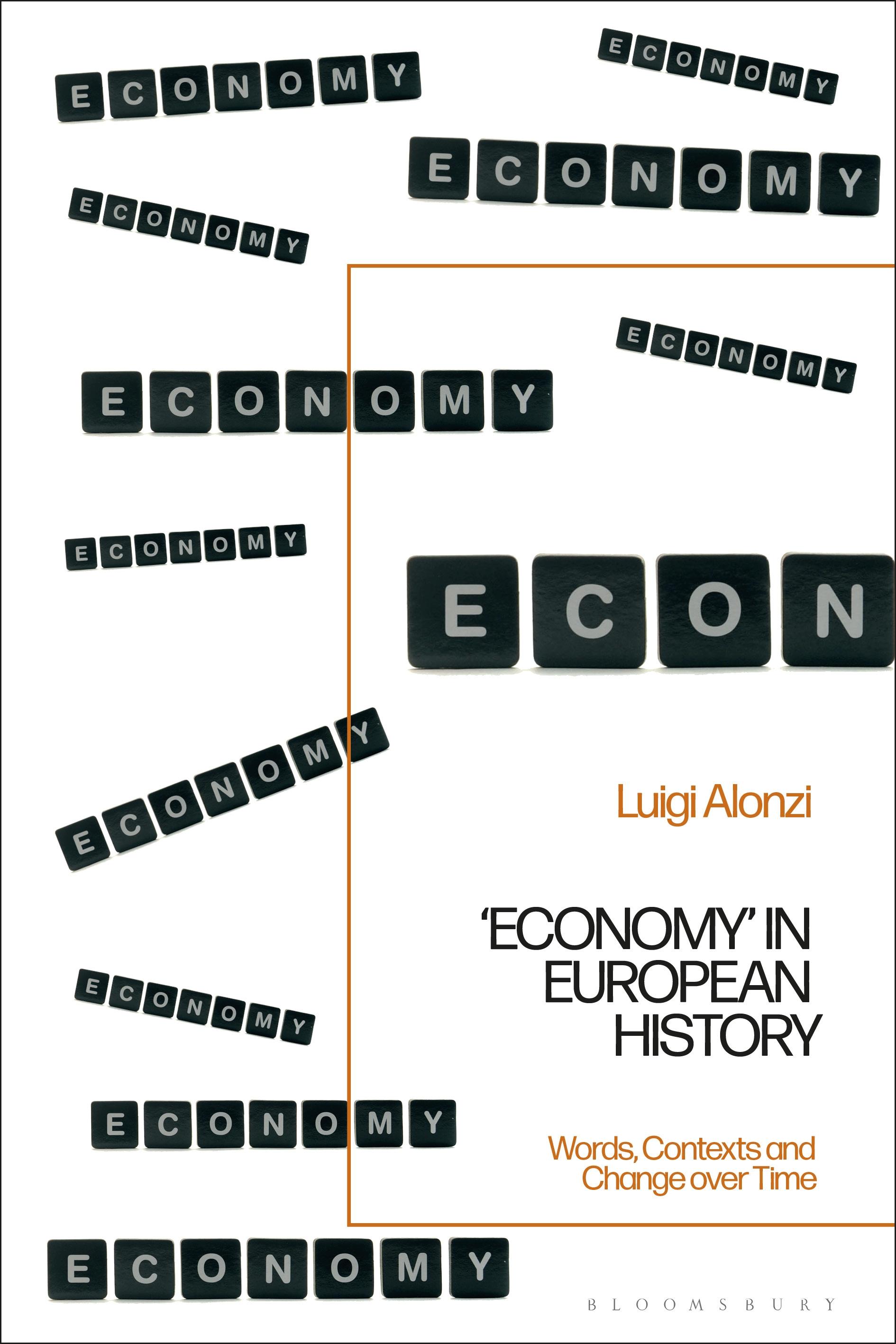
Prompted by the 'linguistic turn' of the late 20th century, intellectual and conceptual historians continue to devote a great deal of attention to the study of concepts in history. This innovative and interdisciplinary volume builds on such scholarship by providing a new history of the term 'economy'.
Starting from the Greek idea of the law of the household, Luigi Alonzi traces the different meanings assumed by the word 'economy' during the middle ages and early modern era, highlighting the semantic richness of the word and its uses in various political and cultural contexts. Notably, there is a particular focus on the so-called Oeconomica literature, tracking the reception of works by Plato, Aristotle, the 'pseudo' Aristotle and Xenophon in the Italian and France Renaissance. This tradition was incredibly influential in civic humanism and in texts devoted to power and command and thus affected later debates on Natural Law and the development of new scientific disciplines in the 17th and 18th centuries. In exploring this, the analysis of the function of translations in the transmission and transformation of meanings becomes central.
'Economy' in European History shines much-needed light on an important challenge that many historians repeatedly face: the fact that words can, and do, change over time. It will thus be a vital resource for all scholars of early modern and European economic history.
Starting from the Greek idea of the law of the household, Luigi Alonzi traces the different meanings assumed by the word 'economy' during the middle ages and early modern era, highlighting the semantic richness of the word and its uses in various political and cultural contexts. Notably, there is a particular focus on the so-called Oeconomica literature, tracking the reception of works by Plato, Aristotle, the 'pseudo' Aristotle and Xenophon in the Italian and France Renaissance. This tradition was incredibly influential in civic humanism and in texts devoted to power and command and thus affected later debates on Natural Law and the development of new scientific disciplines in the 17th and 18th centuries. In exploring this, the analysis of the function of translations in the transmission and transformation of meanings becomes central.
'Economy' in European History shines much-needed light on an important challenge that many historians repeatedly face: the fact that words can, and do, change over time. It will thus be a vital resource for all scholars of early modern and European economic history.
Pay easily by card, Klarna, Apple Pay or Google Pay. Not happy? You always have a 14-day money-back guarantee. Read more in our terms. If you have any questions, email us at hello@memmo.org.
Memmo makes studying easier – wherever you are in the world. We bring your course books and smart study tools together in one place: summaries, quizzes, podcasts and flashcards. Plus Ted, your study buddy who answers anything you wonder. Over 50,000 students already study here – built to help you learn faster and stress less.