
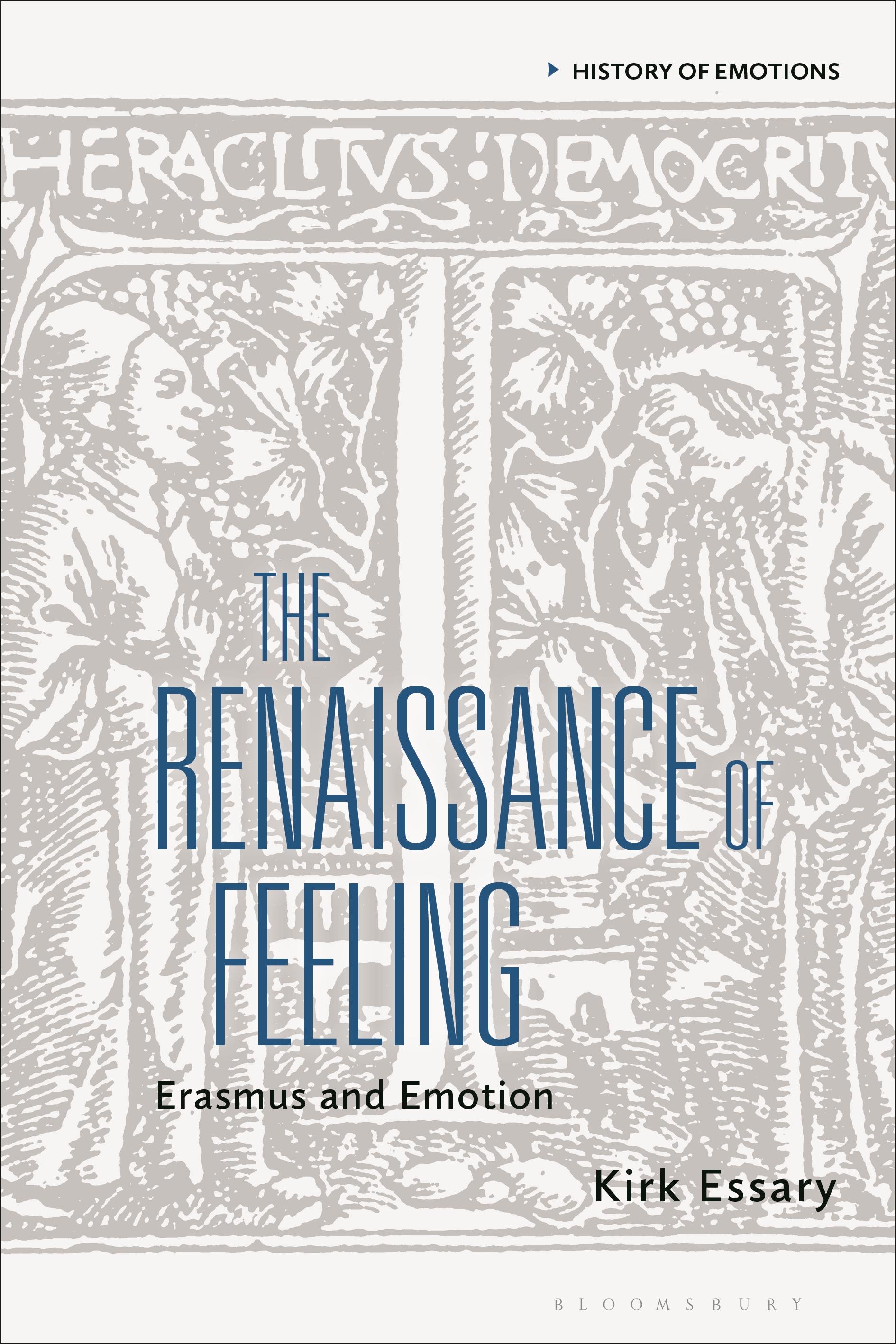
Offering a re-reading of Erasmus's works, this book shows that emotion and affectivity were central to his writings. It argues that Erasmus's conception of emotion was highly complex and richly diverse by tracing how the Dutch humanist writes about emotion not only from different perspectives-theological, philosophical, literary, rhetorical, medical-but also in different genres. In doing so, this book suggests, Erasmus provided a distinctive, if not unique, Christian humanist emotional style.
Demonstrating that Erasmus consulted multiple intellectual traditions and previous works in his thoughts on affectivity, The Renaissance of Feeling sheds light on how understanding emotions in late medieval and early modern Europe was a multi-disciplinary affair for humanist scholars. It argues that the rediscovery and proliferation ancient texts during the so-called renaissance resulted in shifting perspectives on how emotions were described and understood, and on their significance for Christian thought and practice. The book shows how the very availability of source material, coupled with humanists' eagerness to engage with multiple intellectual traditions gave rise to new understandings of feeling in the 16th century.
Essary shows how Erasmus provides the clearest example of such an intellectual inheritance by examining his writings about emotion across much of his vast corpus, including literary and rhetorical works, theological treatises, textual commentaries, religious disputations, and letters. Considering the rich and diverse ways that Erasmus wrote about emotions and affectivity, this book provides a new lens to study his works and sheds light on how emotions were understood in early modern Europe.
Demonstrating that Erasmus consulted multiple intellectual traditions and previous works in his thoughts on affectivity, The Renaissance of Feeling sheds light on how understanding emotions in late medieval and early modern Europe was a multi-disciplinary affair for humanist scholars. It argues that the rediscovery and proliferation ancient texts during the so-called renaissance resulted in shifting perspectives on how emotions were described and understood, and on their significance for Christian thought and practice. The book shows how the very availability of source material, coupled with humanists' eagerness to engage with multiple intellectual traditions gave rise to new understandings of feeling in the 16th century.
Essary shows how Erasmus provides the clearest example of such an intellectual inheritance by examining his writings about emotion across much of his vast corpus, including literary and rhetorical works, theological treatises, textual commentaries, religious disputations, and letters. Considering the rich and diverse ways that Erasmus wrote about emotions and affectivity, this book provides a new lens to study his works and sheds light on how emotions were understood in early modern Europe.
Pay easily by card, Klarna, Apple Pay or Google Pay. Not happy? You always have a 14-day money-back guarantee. Read more in our terms. If you have any questions, email us at hello@memmo.org.
Memmo makes studying easier – wherever you are in the world. We bring your course books and smart study tools together in one place: summaries, quizzes, podcasts and flashcards. Plus Ted, your study buddy who answers anything you wonder. Over 50,000 students already study here – built to help you learn faster and stress less.