
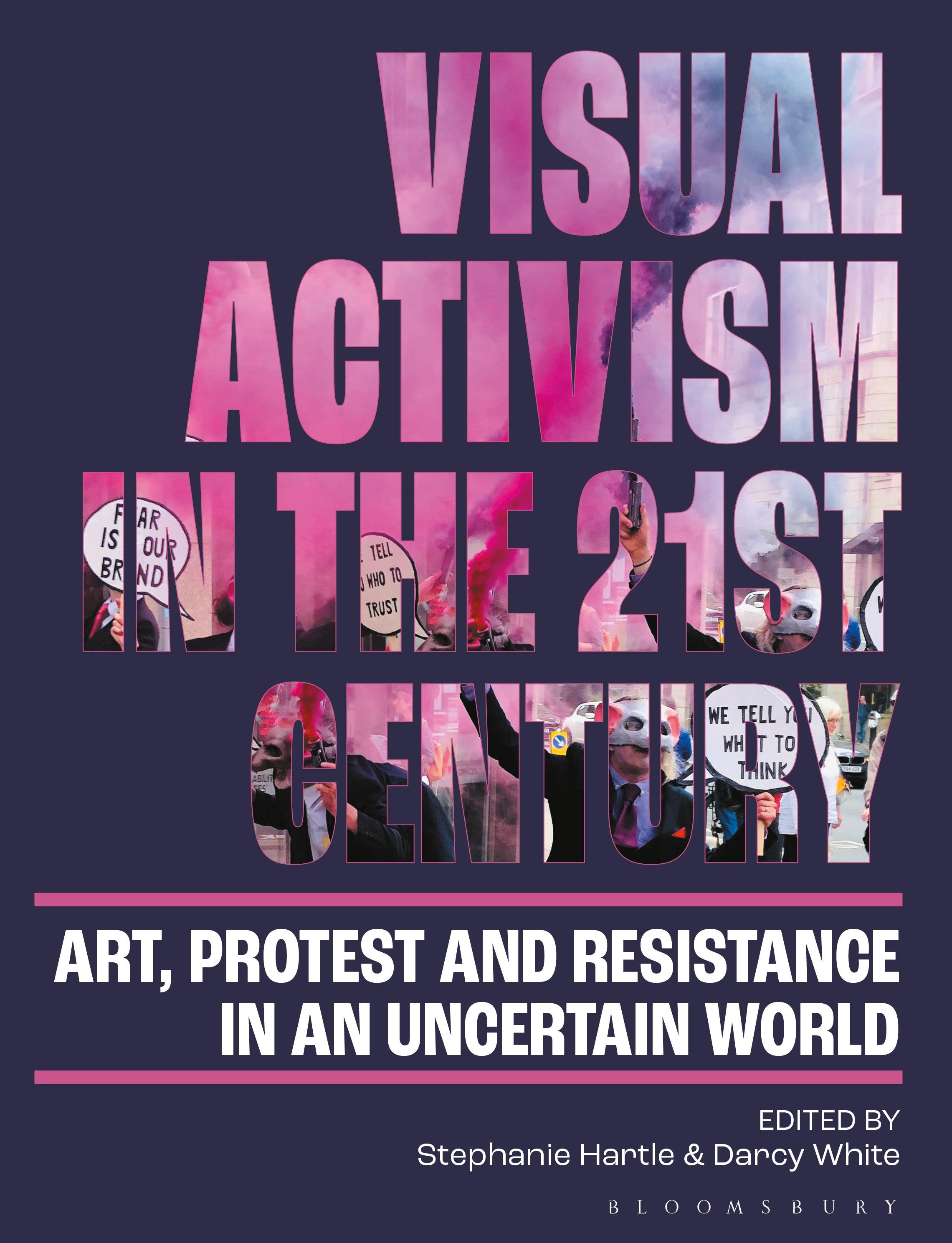
The world is in crisis, bringing activists and protesters onto the streets and into the public eye. More than ever, activism relies on spectacle and visibility in order to be noticed in the era of globalized capitalism and networked media. At the same time, a growing number of artists employ creative strategies to critique the establishment, act in resistance, and demand change. Visual activism of this kind is not new, but it is rapidly evolving.
This anthology presents 16 case-studies of visual activism from across the globe, providing an up-to-date picture of the impact of contemporary visual and art activism, and combining a scholarly interrogation of visual activism with an examination of how it works in practice. The case studies address a wide range of issues including human rights abuses; state violence; gender and sexuality; racism; migration; and climate breakdown. They examine a range of approaches from playful carnivalesque parades to extreme practices such as 'lip-sewing', and are drawn from a wide range of international contexts – from Europe and the US, to Iran, India, Pakistan, Tunisia, and China. This diverse scope enables readers to consider examples comparatively – noticing emerging trends and key differences to reveal how geopolitical and cultural factors play an important role in shaping activist practices.
This rich and timely collection provides a fresh perspective on the possibilities, limitations and politics of visual activism, as activists, artists, and curators respond to the changing world around them in this most uncertain of times.
This anthology presents 16 case-studies of visual activism from across the globe, providing an up-to-date picture of the impact of contemporary visual and art activism, and combining a scholarly interrogation of visual activism with an examination of how it works in practice. The case studies address a wide range of issues including human rights abuses; state violence; gender and sexuality; racism; migration; and climate breakdown. They examine a range of approaches from playful carnivalesque parades to extreme practices such as 'lip-sewing', and are drawn from a wide range of international contexts – from Europe and the US, to Iran, India, Pakistan, Tunisia, and China. This diverse scope enables readers to consider examples comparatively – noticing emerging trends and key differences to reveal how geopolitical and cultural factors play an important role in shaping activist practices.
This rich and timely collection provides a fresh perspective on the possibilities, limitations and politics of visual activism, as activists, artists, and curators respond to the changing world around them in this most uncertain of times.
Pay easily by card, Klarna, Apple Pay or Google Pay. Not happy? You always have a 14-day money-back guarantee. Read more in our terms. If you have any questions, email us at hello@memmo.org.
Memmo makes studying easier – wherever you are in the world. We bring your course books and smart study tools together in one place: summaries, quizzes, podcasts and flashcards. Plus Ted, your study buddy who answers anything you wonder. Over 50,000 students already study here – built to help you learn faster and stress less.