
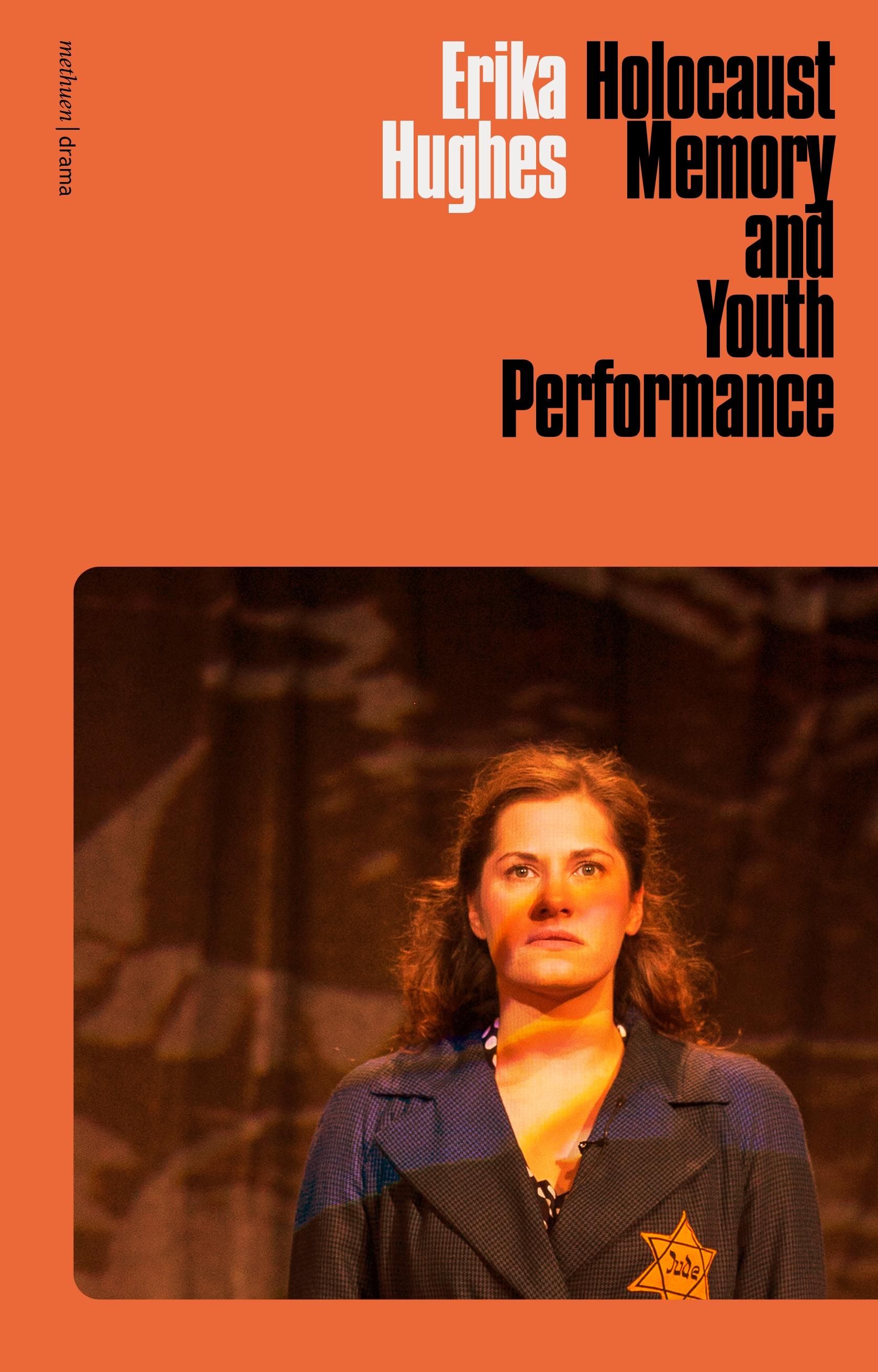
Through an examination of children's and youth plays and performances about the Holocaust from Germany, Israel, and the United States, this book offers an entirely new way of looking at the vital role of youth performance in coping with the legacy of historical tragedy.
As the first book-length critical examination of this subject, Holocaust Memory and Youth Performance considers plays that are produced by major theatre companies alongside performances written by young authors and pieces taken from the diaries and memoirs of those who experienced the Holocaust as children or adolescents. While youth-focused plays about the Holocaust have been in the repertories of top professional companies throughout the world for decades and continue to be performed in theatres, schools, and community centers, they are often neglected in concentrated and comparative studies of Holocaust theatre.
Erika Hughes fills this gap by examining plays (including The Diary of Anne Frank and Ab heure heißt Du Sara), musicals, performances, scripts, a rock concert, a performance on Instagram, and pedagogically-focused works of applied theatre – a diverse collection of performances for young audiences that tell the stories of young people who experienced the Holocaust. Adopting Hannah Arendt's notion of natality as a powerful framework, this study examines the ways in which youth-theatre performances make a vital contribution to intergenerational witnessing and the collective memory of the Holocaust.
As the first book-length critical examination of this subject, Holocaust Memory and Youth Performance considers plays that are produced by major theatre companies alongside performances written by young authors and pieces taken from the diaries and memoirs of those who experienced the Holocaust as children or adolescents. While youth-focused plays about the Holocaust have been in the repertories of top professional companies throughout the world for decades and continue to be performed in theatres, schools, and community centers, they are often neglected in concentrated and comparative studies of Holocaust theatre.
Erika Hughes fills this gap by examining plays (including The Diary of Anne Frank and Ab heure heißt Du Sara), musicals, performances, scripts, a rock concert, a performance on Instagram, and pedagogically-focused works of applied theatre – a diverse collection of performances for young audiences that tell the stories of young people who experienced the Holocaust. Adopting Hannah Arendt's notion of natality as a powerful framework, this study examines the ways in which youth-theatre performances make a vital contribution to intergenerational witnessing and the collective memory of the Holocaust.
Pay easily by card, Klarna, Apple Pay or Google Pay. Not happy? You always have a 14-day money-back guarantee. Read more in our terms. If you have any questions, email us at hello@memmo.org.
Memmo makes studying easier – wherever you are in the world. We bring your course books and smart study tools together in one place: summaries, quizzes, podcasts and flashcards. Plus Ted, your study buddy who answers anything you wonder. Over 75,000 students already study here – built to help you learn faster and stress less.