
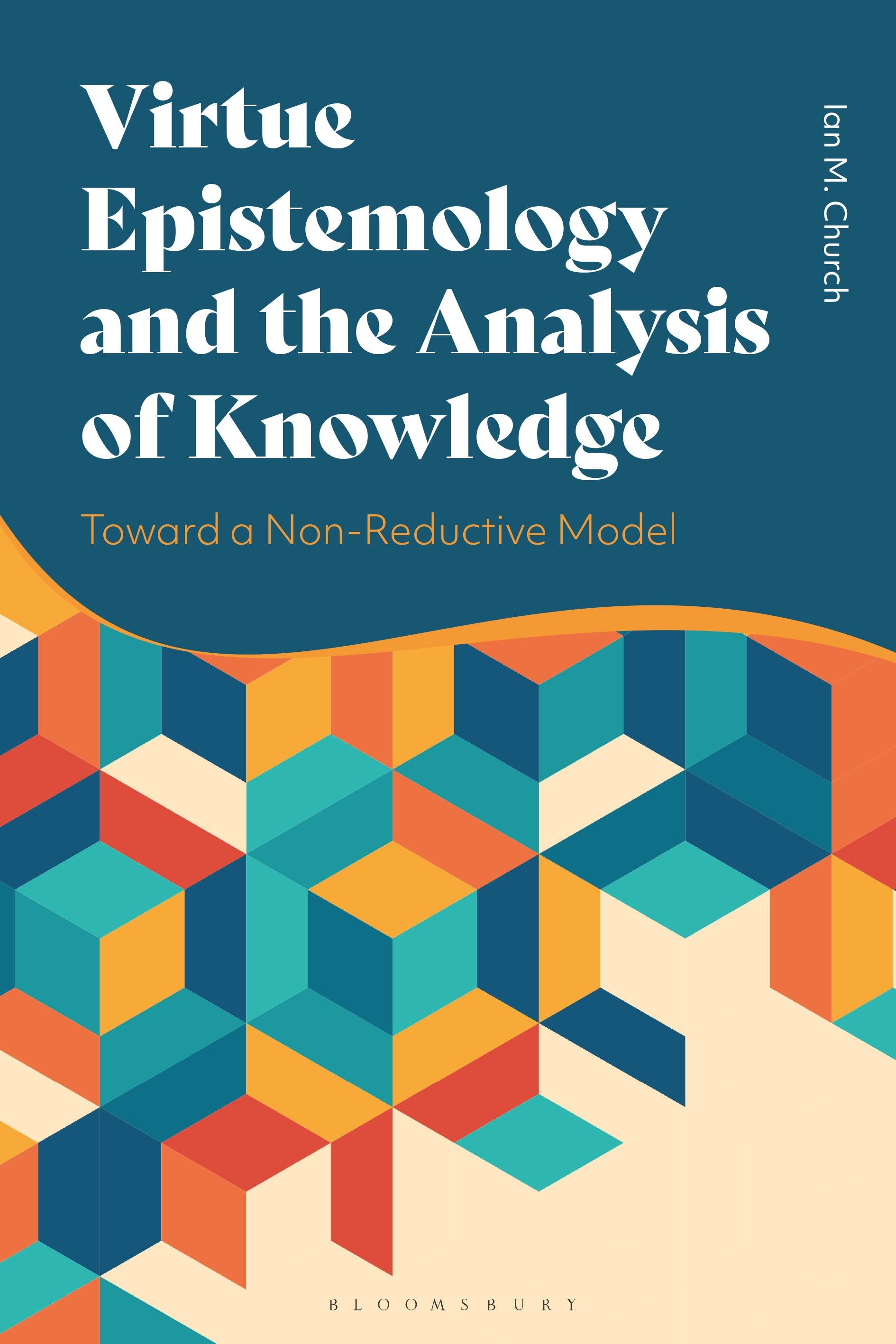
This book centers on two dominant trends within contemporary epistemology: first, the dissatisfaction with the project of analyzing knowledge in terms of necessary and jointly sufficient conditions and, second, the surging popularity of virtue-theoretic approaches to knowledge.
Church argues that the Gettier Problem, the primary reason for abandoning the reductive analysis project, cannot viably be solved, and that prominent approaches to virtue epistemology fail to solve the Gettier Problem precisely along the lines his diagnosis predicts.
Such an outcome motivates Church to explore a better way forward: non-reductive virtue epistemology. In so doing, he makes room for virtue epistemologies that are not only able to endure what he sees as inevitable developments in 21st-century epistemology, but also able to contribute positively to debates and discussions across the discipline and beyond.
Church argues that the Gettier Problem, the primary reason for abandoning the reductive analysis project, cannot viably be solved, and that prominent approaches to virtue epistemology fail to solve the Gettier Problem precisely along the lines his diagnosis predicts.
Such an outcome motivates Church to explore a better way forward: non-reductive virtue epistemology. In so doing, he makes room for virtue epistemologies that are not only able to endure what he sees as inevitable developments in 21st-century epistemology, but also able to contribute positively to debates and discussions across the discipline and beyond.
Pay easily by card, Klarna, Apple Pay or Google Pay. Not happy? You always have a 14-day money-back guarantee. Read more in our terms. If you have any questions, email us at hello@memmo.org.
Memmo makes studying easier – wherever you are in the world. We bring your course books and smart study tools together in one place: summaries, quizzes, podcasts and flashcards. Plus Ted, your study buddy who answers anything you wonder. Over 50,000 students already study here – built to help you learn faster and stress less.