
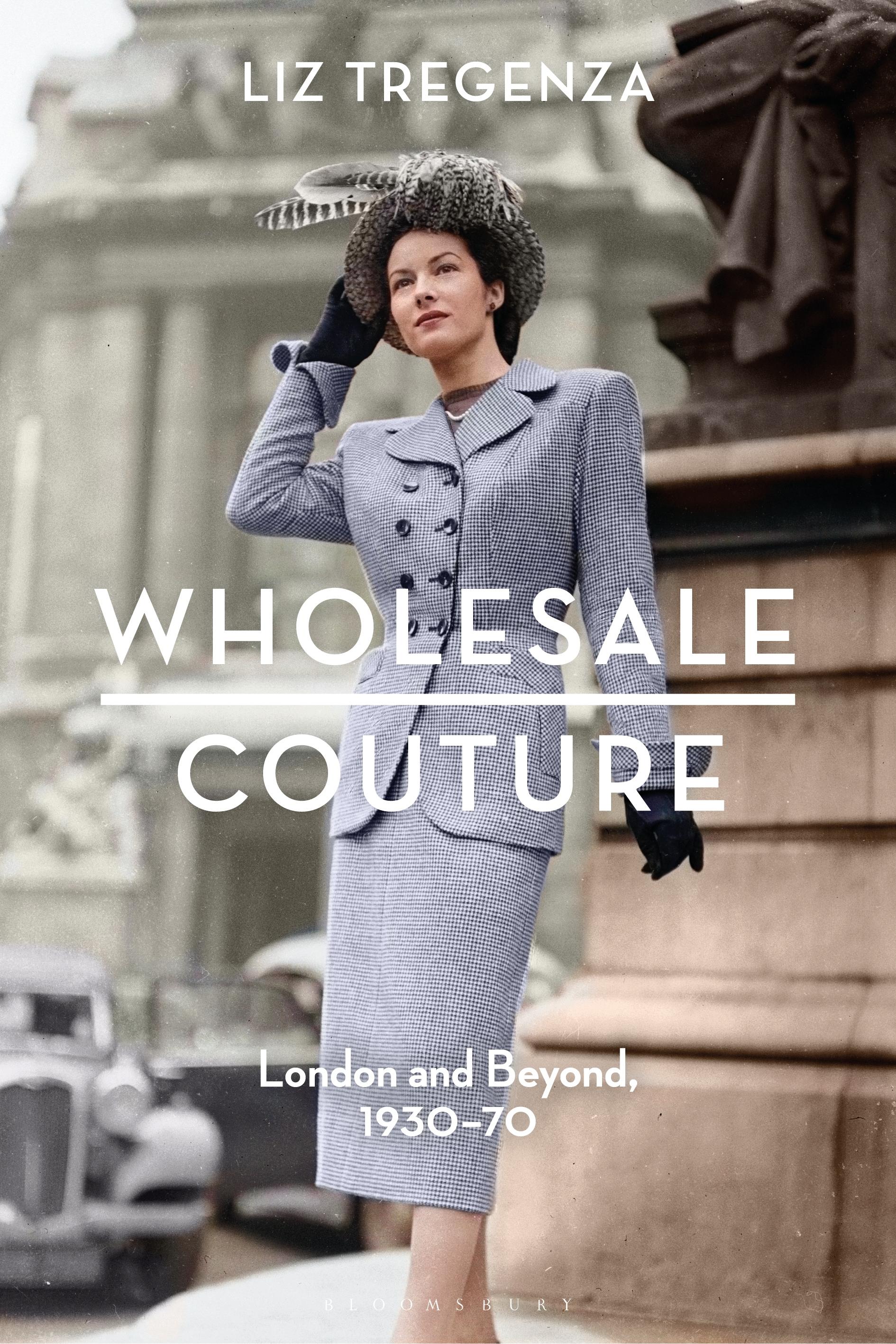
The first book to consider the subject, Wholesale Couture: London and Beyond, 1930-70 seeks to revise the notion that wholesale couturiers were simply copyists and demonstrate the complexities of their design processes and business strategies. This term has fallen out of usage; however, it was used to describe the pinnacle of the British ready-to-wear fashion industry between the 1930s and 1960s. Companies within this sector have typically been recognised as creators of high-quality copies of French haute couture, using ready-to-wear techniques.
Liz Tregenza traces wholesale couture garments from concept to usage, considering design, manufacture, branding, promotion, retail and export. She looks beyond the garments produced and investigates the people behind these firms, consequently demonstrating the significant role that largely Jewish immigrants played in the development and success of this industry. The book also considers the wider social and economic factors that affected manufacturers and consumers; the effect of austerity, rationing and the Utility scheme, and the pressing need for wholesale couturiers to export their products internationally. It demonstrates that 1946 was a critical year for re-building and re-imagining the London fashion industry and that wholesale couturiers were at the centre of these developments. Furthermore, it reveals the impact of changing consumer purchasing power, including the burgeoning youth market, for fashion manufacturers.
Offering a new perspective on British fashion history, Wholesale Couture demonstrates that these couturiers were vital in cementing London's status as a ready-to-wear fashion centre.
Liz Tregenza traces wholesale couture garments from concept to usage, considering design, manufacture, branding, promotion, retail and export. She looks beyond the garments produced and investigates the people behind these firms, consequently demonstrating the significant role that largely Jewish immigrants played in the development and success of this industry. The book also considers the wider social and economic factors that affected manufacturers and consumers; the effect of austerity, rationing and the Utility scheme, and the pressing need for wholesale couturiers to export their products internationally. It demonstrates that 1946 was a critical year for re-building and re-imagining the London fashion industry and that wholesale couturiers were at the centre of these developments. Furthermore, it reveals the impact of changing consumer purchasing power, including the burgeoning youth market, for fashion manufacturers.
Offering a new perspective on British fashion history, Wholesale Couture demonstrates that these couturiers were vital in cementing London's status as a ready-to-wear fashion centre.
Pages: 248
Category: Konst, Design & Fotografi
e-ISBN: 9781350245884
Shipping weight: 1.2 kg
Ships in: 1-2 days
Pay easily by card, Klarna, Apple Pay or Google Pay. Not happy? You always have a 14-day money-back guarantee. Read more in our terms. If you have any questions, email us at hello@memmo.org.
Memmo makes studying easier – wherever you are in the world. We bring your course books and smart study tools together in one place: summaries, quizzes, podcasts and flashcards. Plus Ted, your study buddy who answers anything you wonder. Over 50,000 students already study here – built to help you learn faster and stress less.