
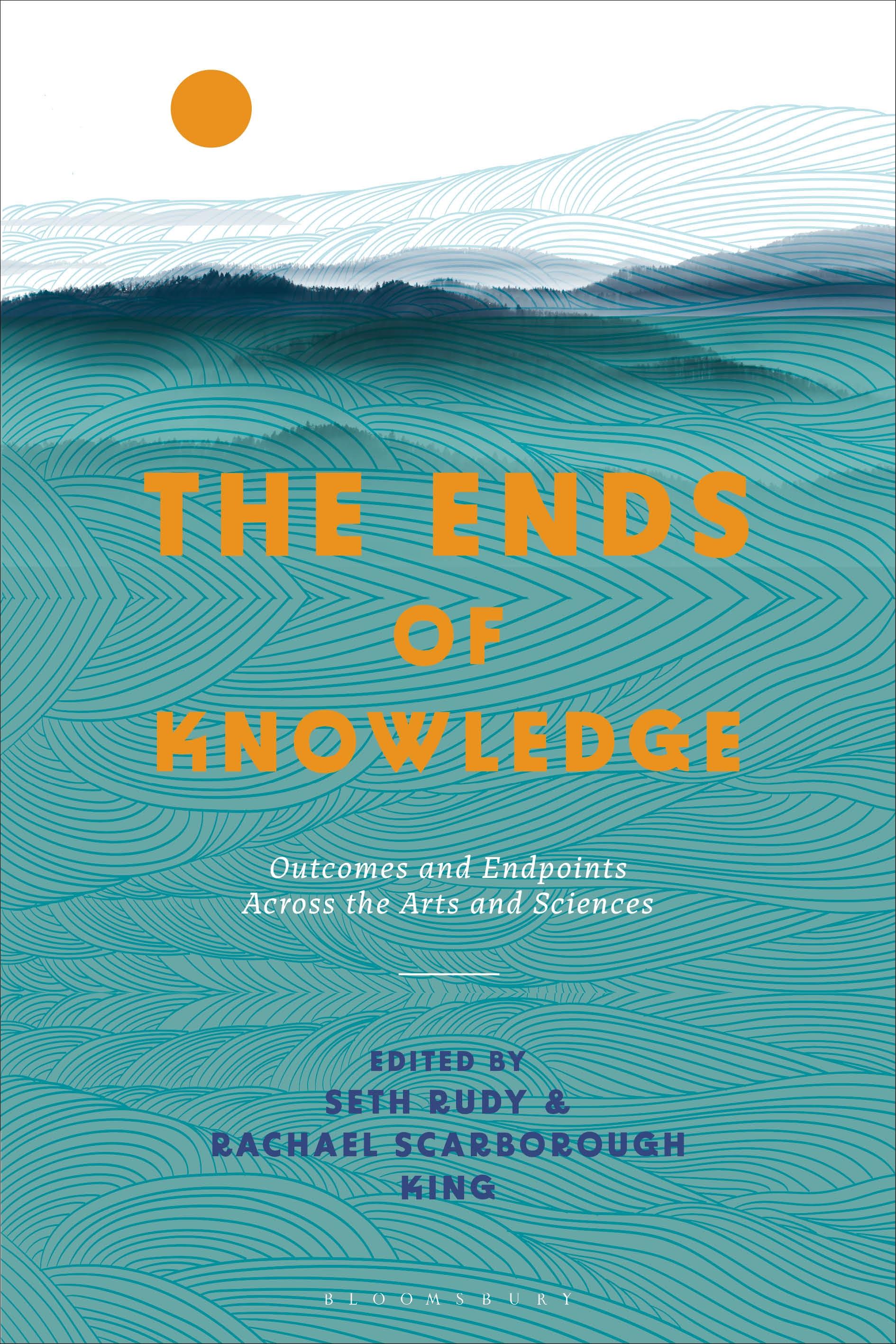
Bringing together an exciting group of knowledge workers, scholars and activists from across fields, this book revisits a foundational question of the Enlightenment: what is “the last or furthest end of knowledge”? It is a book about why we do what we do, and how we might know when we are done.
In the reorganization of knowledge that characterized the Enlightenment, disciplines were conceived as having particular “ends,” both in terms of purposes and end-points. As we experience an ongoing shift to the knowledge economy of the Information Age, this collection asks whether we still conceptualize knowledge in this way. Does an individual discipline have both an inherent purpose and a natural endpoint? What do an experiment on a fruit fly, a reading of a poem, and the writing of a line of code have in common?
Focusing on areas as diverse as AI; biology; Black studies; literary studies; physics; political activism; and the concept of disciplinarity itself, contributors uncover a life after disciplinarity for subjects that face immediate threats to the structure if not the substance of their contributions. These essays – whether reflective, historical, eulogistic, or polemical – chart a vital and necessary course towards the reorganization of knowledge production as a whole.
In the reorganization of knowledge that characterized the Enlightenment, disciplines were conceived as having particular “ends,” both in terms of purposes and end-points. As we experience an ongoing shift to the knowledge economy of the Information Age, this collection asks whether we still conceptualize knowledge in this way. Does an individual discipline have both an inherent purpose and a natural endpoint? What do an experiment on a fruit fly, a reading of a poem, and the writing of a line of code have in common?
Focusing on areas as diverse as AI; biology; Black studies; literary studies; physics; political activism; and the concept of disciplinarity itself, contributors uncover a life after disciplinarity for subjects that face immediate threats to the structure if not the substance of their contributions. These essays – whether reflective, historical, eulogistic, or polemical – chart a vital and necessary course towards the reorganization of knowledge production as a whole.
Pages: 272
Category: Vetenskapsteori och forskningsmetod
e-ISBN: 9781350242319
Shipping weight: 1.2 kg
Ships in: 1-2 days
Pay easily by card, Klarna, Apple Pay or Google Pay. Not happy? You always have a 14-day money-back guarantee. Read more in our terms. If you have any questions, email us at hello@memmo.org.
Memmo makes studying easier – wherever you are in the world. We bring your course books and smart study tools together in one place: summaries, quizzes, podcasts and flashcards. Plus Ted, your study buddy who answers anything you wonder. Over 50,000 students already study here – built to help you learn faster and stress less.