
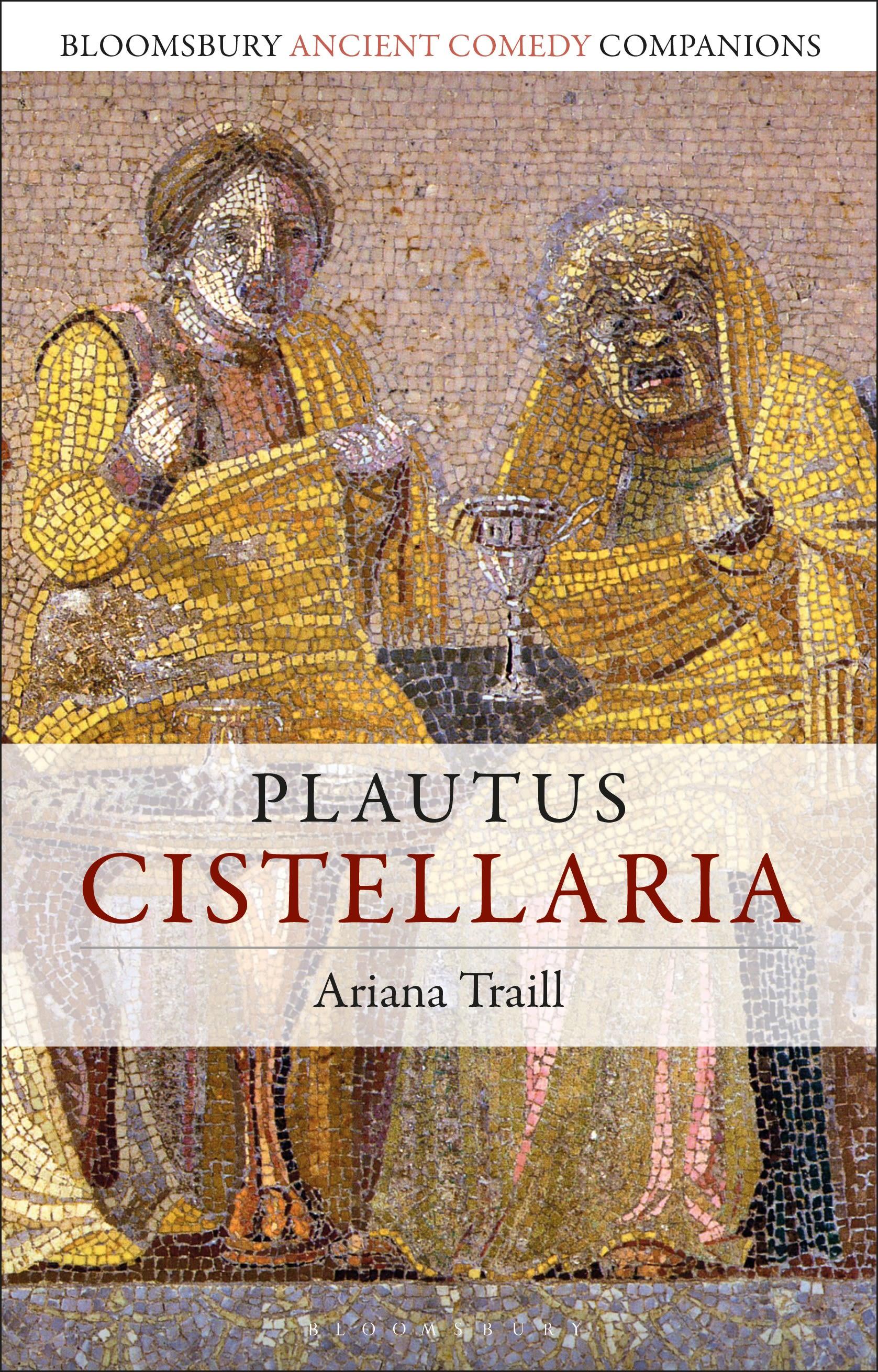
This volume is the first book-length introduction to Plautus' Cistellaria (The Jewelry Box), offering an incisive overview for both students and scholars coming to it for the first time. This play is a story of young lovers defying social norms and disapproving parents in order to be together, featuring a memorable cast of characters and moments of both high humor and drama. This classic mistaken-identity plot includes witty interchanges and a lively conflict of values and ideals.
Drawing on performance and cultural studies, gender and sexuality, and philology and intertextuality, Ariana Traill combines a lucid exploration of Cistellaria's setting, characters, plot and themes, with detailed analyses of its literary and socio-cultural contexts. Readers are able to appreciate the play both as a literary artifact, with its attendant issues of generic conventions and variations, and language and imagery, and as a performance script written for a rich tradition of acting, singing and stage movement at Rome, with its conventional costumes, masks and venues. With its majority female line-up (seven of the twelve roles are female), Cistellaria offers an unusual focus on women's thoughts and feelings as they struggle for their economic and social existence, making it a fascinating source for the study of women and gender in ancient Rome. The play continues to cast a shadow in the western dramatic tradition through its history of reception and adaptation.
Drawing on performance and cultural studies, gender and sexuality, and philology and intertextuality, Ariana Traill combines a lucid exploration of Cistellaria's setting, characters, plot and themes, with detailed analyses of its literary and socio-cultural contexts. Readers are able to appreciate the play both as a literary artifact, with its attendant issues of generic conventions and variations, and language and imagery, and as a performance script written for a rich tradition of acting, singing and stage movement at Rome, with its conventional costumes, masks and venues. With its majority female line-up (seven of the twelve roles are female), Cistellaria offers an unusual focus on women's thoughts and feelings as they struggle for their economic and social existence, making it a fascinating source for the study of women and gender in ancient Rome. The play continues to cast a shadow in the western dramatic tradition through its history of reception and adaptation.
Pay easily by card, Klarna, Apple Pay or Google Pay. Not happy? You always have a 14-day money-back guarantee. Read more in our terms. If you have any questions, email us at hello@memmo.org.
Memmo makes studying easier – wherever you are in the world. We bring your course books and smart study tools together in one place: summaries, quizzes, podcasts and flashcards. Plus Ted, your study buddy who answers anything you wonder. Over 75,000 students already study here – built to help you learn faster and stress less.