
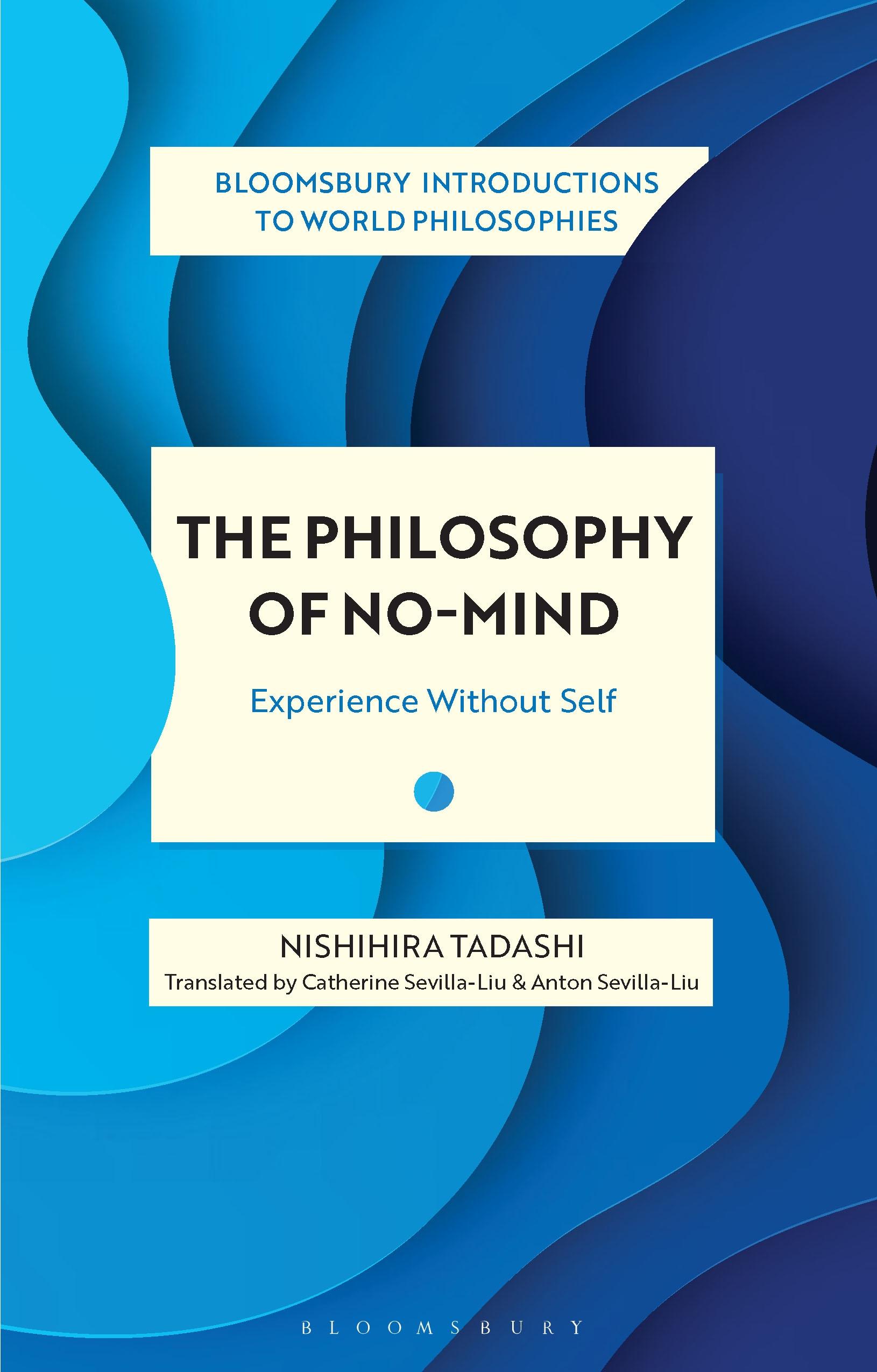
Nishihira Tadashi, one of Japan's leading philosophers, introduces the deeply experiential philosophy of no-mind (mushin). In everyday Japanese, mushin is when one loses oneself in the reality of the present and becomes one with it, resulting in one's best performance. However, behind this everyday use is a concept that touches the core of Japanese spirituality.
This book explores no-mind in its dynamic complexity. It is both the letting go of the calculations of mind and at the same time the arising of a vibrant consciousness in unity with reality. This gives rise to various tensions: Is it about negating or affirming self? Is stillness or activity? How does it relate with social ethics, or religious transcendence? And what is stopping no-mind from descending into mere mindlessness?
These tensional facets are explored through philosophy and history of thought in Japan, from pre-Buddhist Japanese thought, to Zen Buddhism in D.T. Suzuki and Toshihiko Izutsu, to swordsmanship and Noh theater. These historical approaches are brought to the here-and-now, dialoguing with psychology, ethics, and the experiences of everyday life, and ending with two preliminary practical explorations-What does it mean to care for another and to educate from the point of view of no-mind?
This book explores no-mind in its dynamic complexity. It is both the letting go of the calculations of mind and at the same time the arising of a vibrant consciousness in unity with reality. This gives rise to various tensions: Is it about negating or affirming self? Is stillness or activity? How does it relate with social ethics, or religious transcendence? And what is stopping no-mind from descending into mere mindlessness?
These tensional facets are explored through philosophy and history of thought in Japan, from pre-Buddhist Japanese thought, to Zen Buddhism in D.T. Suzuki and Toshihiko Izutsu, to swordsmanship and Noh theater. These historical approaches are brought to the here-and-now, dialoguing with psychology, ethics, and the experiences of everyday life, and ending with two preliminary practical explorations-What does it mean to care for another and to educate from the point of view of no-mind?
Pay easily by card, Klarna, Apple Pay or Google Pay. Not happy? You always have a 14-day money-back guarantee. Read more in our terms. If you have any questions, email us at hello@memmo.org.
Memmo makes studying easier – wherever you are in the world. We bring your course books and smart study tools together in one place: summaries, quizzes, podcasts and flashcards. Plus Ted, your study buddy who answers anything you wonder. Over 50,000 students already study here – built to help you learn faster and stress less.