
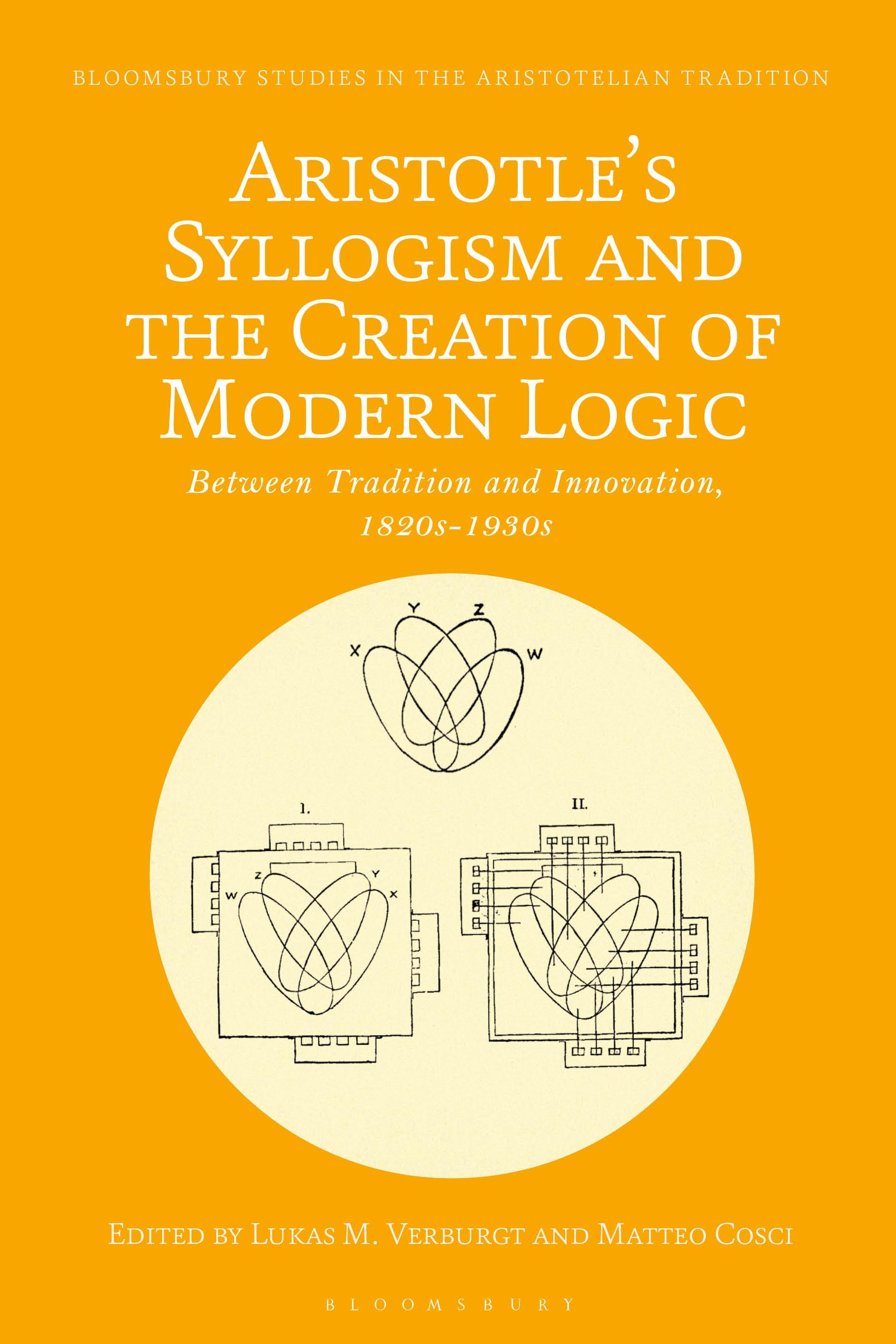
Offering a bold new vision on the history of modern logic, Lukas M. Verburgt and Matteo Cosci focus on the lasting impact of Aristotle's syllogism between the 1820s and 1930s.
For over two millennia, deductive logic was the syllogism and syllogism was the yardstick of sound human reasoning. During the 19th century, this hegemony fell apart and logicians, including Boole, Frege and Peirce, took deductive logic far beyond its Aristotelian borders. However, contrary to common wisdom, reflections on syllogism were also instrumental to the creation of new logical developments, such as first-order logic and early set theory. This volume presents the period under discussion as one of both tradition and innovation, both continuity and discontinuity. Modern logic broke away from the syllogistic tradition, but without Aristotle's syllogism, modern logic would not have been born.
A vital follow up to The Aftermath of Syllogism, this book traces the longue durée history of syllogism from Richard Whately's revival of formal logic in the 1820s through the work of David Hilbert and the Göttingen school up to the 1930s. Bringing together a group of major international experts, it sheds crucial new light on the emergence of modern logic and the roots of analytic philosophy in the 19th and early 20th centuries.
For over two millennia, deductive logic was the syllogism and syllogism was the yardstick of sound human reasoning. During the 19th century, this hegemony fell apart and logicians, including Boole, Frege and Peirce, took deductive logic far beyond its Aristotelian borders. However, contrary to common wisdom, reflections on syllogism were also instrumental to the creation of new logical developments, such as first-order logic and early set theory. This volume presents the period under discussion as one of both tradition and innovation, both continuity and discontinuity. Modern logic broke away from the syllogistic tradition, but without Aristotle's syllogism, modern logic would not have been born.
A vital follow up to The Aftermath of Syllogism, this book traces the longue durée history of syllogism from Richard Whately's revival of formal logic in the 1820s through the work of David Hilbert and the Göttingen school up to the 1930s. Bringing together a group of major international experts, it sheds crucial new light on the emergence of modern logic and the roots of analytic philosophy in the 19th and early 20th centuries.
Pay easily by card, Klarna, Apple Pay or Google Pay. Not happy? You always have a 14-day money-back guarantee. Read more in our terms. If you have any questions, email us at hello@memmo.org.
Memmo makes studying easier – wherever you are in the world. We bring your course books and smart study tools together in one place: summaries, quizzes, podcasts and flashcards. Plus Ted, your study buddy who answers anything you wonder. Over 50,000 students already study here – built to help you learn faster and stress less.