
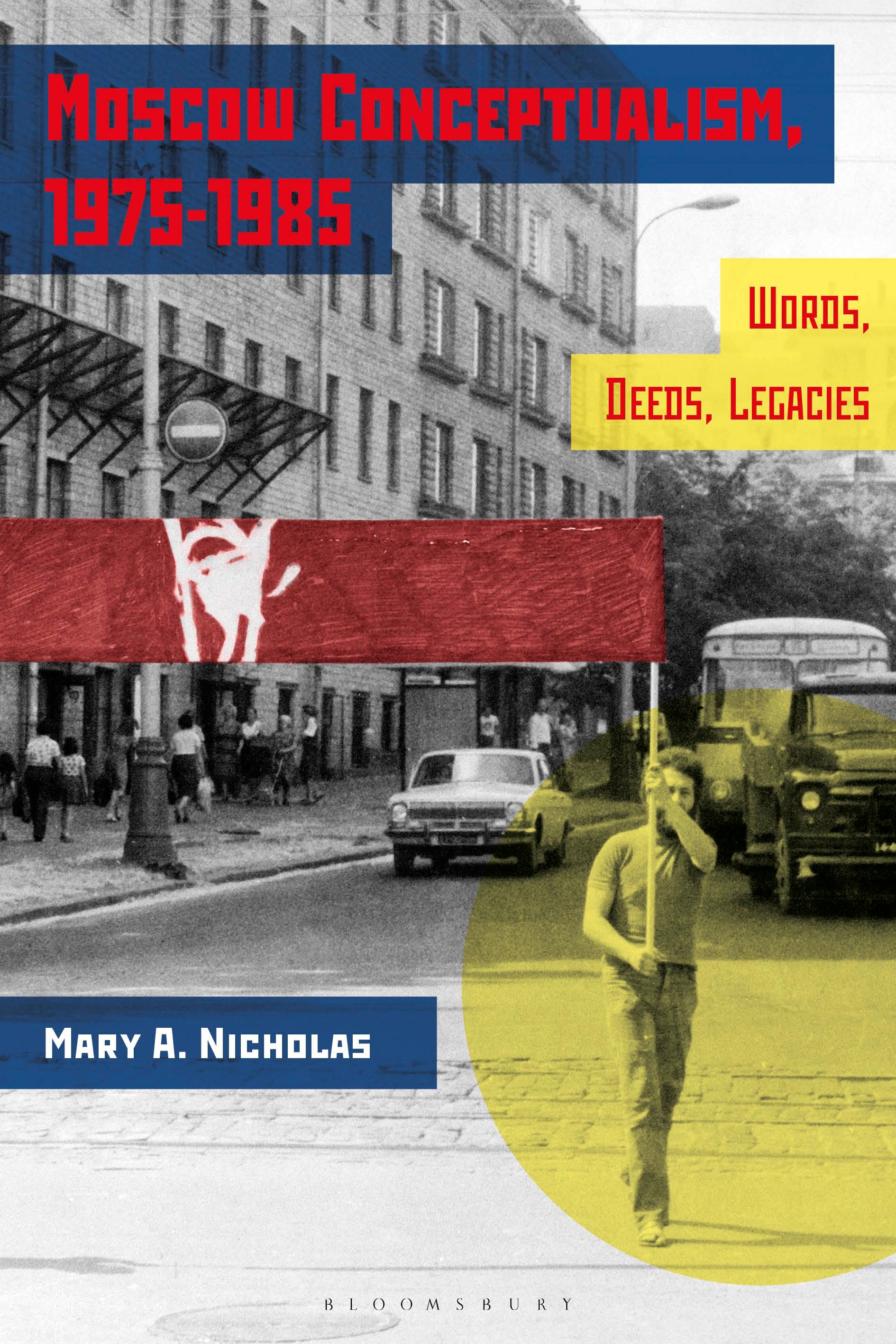
As the last generation of underground artists in the Soviet Union and the first on the post-Soviet scene, Moscow conceptualists provide a unique point of view on the breakup of the USSR, the changing role of unofficial art in a repressive state, and the beginning of a new world order in both art and politics. Offering a counter-narrative to the tradition of Socialist Realism that dominates Soviet art history, this book provides insight into the production and activism of the experimental artists that worked in Moscow during this watershed moment in Russian history.
Based on extensive original research and in-depth interviews with the original artists, Nicholas demonstrates how the work of these radical, unconventional artists challenged the Soviet authorities, official doctrine, and even other colleagues in the nonconformist art world. They rebelled against political and artistic restraints alike, turning everyday texts and engaged performances into powerful statements of creative independence and unrestrained imagination.
Unlike many of their fellow dissenters, these artists rejected elitist notions about art for art's sake in favor of a more open, democratic, and on-going dialogue about everyday concerns. Their embrace of humor, their focus on the real meaning of words, and their insistence on the importance of broad participation in the creation of art make these artists important models for the challenges of our own time. A crucial link between the revolutionary avant-garde and contemporary protest art, Moscow conceptualism offers lessons for activists under pressure from authoritarian regimes around the world.
By highlighting the importance of laughter, imaginative outreach, and direct engagement with everyday citizens, this book presents fascinating evidence of the importance of individual protest and demonstrates that socially-engaged art can be a powerful weapon for change in building a better world.
Based on extensive original research and in-depth interviews with the original artists, Nicholas demonstrates how the work of these radical, unconventional artists challenged the Soviet authorities, official doctrine, and even other colleagues in the nonconformist art world. They rebelled against political and artistic restraints alike, turning everyday texts and engaged performances into powerful statements of creative independence and unrestrained imagination.
Unlike many of their fellow dissenters, these artists rejected elitist notions about art for art's sake in favor of a more open, democratic, and on-going dialogue about everyday concerns. Their embrace of humor, their focus on the real meaning of words, and their insistence on the importance of broad participation in the creation of art make these artists important models for the challenges of our own time. A crucial link between the revolutionary avant-garde and contemporary protest art, Moscow conceptualism offers lessons for activists under pressure from authoritarian regimes around the world.
By highlighting the importance of laughter, imaginative outreach, and direct engagement with everyday citizens, this book presents fascinating evidence of the importance of individual protest and demonstrates that socially-engaged art can be a powerful weapon for change in building a better world.
Pay easily by card, Klarna, Apple Pay or Google Pay. Not happy? You always have a 14-day money-back guarantee. Read more in our terms. If you have any questions, email us at hello@memmo.org.
Memmo makes studying easier – wherever you are in the world. We bring your course books and smart study tools together in one place: summaries, quizzes, podcasts and flashcards. Plus Ted, your study buddy who answers anything you wonder. Over 50,000 students already study here – built to help you learn faster and stress less.