
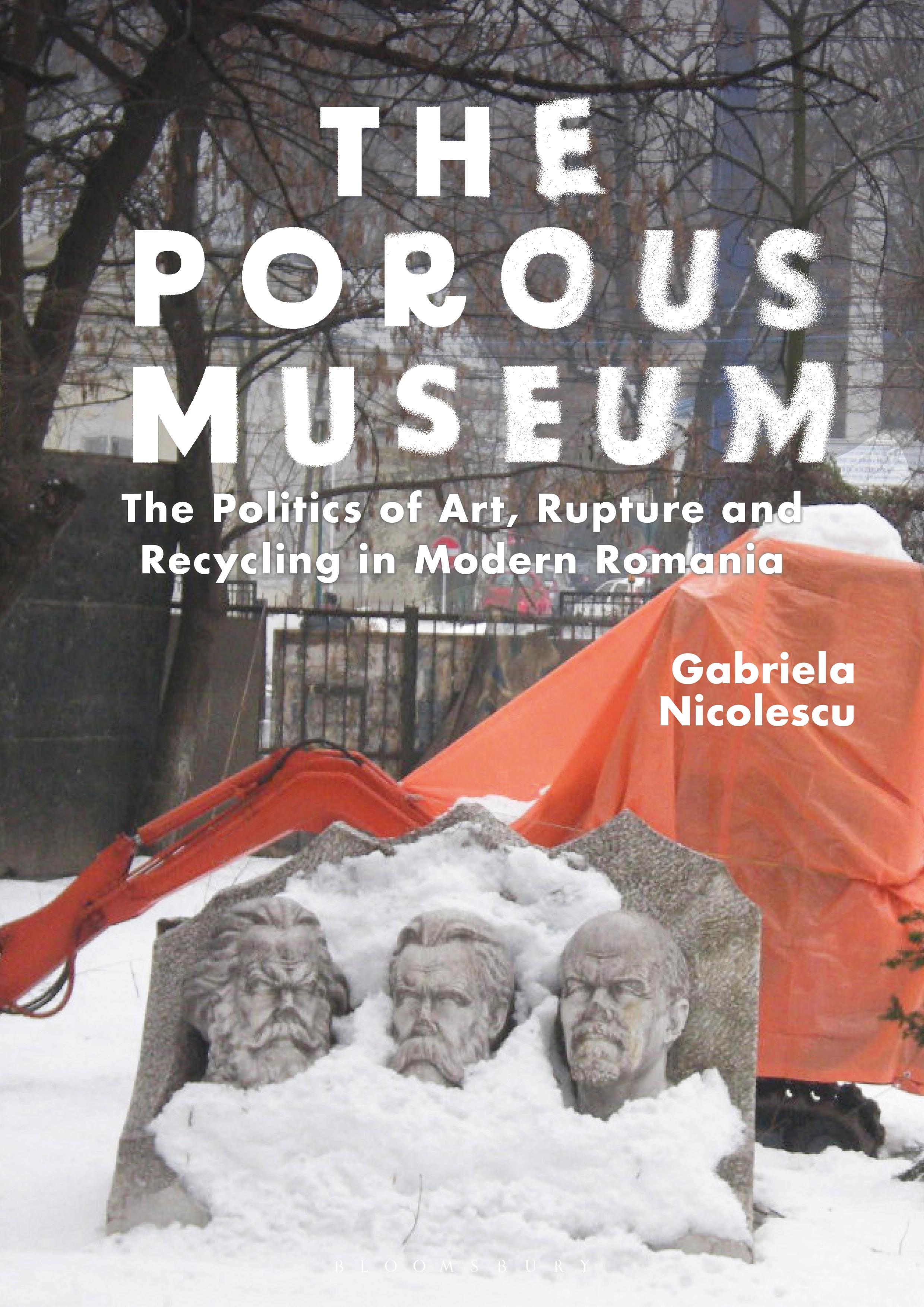
The Porous Museum examines questions of museum practice, aesthetics and politics through a focused study of The National Museum of the Romanian Peasant in Bucharest. The museum has functioned successively as a museum of art, a communist museum, the headquarters of the communist secret police, and a museum of folk art. Gabriela Nicolescu traces the museum's spectacular biography and follows the transformation of its practices and aesthetics through three very different political regimes in the 20th and early 21st century: monarchist, socialist and post-socialist.
Nicolescu's fascinating study starts with a focus on a dumped and smashed statue of the revolutionary figureheads Marx, Engels and Lenin in the museum's rear yard as an expression of the complicated journey of modern Romania. She considers questions of recycling and rupture, with some exhibits and practices carried over from one regime to another, whilst others have been discarded in favour of the completely new. Through this process, the museum can been seen as a microcosm of the wider nation state and the ways in which the past is remembered or rejected.
The interdependency of politics, ethics and aesthetics that Nicolescu terms 'porosity' is an attribute of museums all over the world. Applying original anthropological research to key ethnographic museums in Romania and elsewhere in Europe, the book moves beyond regional and media stereotypes by arguing for the influence of local oral histories on national history.
Nicolescu's fascinating study starts with a focus on a dumped and smashed statue of the revolutionary figureheads Marx, Engels and Lenin in the museum's rear yard as an expression of the complicated journey of modern Romania. She considers questions of recycling and rupture, with some exhibits and practices carried over from one regime to another, whilst others have been discarded in favour of the completely new. Through this process, the museum can been seen as a microcosm of the wider nation state and the ways in which the past is remembered or rejected.
The interdependency of politics, ethics and aesthetics that Nicolescu terms 'porosity' is an attribute of museums all over the world. Applying original anthropological research to key ethnographic museums in Romania and elsewhere in Europe, the book moves beyond regional and media stereotypes by arguing for the influence of local oral histories on national history.
Pages: 224
Category: Konst, Design & Fotografi
e-ISBN: 9781350196643
Shipping weight: 1.2 kg
Ships in: 1-2 days
Pay easily by card, Klarna, Apple Pay or Google Pay. Not happy? You always have a 14-day money-back guarantee. Read more in our terms. If you have any questions, email us at hello@memmo.org.
Memmo makes studying easier – wherever you are in the world. We bring your course books and smart study tools together in one place: summaries, quizzes, podcasts and flashcards. Plus Ted, your study buddy who answers anything you wonder. Over 50,000 students already study here – built to help you learn faster and stress less.