
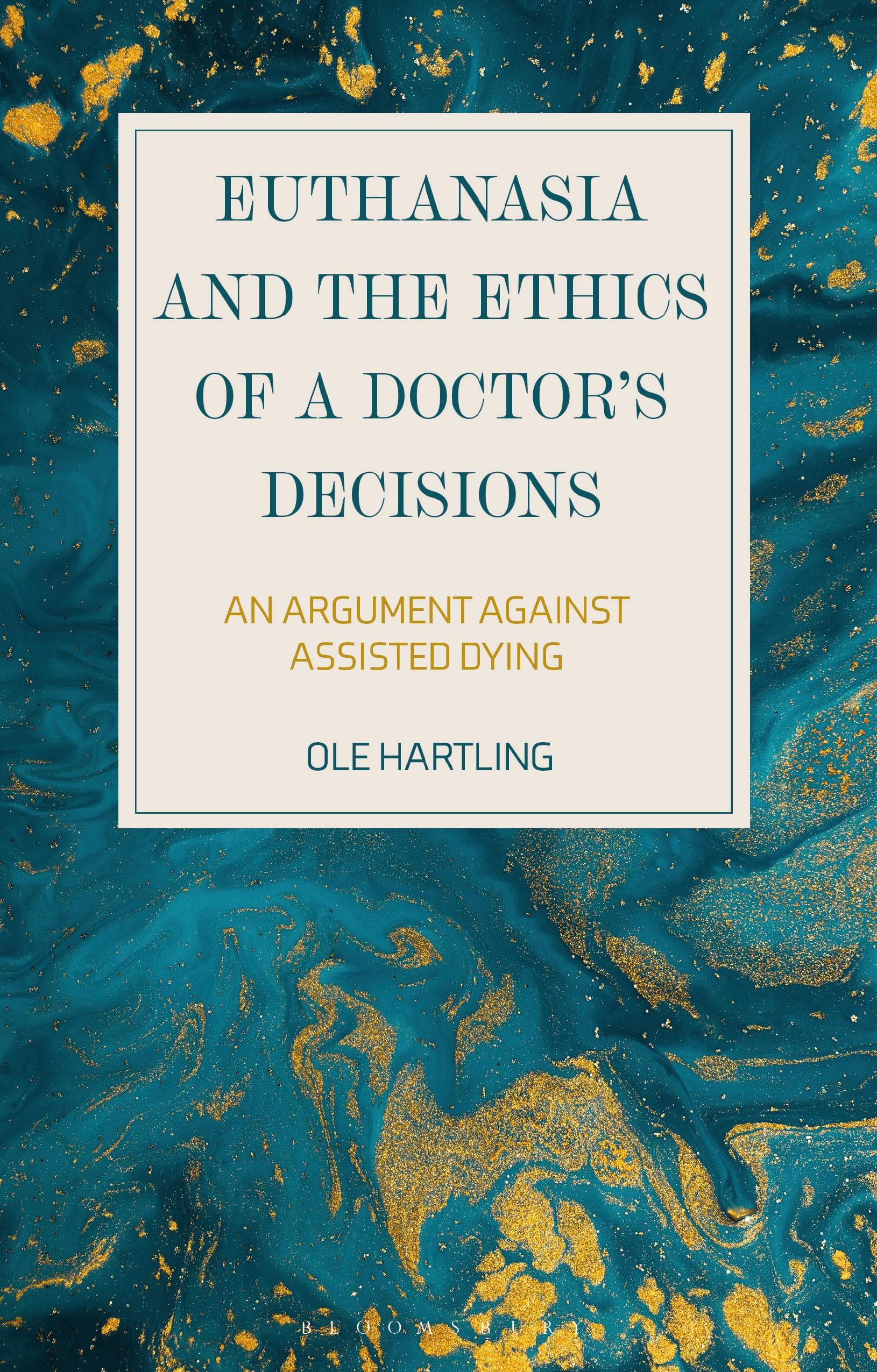
Why do so many doctors have profound misgivings about the push to legalise euthanasia and assisted suicide? Ole Hartling uses his background as a physician, university professor and former chairman of the Danish Council of Ethics to introduce new elements into what can often be understood as an all too simple debate.
Alive to the case that assisted dying can be driven by an unattainable yearning for control, Hartling concentrates on two fundamental questions: whether the answer to suffering is to remove the sufferer, and whether self-determination in dying and death is an illusion.
He draws on his own experience as a medical doctor to personalize the ethical arguments, share patients' narratives and make references to medical literature. Here is a sceptical stance towards euthanasia, one that is respectful to those who hold different opinions and well-informed about the details and nuances of different euthanasia practices.
Written from a Scandinavian perspective, where respect for autonomy and high quality palliative care go hand in hand, Hartling's is a nuanced, valuable contribution to the arguments that surround a question doctors have faced since the birth of medicine. He shows us how the intentions of doing something good can sometimes lead to even greater dilemmas, opening us up to those situations where an inclination to end suffering by ending life is deeply conflicting both for the clinician and for any fellow human being.
Alive to the case that assisted dying can be driven by an unattainable yearning for control, Hartling concentrates on two fundamental questions: whether the answer to suffering is to remove the sufferer, and whether self-determination in dying and death is an illusion.
He draws on his own experience as a medical doctor to personalize the ethical arguments, share patients' narratives and make references to medical literature. Here is a sceptical stance towards euthanasia, one that is respectful to those who hold different opinions and well-informed about the details and nuances of different euthanasia practices.
Written from a Scandinavian perspective, where respect for autonomy and high quality palliative care go hand in hand, Hartling's is a nuanced, valuable contribution to the arguments that surround a question doctors have faced since the birth of medicine. He shows us how the intentions of doing something good can sometimes lead to even greater dilemmas, opening us up to those situations where an inclination to end suffering by ending life is deeply conflicting both for the clinician and for any fellow human being.
Pay easily by card, Klarna, Apple Pay or Google Pay. Not happy? You always have a 14-day money-back guarantee. Read more in our terms. If you have any questions, email us at hello@memmo.org.
Memmo makes studying easier – wherever you are in the world. We bring your course books and smart study tools together in one place: summaries, quizzes, podcasts and flashcards. Plus Ted, your study buddy who answers anything you wonder. Over 50,000 students already study here – built to help you learn faster and stress less.