
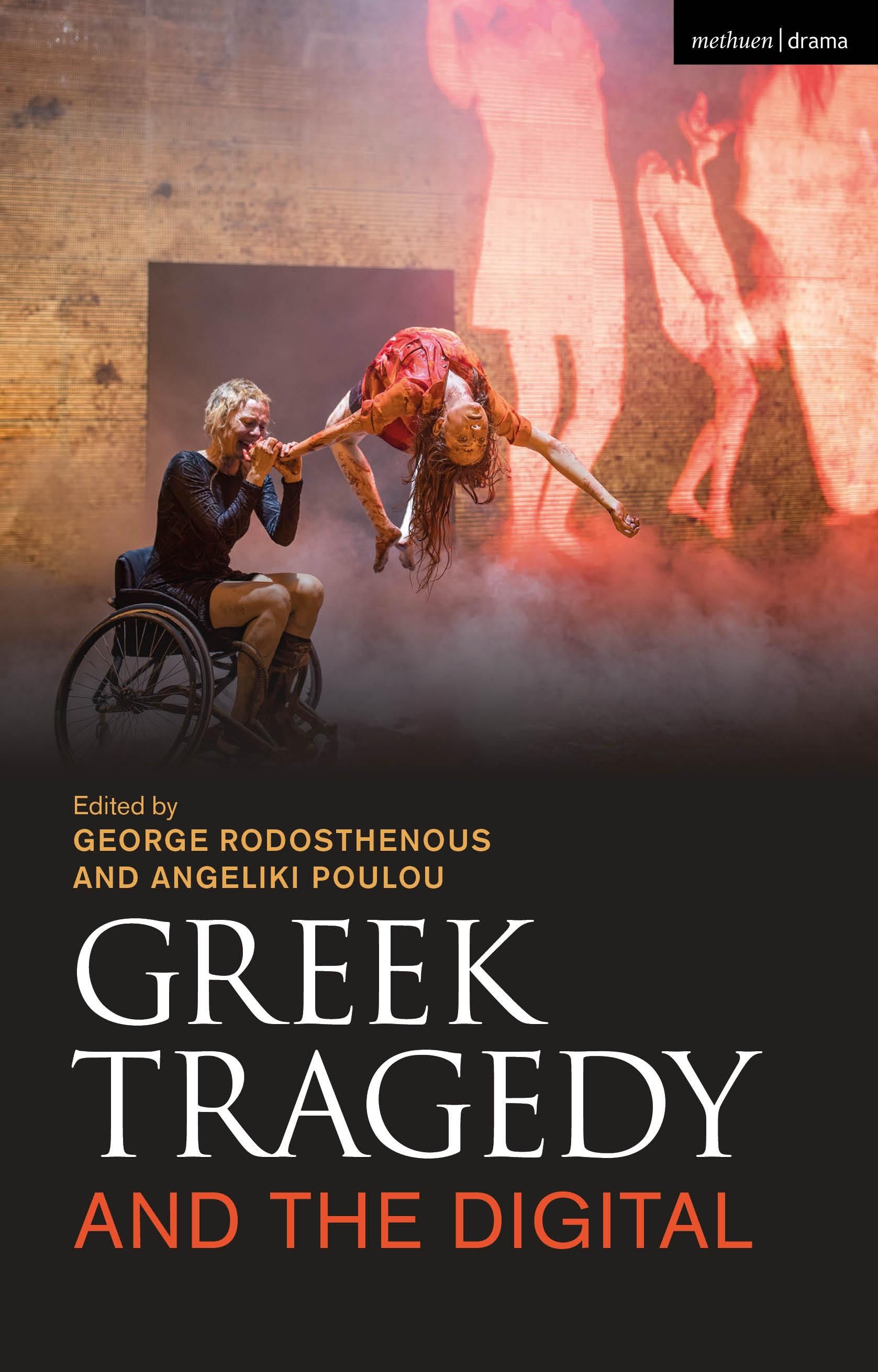
Adopting an innovative and theoretical approach, Greek Tragedy and the Digital is an original study of the encounter between Greek tragedy and digital media in contemporary performance. It challenges Greek tragedy conventions through the contemporary arsenal of sound masks, avatars, live code poetry, new media art and digital cognitive experimentations. These technological innovations in performances of Greek tragedy shed new light on contemporary transformations and adaptations of classical myths, while raising emerging questions about how augmented reality works within interactive and immersive environments.
Drawing on cutting-edge productions and theoretical debates on performance and the digital, this collection considers issues including performativity, liveness, immersion, intermediality, aesthetics, technological fragmentation, conventions of the chorus, theatre as hypermedia and reception theory in relation to Greek tragedy.
Case studies include Kzryztof Warlikowski, Jan Fabre, Romeo Castellucci, Katie Mitchell, Georges Lavaudant, The Wooster Group, Labex Arts-H2H, Akram Khan, Urland & Crew, Medea Electronique, Robert Wilson, Klaus Obermaier, Guy Cassiers, Luca di Fusco, Ivo Van Hove, Avra Sidiropoulou and Jay Scheib. This is an incisive, interdisciplinary study that serves as a practice model for conceptualizing the ways in which Greek tragedy encounters digital culture in contemporary performance.
Drawing on cutting-edge productions and theoretical debates on performance and the digital, this collection considers issues including performativity, liveness, immersion, intermediality, aesthetics, technological fragmentation, conventions of the chorus, theatre as hypermedia and reception theory in relation to Greek tragedy.
Case studies include Kzryztof Warlikowski, Jan Fabre, Romeo Castellucci, Katie Mitchell, Georges Lavaudant, The Wooster Group, Labex Arts-H2H, Akram Khan, Urland & Crew, Medea Electronique, Robert Wilson, Klaus Obermaier, Guy Cassiers, Luca di Fusco, Ivo Van Hove, Avra Sidiropoulou and Jay Scheib. This is an incisive, interdisciplinary study that serves as a practice model for conceptualizing the ways in which Greek tragedy encounters digital culture in contemporary performance.
Pay easily by card, Klarna, Apple Pay or Google Pay. Not happy? You always have a 14-day money-back guarantee. Read more in our terms. If you have any questions, email us at hello@memmo.org.
Memmo makes studying easier – wherever you are in the world. We bring your course books and smart study tools together in one place: summaries, quizzes, podcasts and flashcards. Plus Ted, your study buddy who answers anything you wonder. Over 75,000 students already study here – built to help you learn faster and stress less.