
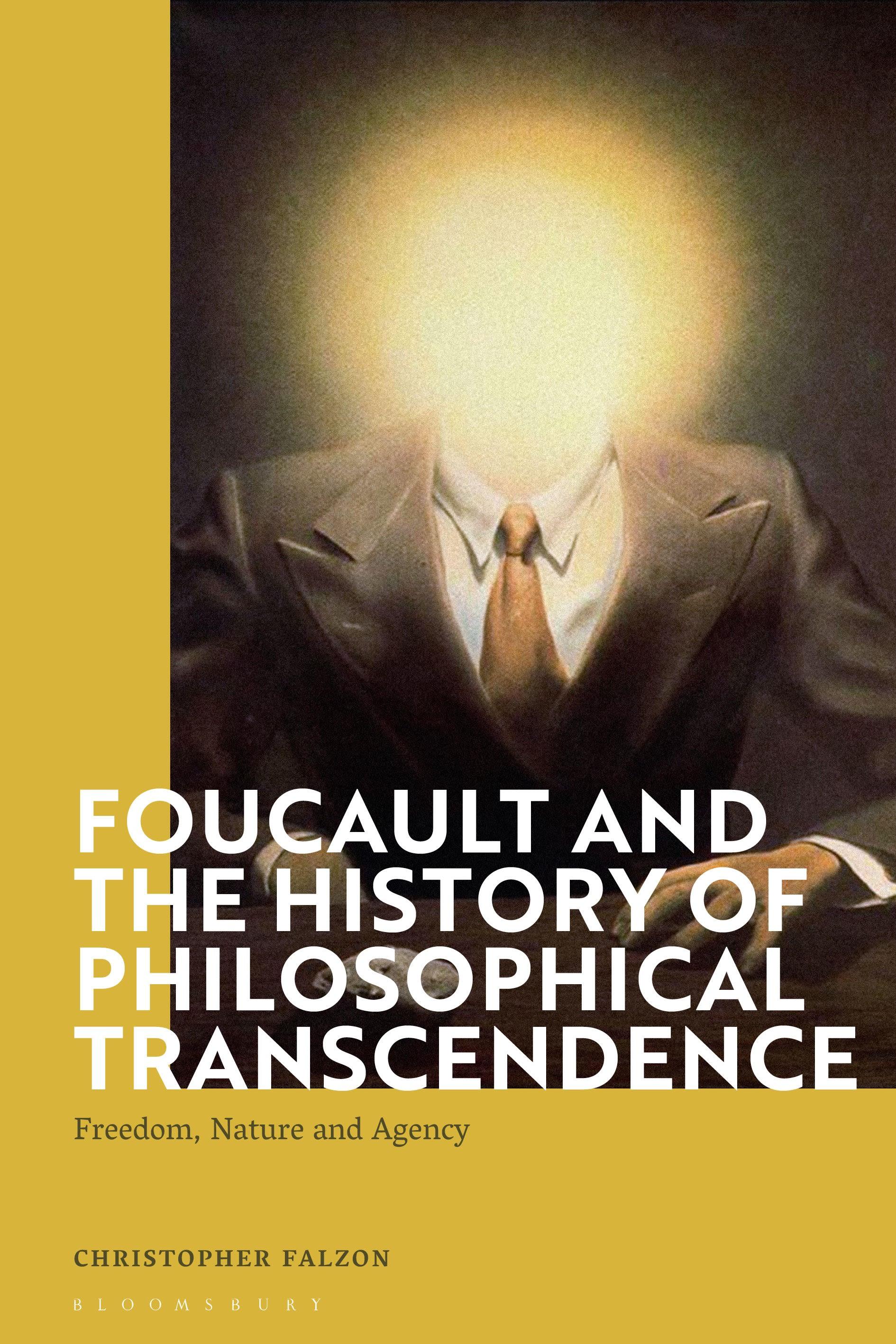
In an original approach to Foucault's philosophy, Christopher Falzon argues for a reading of Foucault as a philosopher of finite transcendence, and explores its implications for ethics.
In order to distinguish Foucault's position, Falzon charts the historical trajectory of transcendence as a philosophical concept, starting with the radical notion of transcendence that was introduced by Plato, and which reappears in various forms in subsequent thinkers from the Stoics to Descartes, and from Kant to Sartre. He argues that Foucault's critique of the transcendent subject of humanism is a rejection not of transcendence per se but of radical transcendence in its distinctively modern form. As such, he shows how Foucault's conceptualisation of transcendence as finite enables a picture of the human being as neither fully determined nor a creature of infinite possibilities, but as both subject and object, affected by but also able to affect the world.
With the notion of finite transcendence Falzon captures the essence of Foucault's unique philosophy and provides a new insight into his contribution to ethics. Demonstrating its contemporary relevance, Foucault and the History of Philosophical Transcendence further explores the potential application of Foucault's approach to the current ecological crisis.
In order to distinguish Foucault's position, Falzon charts the historical trajectory of transcendence as a philosophical concept, starting with the radical notion of transcendence that was introduced by Plato, and which reappears in various forms in subsequent thinkers from the Stoics to Descartes, and from Kant to Sartre. He argues that Foucault's critique of the transcendent subject of humanism is a rejection not of transcendence per se but of radical transcendence in its distinctively modern form. As such, he shows how Foucault's conceptualisation of transcendence as finite enables a picture of the human being as neither fully determined nor a creature of infinite possibilities, but as both subject and object, affected by but also able to affect the world.
With the notion of finite transcendence Falzon captures the essence of Foucault's unique philosophy and provides a new insight into his contribution to ethics. Demonstrating its contemporary relevance, Foucault and the History of Philosophical Transcendence further explores the potential application of Foucault's approach to the current ecological crisis.
Pay easily by card, Klarna, Apple Pay or Google Pay. Not happy? You always have a 14-day money-back guarantee. Read more in our terms. If you have any questions, email us at hello@memmo.org.
Memmo makes studying easier – wherever you are in the world. We bring your course books and smart study tools together in one place: summaries, quizzes, podcasts and flashcards. Plus Ted, your study buddy who answers anything you wonder. Over 50,000 students already study here – built to help you learn faster and stress less.