
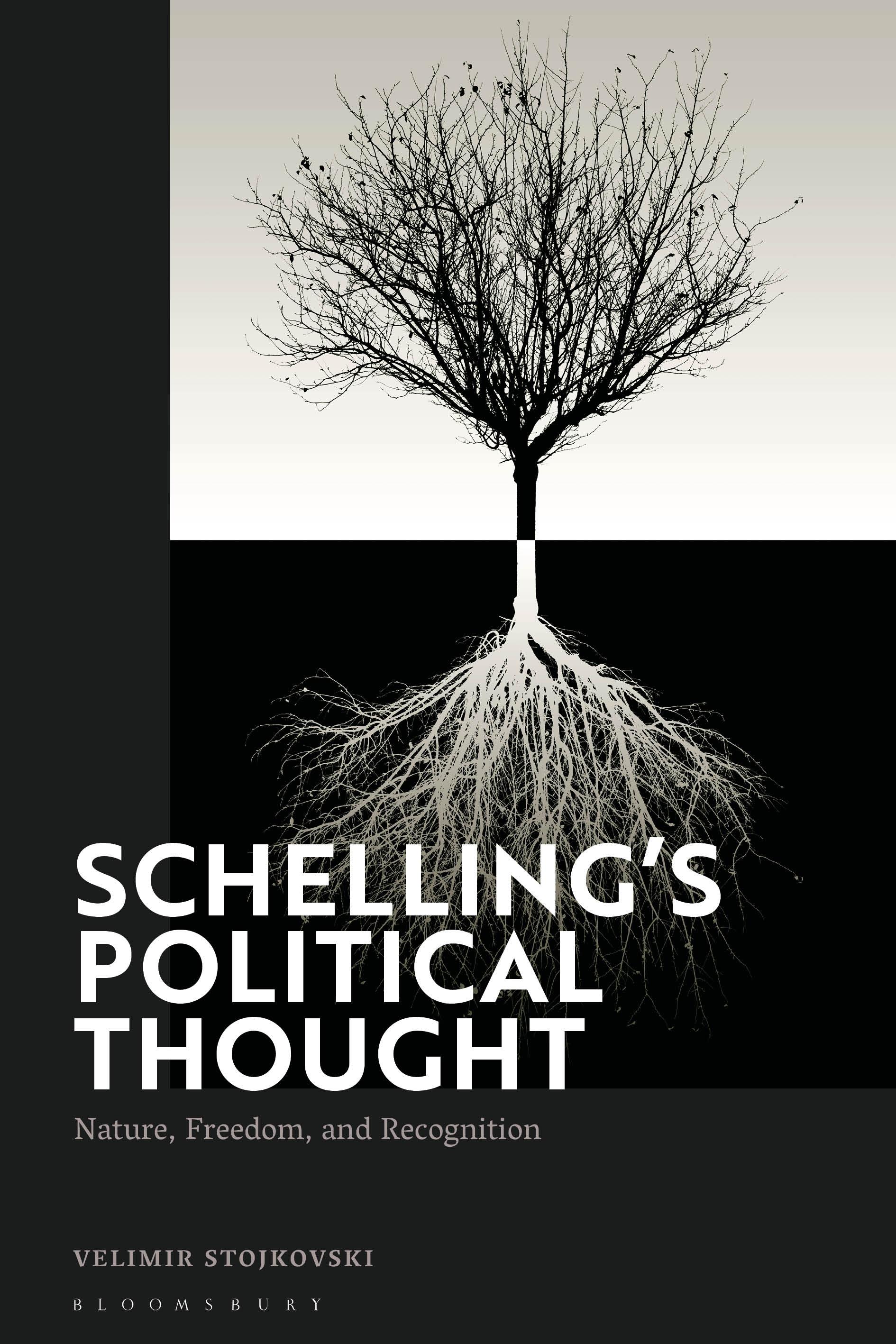
In the first study to examine F. W. J. Schelling's political thought, Velimir Stojkovski not only unearths a neglected dimension of the influential thinker's philosophy but further shows what it can teach us about our ethical and political responsibilities today.
Unlike Hegel or Fichte, Schelling never wrote a political treatise. Yet by reconstructing the portions of such works as The New Deductions of Natural Right that deal explicitly with the political and by thematically rethinking parts of his writings that have a clear repercussion on politics – in particular those on nature, freedom and religion – this book reveals the centrality of politics to his oeuvre.
Revisiting his corpus in this way, Stojkovski uncovers a number of ways we can learn from Schelling and his reception. He examines how Schelling's views on nature can clarify our moral and political obligations to the non-human world and further demonstrates how the separation of ontology as first philosophy from the ethico-political has resulted in a fragmented view of the status of the political subject and thus the body politic. Forcefully renouncing this fragmentation, Stojkovski explores how the same divide has contributed to the ongoing political turmoil in Europe and America.
Combining an exploration of German Idealism with contemporary concerns, this is an essential study that will introduce readers to a new Schelling: a political thinker for the 21st century.
Unlike Hegel or Fichte, Schelling never wrote a political treatise. Yet by reconstructing the portions of such works as The New Deductions of Natural Right that deal explicitly with the political and by thematically rethinking parts of his writings that have a clear repercussion on politics – in particular those on nature, freedom and religion – this book reveals the centrality of politics to his oeuvre.
Revisiting his corpus in this way, Stojkovski uncovers a number of ways we can learn from Schelling and his reception. He examines how Schelling's views on nature can clarify our moral and political obligations to the non-human world and further demonstrates how the separation of ontology as first philosophy from the ethico-political has resulted in a fragmented view of the status of the political subject and thus the body politic. Forcefully renouncing this fragmentation, Stojkovski explores how the same divide has contributed to the ongoing political turmoil in Europe and America.
Combining an exploration of German Idealism with contemporary concerns, this is an essential study that will introduce readers to a new Schelling: a political thinker for the 21st century.
Pay easily by card, Klarna, Apple Pay or Google Pay. Not happy? You always have a 14-day money-back guarantee. Read more in our terms. If you have any questions, email us at hello@memmo.org.
Memmo makes studying easier – wherever you are in the world. We bring your course books and smart study tools together in one place: summaries, quizzes, podcasts and flashcards. Plus Ted, your study buddy who answers anything you wonder. Over 50,000 students already study here – built to help you learn faster and stress less.