
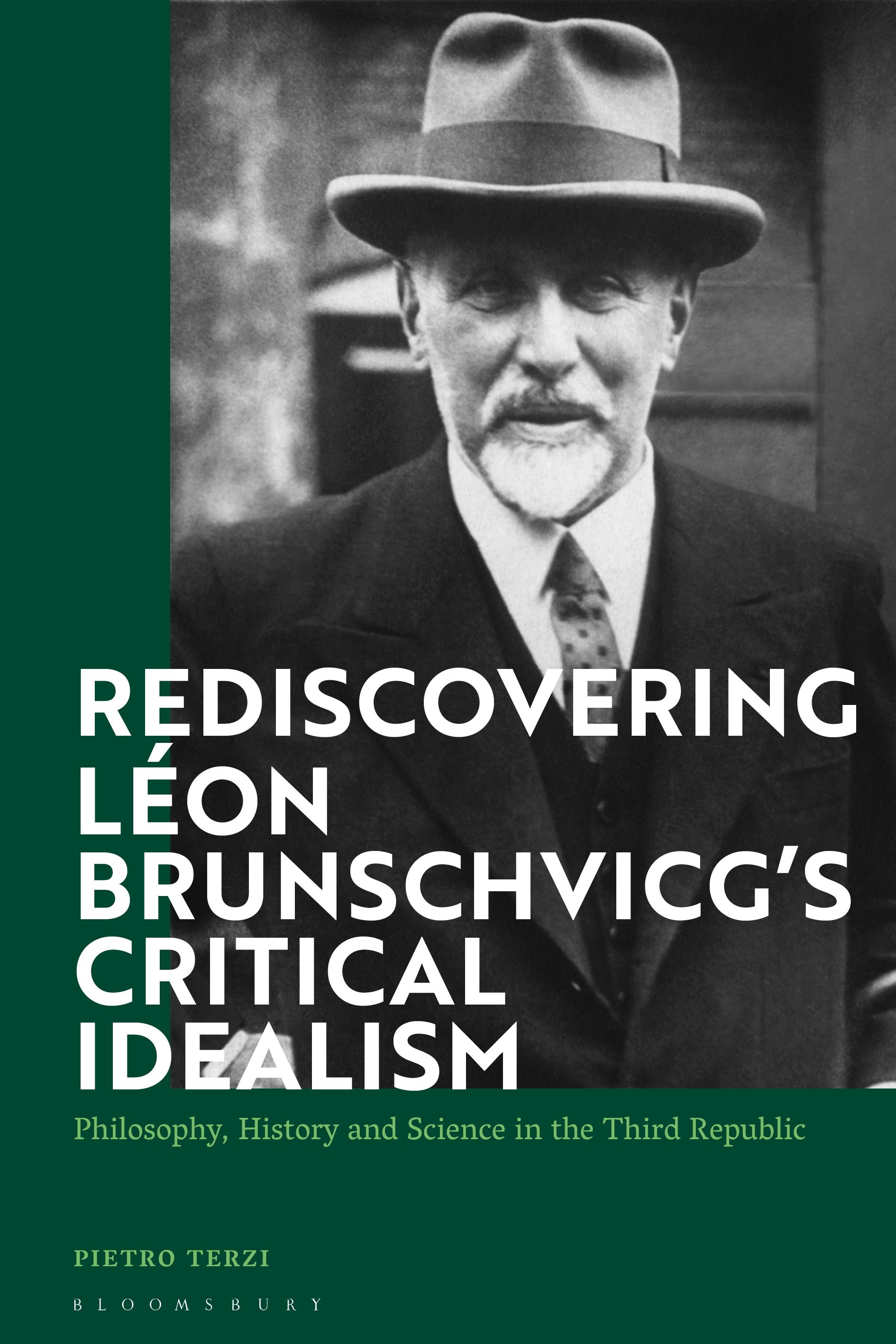
Léon Brunschvicg's contribution to philosophical thought in fin-de-siècle France receives full explication in the first English-language study on his work. Arguing that Brunschvicg is crucial to understanding the philosophical schools which took root in 20th-century France, Pietro Terzi locates Brunschvicg alongside his contemporary Henri Bergson, as well as the range of thinkers he taught and influenced, including Lévinas, Merleau-Ponty, de Beauvoir, and Sartre. Brunschvicg's deep engagement with debates concerning spiritualism and rationalism, neo-Kantian philosophy, and the role of mathematics in philosophy made him the perfect supervisor for a whole host of nascent philosophical ideas which were forming in the work of his students.
Terzi outlines Brunchvicg's defence of neo-Kantian judgement, historical analysis and the inextricability of the natural and humanist sciences to any rigorous system of philosophy, with wide-ranging implications for contemporary scholarship.
Terzi outlines Brunchvicg's defence of neo-Kantian judgement, historical analysis and the inextricability of the natural and humanist sciences to any rigorous system of philosophy, with wide-ranging implications for contemporary scholarship.
Pay easily by card, Klarna, Apple Pay or Google Pay. Not happy? You always have a 14-day money-back guarantee. Read more in our terms. If you have any questions, email us at hello@memmo.org.
Memmo makes studying easier – wherever you are in the world. We bring your course books and smart study tools together in one place: summaries, quizzes, podcasts and flashcards. Plus Ted, your study buddy who answers anything you wonder. Over 50,000 students already study here – built to help you learn faster and stress less.