
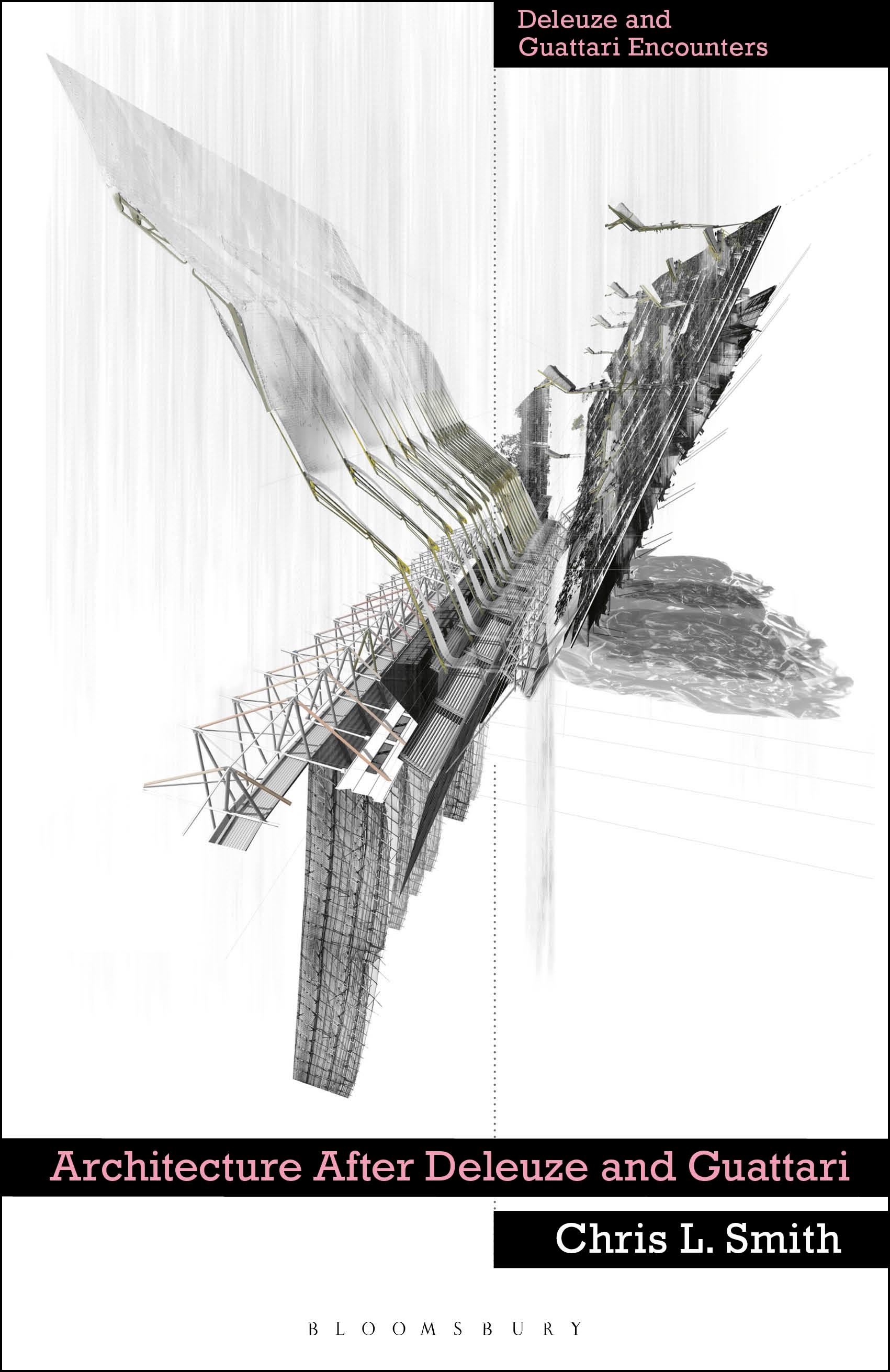
This study illuminates the complex interplay between Deleuze and Guattari's philosophy and architecture. Presenting their wide-ranging impact on late 20th- and 21st-century architecture, each chapter focuses on a core Deleuzian/Guattarian philosophical concept and one key work of architecture which evokes, contorts, or extends it.
Challenging the idea that a concept or theory defines and then produces the physical work and not vice versa, Chris L. Smith positions the relationship between Deleuze and Guattari's philosophy and the field of architecture as one that is mutually substantiating and constitutive. In this framework, modes of architectural production and experimentation become inextricable from the conceptual territories defined by these two key thinkers, producing a rigorous discussion of theoretical, practical, and experimental engagements with their ideas.
Challenging the idea that a concept or theory defines and then produces the physical work and not vice versa, Chris L. Smith positions the relationship between Deleuze and Guattari's philosophy and the field of architecture as one that is mutually substantiating and constitutive. In this framework, modes of architectural production and experimentation become inextricable from the conceptual territories defined by these two key thinkers, producing a rigorous discussion of theoretical, practical, and experimental engagements with their ideas.
Pay easily by card, Klarna, Apple Pay or Google Pay. Not happy? You always have a 14-day money-back guarantee. Read more in our terms. If you have any questions, email us at hello@memmo.org.
Memmo makes studying easier – wherever you are in the world. We bring your course books and smart study tools together in one place: summaries, quizzes, podcasts and flashcards. Plus Ted, your study buddy who answers anything you wonder. Over 75,000 students already study here – built to help you learn faster and stress less.