
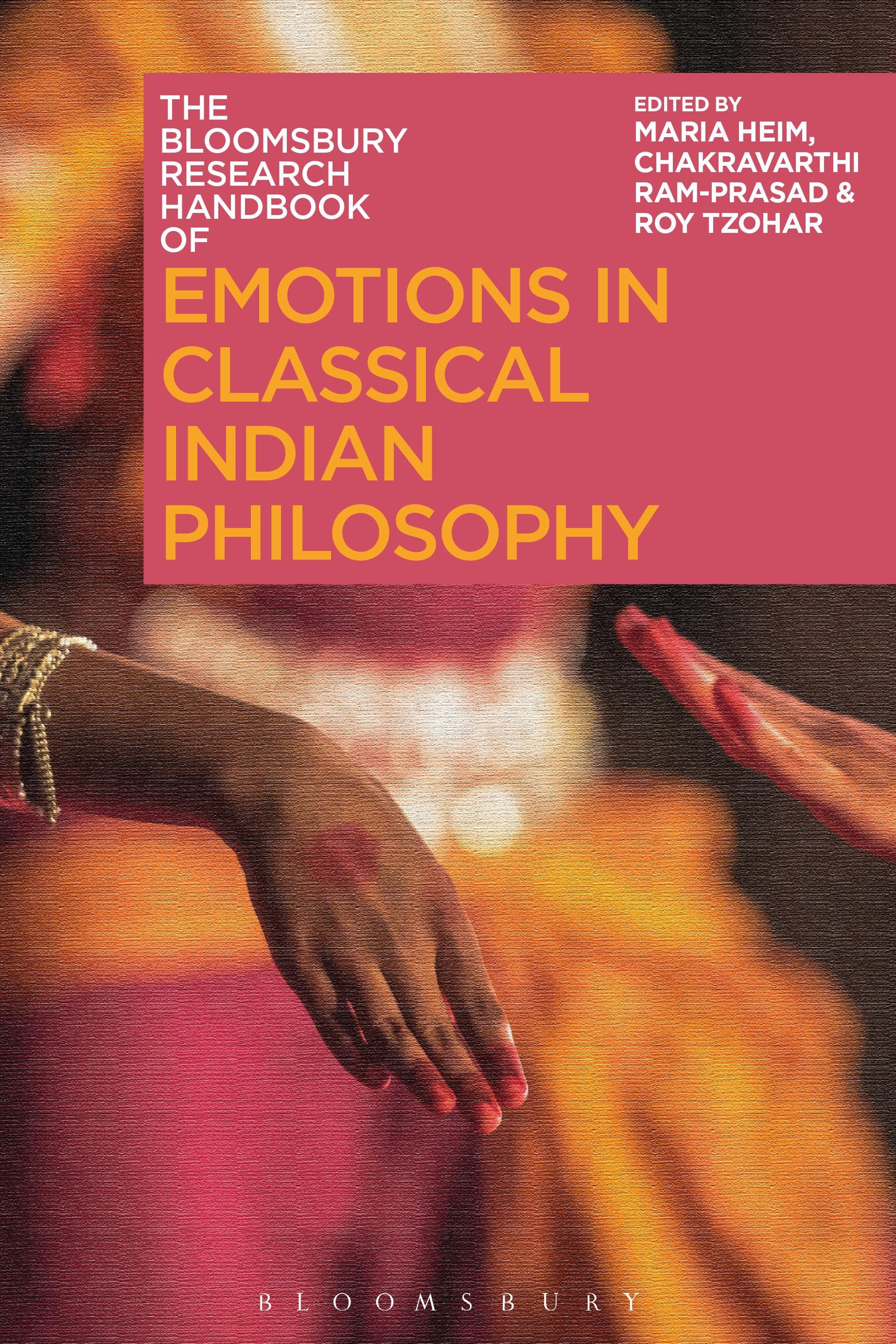
Drawing on a rich variety of premodern Indian texts across multiple traditions, genres, and languages, this collection explores how emotional experience is framed, evoked, and theorized in order to offer compelling insights into human subjectivity.
Rather than approaching emotion through the prism of Western theory, a team of leading scholars of Indian traditions showcases the literary texture, philosophical reflections, and theoretical paradigms that classical Indian sources provide in their own right. The focus is on how the texts themselves approach those dimensions of the human condition we may intuitively think of as being about emotion, without pre-judging what that might be. The result is a collection that reveals the range and diversity of phenomena that benefit from being gathered under the formal term “emotion”, but which in fact open up what such theorisation, representation, and expression might contribute to a cross-cultural understanding of this term. In doing so, these chapters contribute to a cosmopolitan, comparative, and pluralistic conception of human experience.
Adopting a broad phenomenological methodology, this handbook reframes debates on emotion within classical Indian thought and is an invaluable resource for researchers and students seeking to understand the field beyond the Western tradition.
Rather than approaching emotion through the prism of Western theory, a team of leading scholars of Indian traditions showcases the literary texture, philosophical reflections, and theoretical paradigms that classical Indian sources provide in their own right. The focus is on how the texts themselves approach those dimensions of the human condition we may intuitively think of as being about emotion, without pre-judging what that might be. The result is a collection that reveals the range and diversity of phenomena that benefit from being gathered under the formal term “emotion”, but which in fact open up what such theorisation, representation, and expression might contribute to a cross-cultural understanding of this term. In doing so, these chapters contribute to a cosmopolitan, comparative, and pluralistic conception of human experience.
Adopting a broad phenomenological methodology, this handbook reframes debates on emotion within classical Indian thought and is an invaluable resource for researchers and students seeking to understand the field beyond the Western tradition.
Pay easily by card, Klarna, Apple Pay or Google Pay. Not happy? You always have a 14-day money-back guarantee. Read more in our terms. If you have any questions, email us at hello@memmo.org.
Memmo makes studying easier – wherever you are in the world. We bring your course books and smart study tools together in one place: summaries, quizzes, podcasts and flashcards. Plus Ted, your study buddy who answers anything you wonder. Over 50,000 students already study here – built to help you learn faster and stress less.