
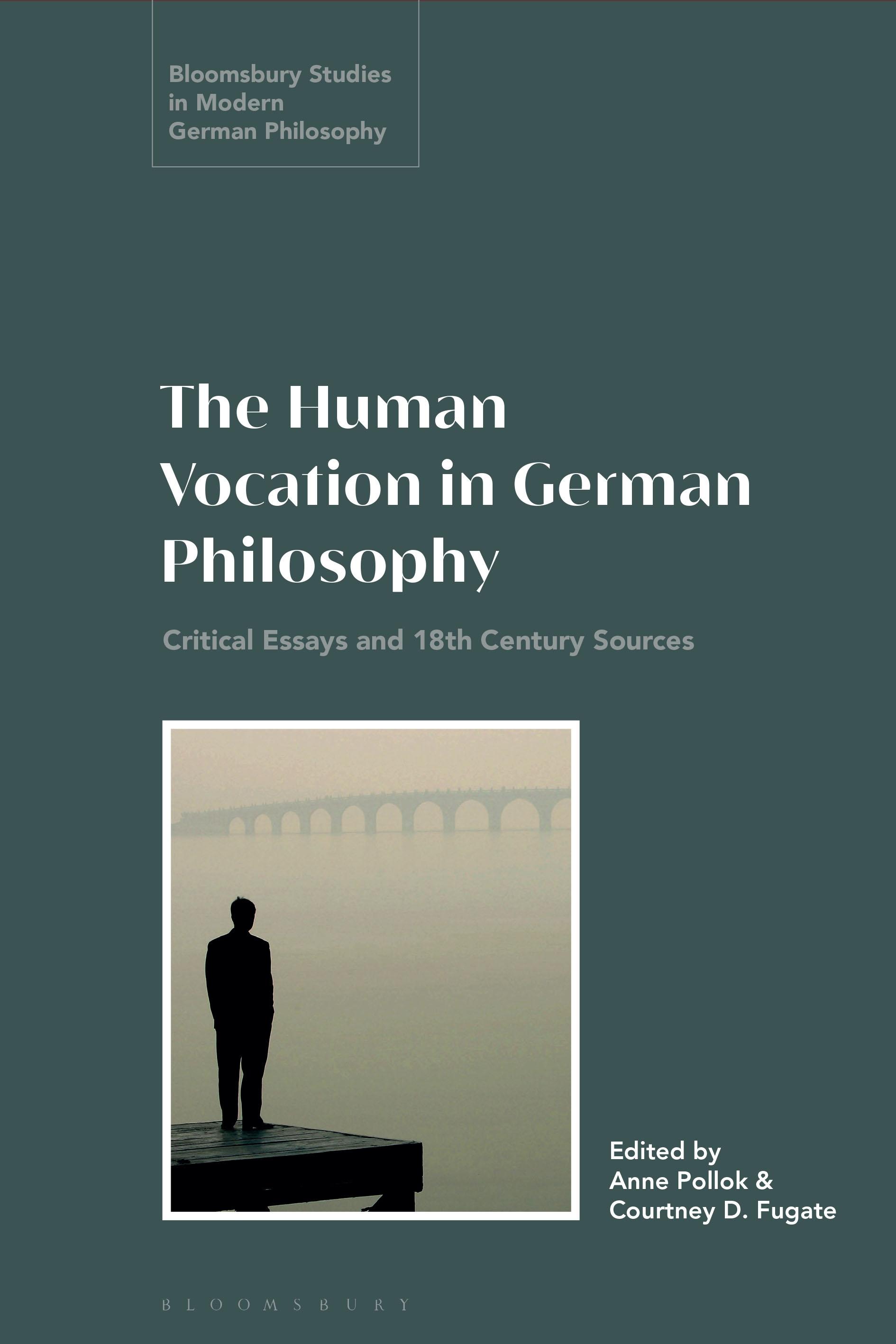
In 18th-century Germany philosophers were occupied with questions of who we are and what we should be. Can the individual fulfill its vocation or is this possible only for humanity as a whole? Is significant progress towards perfection in any way possible for me or just for me as part of humanity? By following the origin and nature of these debates, this collection sheds light on the vocation of humanity in early German philosophy.
Featuring translations of Spalding's Contemplation on the Vocation of the Human Being in its first version from 1748 and an extended translation of Abbt's and Mendelssohn's epistolary discussion around the Doubts and the Oracle from 1767, newly-commissioned chapters cover Johann Gottfried Herder's inherently cultural concept of the human being, Immanuel Kant's transformative interplay of moral and natural aspects, and the notion of metempsychosis in Fichte's work inspired by two neglected philosophers, Gotthold Ephraim Lessing and Johann Georg Schlosser. Opening further lines of inquiry, contributors address questions about the adaptations of Spalding's work that focus on the vocation of women as wife, mother or citizen.
Exploring the multitude of ways 18th-century German thinkers understand our position in the world, this volume captures major changes in metaphysics and anthropology and enriches current debates within modern philosophy.
Featuring translations of Spalding's Contemplation on the Vocation of the Human Being in its first version from 1748 and an extended translation of Abbt's and Mendelssohn's epistolary discussion around the Doubts and the Oracle from 1767, newly-commissioned chapters cover Johann Gottfried Herder's inherently cultural concept of the human being, Immanuel Kant's transformative interplay of moral and natural aspects, and the notion of metempsychosis in Fichte's work inspired by two neglected philosophers, Gotthold Ephraim Lessing and Johann Georg Schlosser. Opening further lines of inquiry, contributors address questions about the adaptations of Spalding's work that focus on the vocation of women as wife, mother or citizen.
Exploring the multitude of ways 18th-century German thinkers understand our position in the world, this volume captures major changes in metaphysics and anthropology and enriches current debates within modern philosophy.
Pay easily by card, Klarna, Apple Pay or Google Pay. Not happy? You always have a 14-day money-back guarantee. Read more in our terms. If you have any questions, email us at hello@memmo.org.
Memmo makes studying easier – wherever you are in the world. We bring your course books and smart study tools together in one place: summaries, quizzes, podcasts and flashcards. Plus Ted, your study buddy who answers anything you wonder. Over 50,000 students already study here – built to help you learn faster and stress less.