
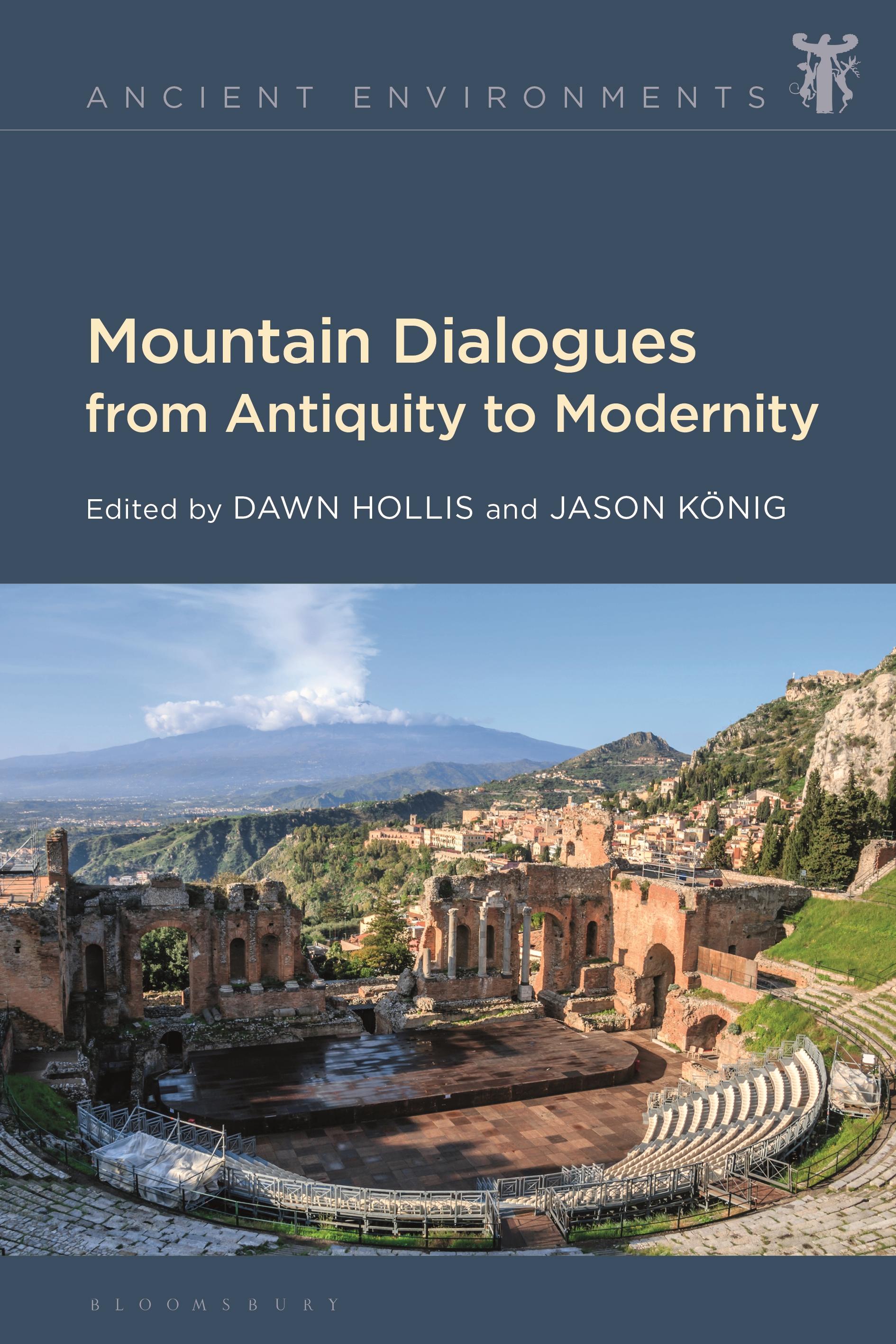
Throughout the longue dureé of Western culture, how have people represented mountains as landscapes of the imagination and as places of real experience? In what ways has human understanding of mountains changed – or stayed the same?
Mountain Dialogues from Antiquity to Modernity opens up a new conversation between ancient and modern engagements with mountains. It highlights the ongoing relevance of ancient understandings of mountain environments to the postclassical and present-day world, while also suggesting ways in which modern approaches to landscape can generate new questions about premodern responses. It brings together experts from across many different disciplines and periods, offering case studies on topics ranging from classical Greek drama to Renaissance art, and from early modern natural philosophy to nineteenth-century travel writing. Throughout, essays engage with key themes of temporality, knowledge, identity, and experience in the mountain landscape.
As a whole, the volume suggests that modern responses to mountains participate in rhetorical and experiential patterns that stretch right back to the ancient Mediterranean. It also makes the case for collaborative, cross-period research as a route both for understanding human relations with the natural world in the past, and informing them in the present.
Mountain Dialogues from Antiquity to Modernity opens up a new conversation between ancient and modern engagements with mountains. It highlights the ongoing relevance of ancient understandings of mountain environments to the postclassical and present-day world, while also suggesting ways in which modern approaches to landscape can generate new questions about premodern responses. It brings together experts from across many different disciplines and periods, offering case studies on topics ranging from classical Greek drama to Renaissance art, and from early modern natural philosophy to nineteenth-century travel writing. Throughout, essays engage with key themes of temporality, knowledge, identity, and experience in the mountain landscape.
As a whole, the volume suggests that modern responses to mountains participate in rhetorical and experiential patterns that stretch right back to the ancient Mediterranean. It also makes the case for collaborative, cross-period research as a route both for understanding human relations with the natural world in the past, and informing them in the present.
Pay easily by card, Klarna, Apple Pay or Google Pay. Not happy? You always have a 14-day money-back guarantee. Read more in our terms. If you have any questions, email us at hello@memmo.org.
Memmo makes studying easier – wherever you are in the world. We bring your course books and smart study tools together in one place: summaries, quizzes, podcasts and flashcards. Plus Ted, your study buddy who answers anything you wonder. Over 75,000 students already study here – built to help you learn faster and stress less.