
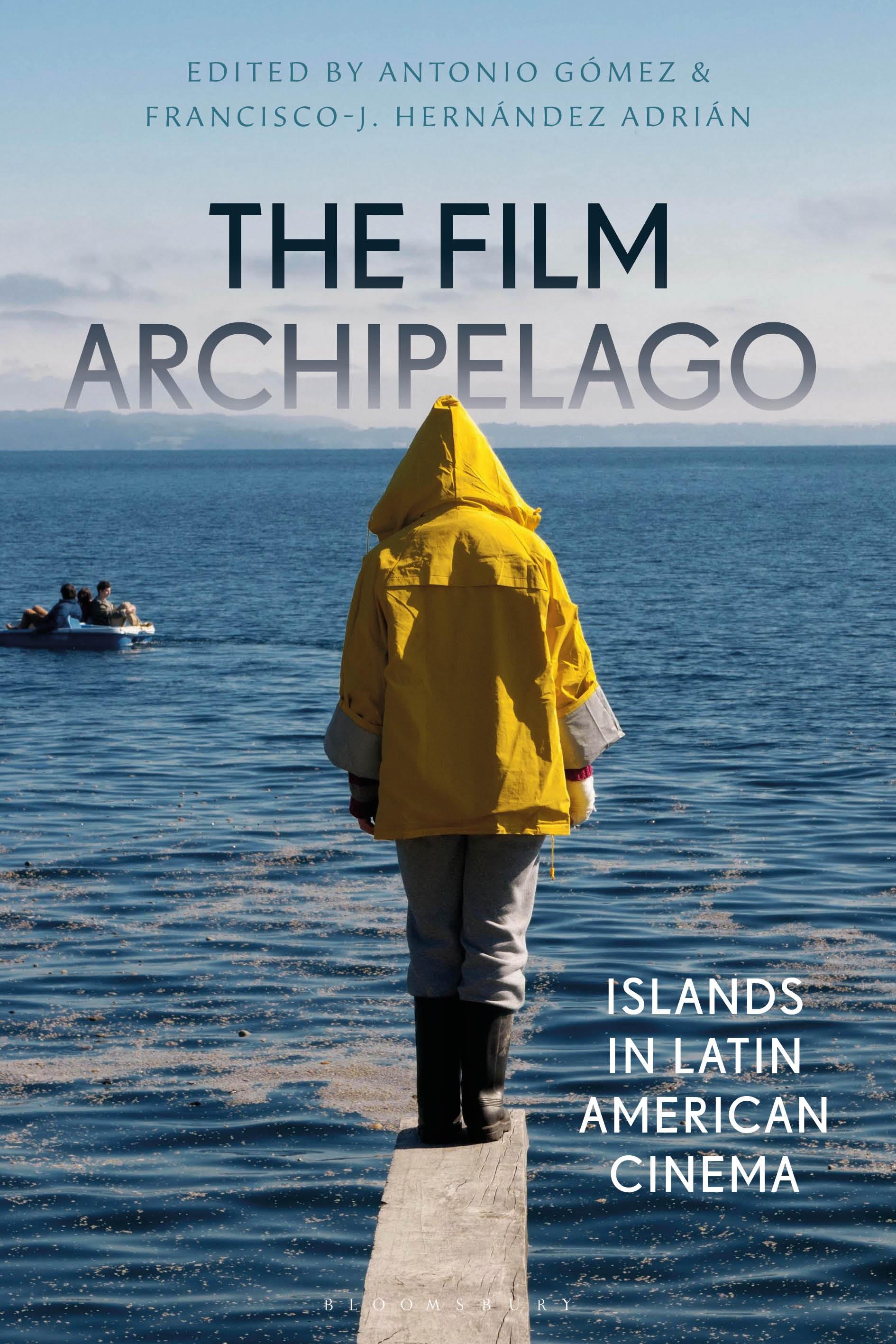
How do the islands and archipelagos of the New World figure in Latin American cinema? Comprising 15 essays and a critical introduction, The Film Archipelago: Islands in Latin American Cinema addresses this question by examining a series of intersections between insular spaces and filmmaking in Latin America. The volume brings together international scholars and filmmakers to consider a diverse corpus of films about islands, films that take place on islands, films produced in islands, and films that problematise islands.
The book explores a diverse range of films that extend from the Chilean documentaries of Patricio Guzmán to work on the Malvinas/Falkland Islands, and films by Argentine directors Gustavo Fontán and Lucrecia Martel. Chapters focus on Rapa Nui (Easter Island), the Mexican Islas Marías, and the Panamanian Caribbean; on ecocritical, environmental and film historical aspects of Brazilian and Argentine river islands; and on Cuban, Guadeloupean, Haitian, and Puerto Rican contexts.
The Film Archipelago argues that the islands and archipelagos of Latin American cinema constitute a critically interesting, analytically complex, and historically suggestive angle to explore issues of marginality and peripherality, remoteness and isolation, and fragility and dependency. As a whole, the collection demonstrates to what extent the combined insular and archipelagic lens can re-frame and re-figure both longstanding and recent discussions on the spaces of Latin American cinema.
The book explores a diverse range of films that extend from the Chilean documentaries of Patricio Guzmán to work on the Malvinas/Falkland Islands, and films by Argentine directors Gustavo Fontán and Lucrecia Martel. Chapters focus on Rapa Nui (Easter Island), the Mexican Islas Marías, and the Panamanian Caribbean; on ecocritical, environmental and film historical aspects of Brazilian and Argentine river islands; and on Cuban, Guadeloupean, Haitian, and Puerto Rican contexts.
The Film Archipelago argues that the islands and archipelagos of Latin American cinema constitute a critically interesting, analytically complex, and historically suggestive angle to explore issues of marginality and peripherality, remoteness and isolation, and fragility and dependency. As a whole, the collection demonstrates to what extent the combined insular and archipelagic lens can re-frame and re-figure both longstanding and recent discussions on the spaces of Latin American cinema.
Pay easily by card, Klarna, Apple Pay or Google Pay. Not happy? You always have a 14-day money-back guarantee. Read more in our terms. If you have any questions, email us at hello@memmo.org.
Memmo makes studying easier – wherever you are in the world. We bring your course books and smart study tools together in one place: summaries, quizzes, podcasts and flashcards. Plus Ted, your study buddy who answers anything you wonder. Over 50,000 students already study here – built to help you learn faster and stress less.