
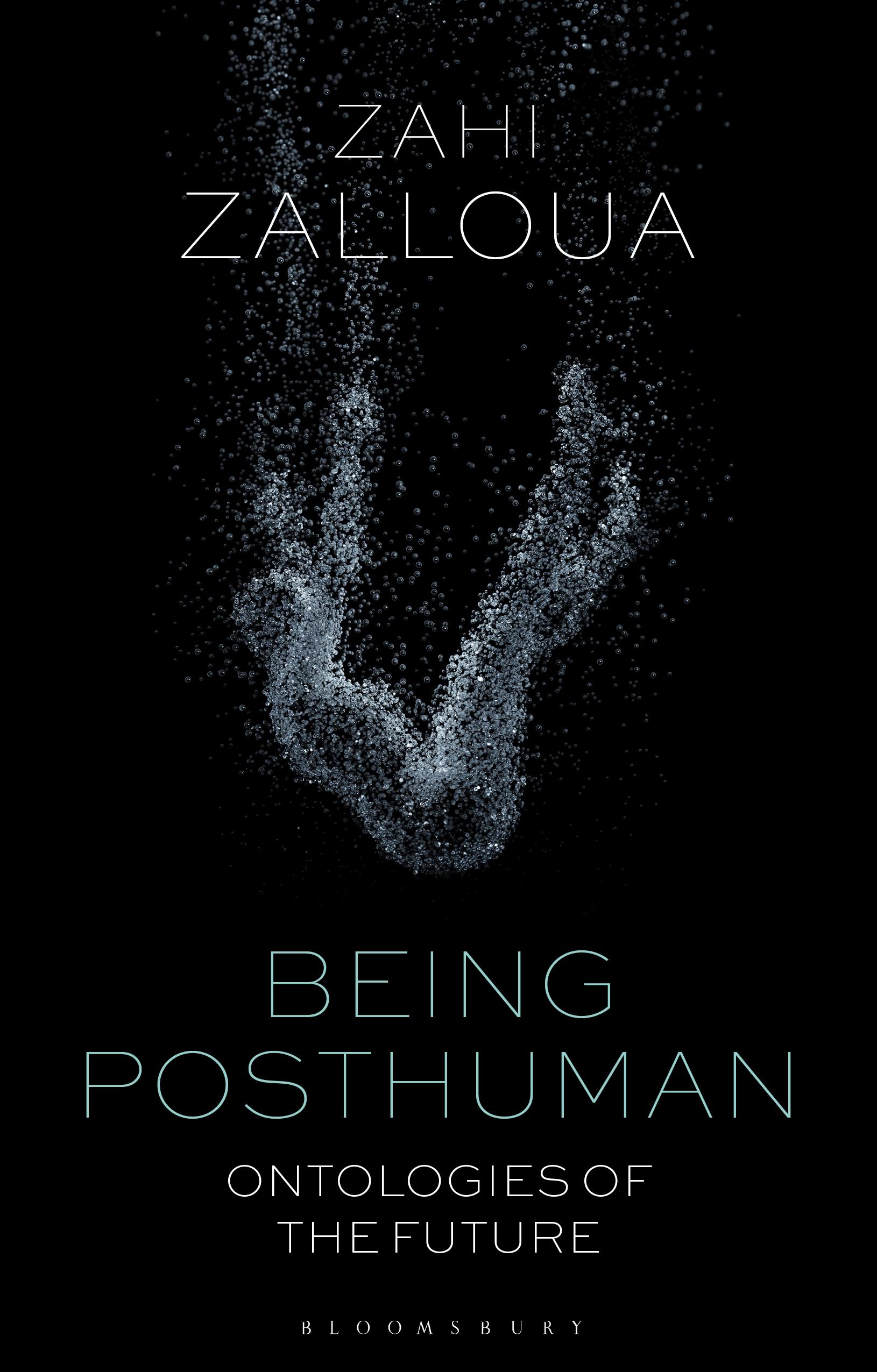
Posthumanism is both a descriptive and a prescriptive term. Firstly, it registers a shift beginning in the late 1960s and epitomized by Foucault's “the death of Man”. Secondly, it refers to the future and a new relationship with the non-human, along with a different understanding of human exceptionalism.
In Being Posthuman: Ontologies of the Future, Zahi Zalloua interrogates this future and shows that “post-” does not necessarily mean 'after' or that what comes after is more advanced than what has gone before. He pursues this line of inquiry across four distinct, yet interrelated, figures: cyborgs, animals, objects, and racialized and excluded 'others'. These figures disrupt the narrative of the 'human' and its singularity and by reading them together, Zalloua determines that it is only when posthumanist discourse is combined with psychoanalysis that subjectivity can be properly examined.
In Being Posthuman: Ontologies of the Future, Zahi Zalloua interrogates this future and shows that “post-” does not necessarily mean 'after' or that what comes after is more advanced than what has gone before. He pursues this line of inquiry across four distinct, yet interrelated, figures: cyborgs, animals, objects, and racialized and excluded 'others'. These figures disrupt the narrative of the 'human' and its singularity and by reading them together, Zalloua determines that it is only when posthumanist discourse is combined with psychoanalysis that subjectivity can be properly examined.
Pay easily by card, Klarna, Apple Pay or Google Pay. Not happy? You always have a 14-day money-back guarantee. Read more in our terms. If you have any questions, email us at hello@memmo.org.
Memmo makes studying easier – wherever you are in the world. We bring your course books and smart study tools together in one place: summaries, quizzes, podcasts and flashcards. Plus Ted, your study buddy who answers anything you wonder. Over 50,000 students already study here – built to help you learn faster and stress less.