
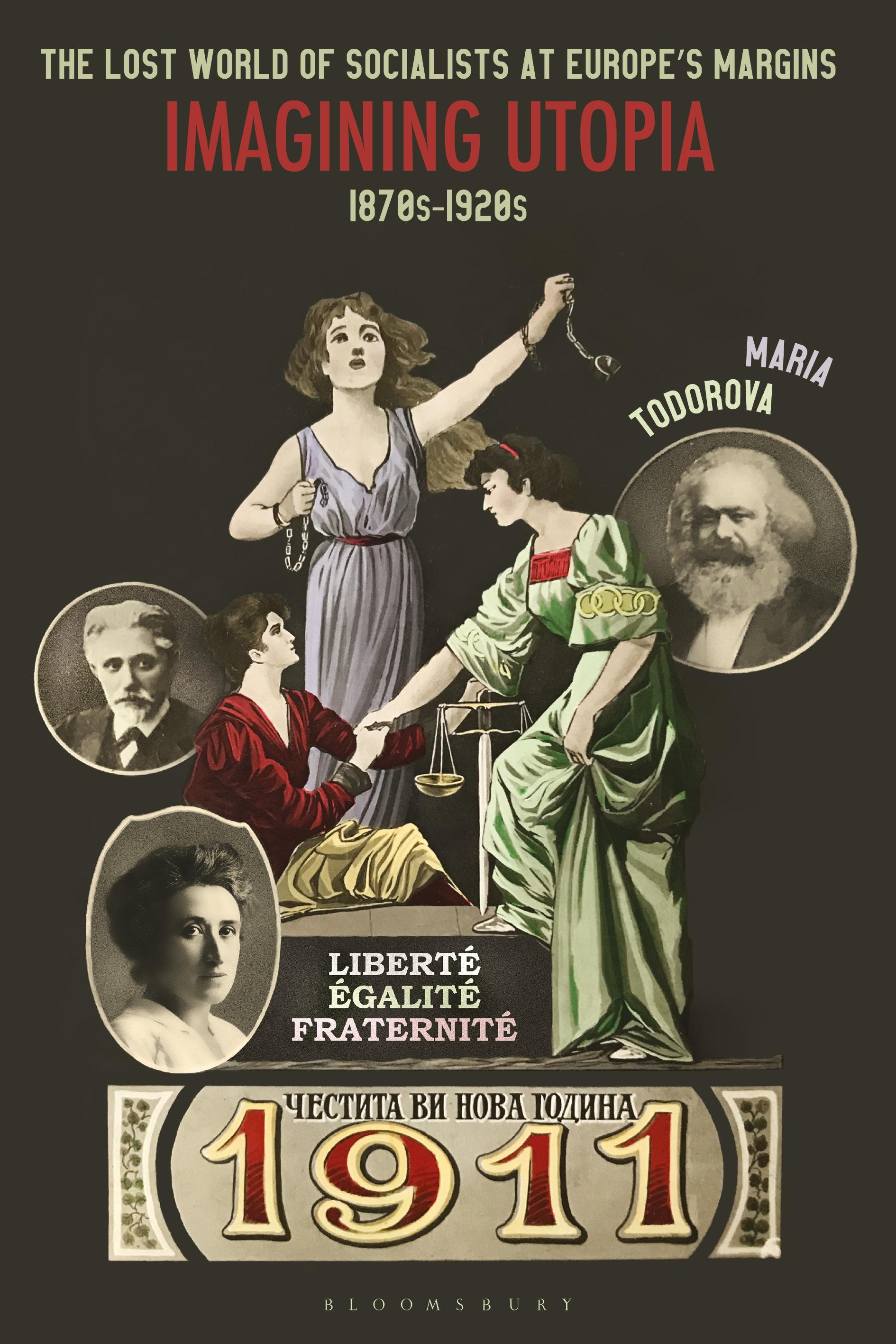
Maria Todorova's book is devoted to the 'golden age' of the socialist idea, broadly surveying the period in and around the time of the Second International. It critically examines the promise for an alternative socialist utopia from 1870 to the 1920s. Todorova brings in the experience of the periphery in a comparative context in the belief that the margins can often elucidate better the character of a phenomenon, and de-provincialize it from essentialist notions. In doing so, The Lost World of Socialists at Europe's Margins moves beyond the traditional historiographical emphasis on ideology by looking at different intersections or entanglements of spaces, generations, genders, ideas and feelings, and different flows of historical time.
The study provides a social and cultural history of early socialism in Eastern Europe with an emphasis on Bulgaria, arguably the country with the earliest and strongest socialist movement in Southeast Europe, and one that had a unique relationship to both German and Russian social democracy. Based on a rich prosopographical database of around 3500 biographies of people born in the 19th century, the book addresses the interplay of several generations of leftists, looking at the specifics of how ideas were generated, received, transferred and transformed. Finally, the work investigates the intersection between subjectivity and memory as reflected in a unique cache of archival materials containing over 4000 documentary sources including diaries, oral interviews, and unpublished memoirs. A microhistorical approach to this material allows the reconstruction of 'structures of feeling' that inspired an exceptional group of individuals.
The study provides a social and cultural history of early socialism in Eastern Europe with an emphasis on Bulgaria, arguably the country with the earliest and strongest socialist movement in Southeast Europe, and one that had a unique relationship to both German and Russian social democracy. Based on a rich prosopographical database of around 3500 biographies of people born in the 19th century, the book addresses the interplay of several generations of leftists, looking at the specifics of how ideas were generated, received, transferred and transformed. Finally, the work investigates the intersection between subjectivity and memory as reflected in a unique cache of archival materials containing over 4000 documentary sources including diaries, oral interviews, and unpublished memoirs. A microhistorical approach to this material allows the reconstruction of 'structures of feeling' that inspired an exceptional group of individuals.
Pay easily by card, Klarna, Apple Pay or Google Pay. Not happy? You always have a 14-day money-back guarantee. Read more in our terms. If you have any questions, email us at hello@memmo.org.
Memmo makes studying easier – wherever you are in the world. We bring your course books and smart study tools together in one place: summaries, quizzes, podcasts and flashcards. Plus Ted, your study buddy who answers anything you wonder. Over 50,000 students already study here – built to help you learn faster and stress less.