
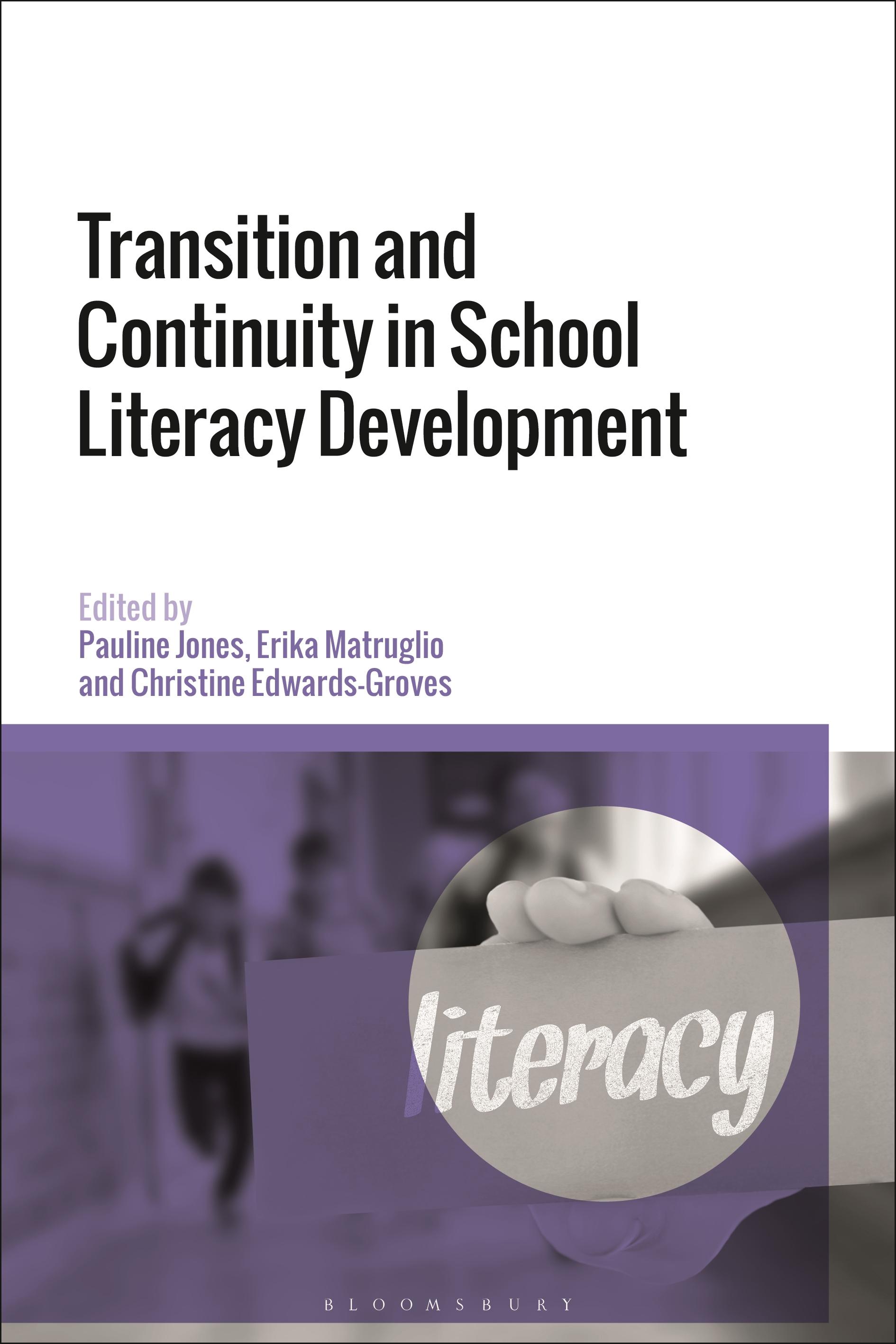
This book addresses a significant gap in the research literature on transitions across the school years: the continuities and discontinuities in school literacy education and their implications for practice. Across different curriculum domains, and using social semiotic, ethnographic, and conversation-analytic approaches, the contributors investigate key transition points for individual students' literacy development, elements of literacy knowledge that are at stake at each of these points, and variability in students' experiences. Grounding its discussion in classroom voices, experiences and texts, this book reveals literacy-specific curriculum demands and considers how teachers and students experience and account for these evolving demands.
The contributors include a number of established names (such as Freebody, Derewianka, Myhill, Rowsell, Moje and Lefstein), as well as emerging scholars gaining increasing recognition in the field. They draw out implications for how literacy development is theorized in school curriculum and practice, teacher education, further research and policy formation. In addition, each section of the book features a summary from an international scholar who draws together key ideas from the section and relates these to their current thinking. They deploy a range of different theoretical and methodological approaches in order to bring rich yet complementary perspectives to bear on the issue of literacy transition.
The contributors include a number of established names (such as Freebody, Derewianka, Myhill, Rowsell, Moje and Lefstein), as well as emerging scholars gaining increasing recognition in the field. They draw out implications for how literacy development is theorized in school curriculum and practice, teacher education, further research and policy formation. In addition, each section of the book features a summary from an international scholar who draws together key ideas from the section and relates these to their current thinking. They deploy a range of different theoretical and methodological approaches in order to bring rich yet complementary perspectives to bear on the issue of literacy transition.
Pay easily by card, Klarna, Apple Pay or Google Pay. Not happy? You always have a 14-day money-back guarantee. Read more in our terms. If you have any questions, email us at hello@memmo.org.
Memmo makes studying easier – wherever you are in the world. We bring your course books and smart study tools together in one place: summaries, quizzes, podcasts and flashcards. Plus Ted, your study buddy who answers anything you wonder. Over 50,000 students already study here – built to help you learn faster and stress less.