
Shortlisted for the Architects Sweden Critic's Award 2023
Scholars in architectural and urban history have, over the last decade, been trying to come to terms with architecture's 'neoliberal turn' and its various impacts - from municipal policy to the artistic imagination. However most scholarship has focussed on generalizations, with very little work to date focussing on specific cases.
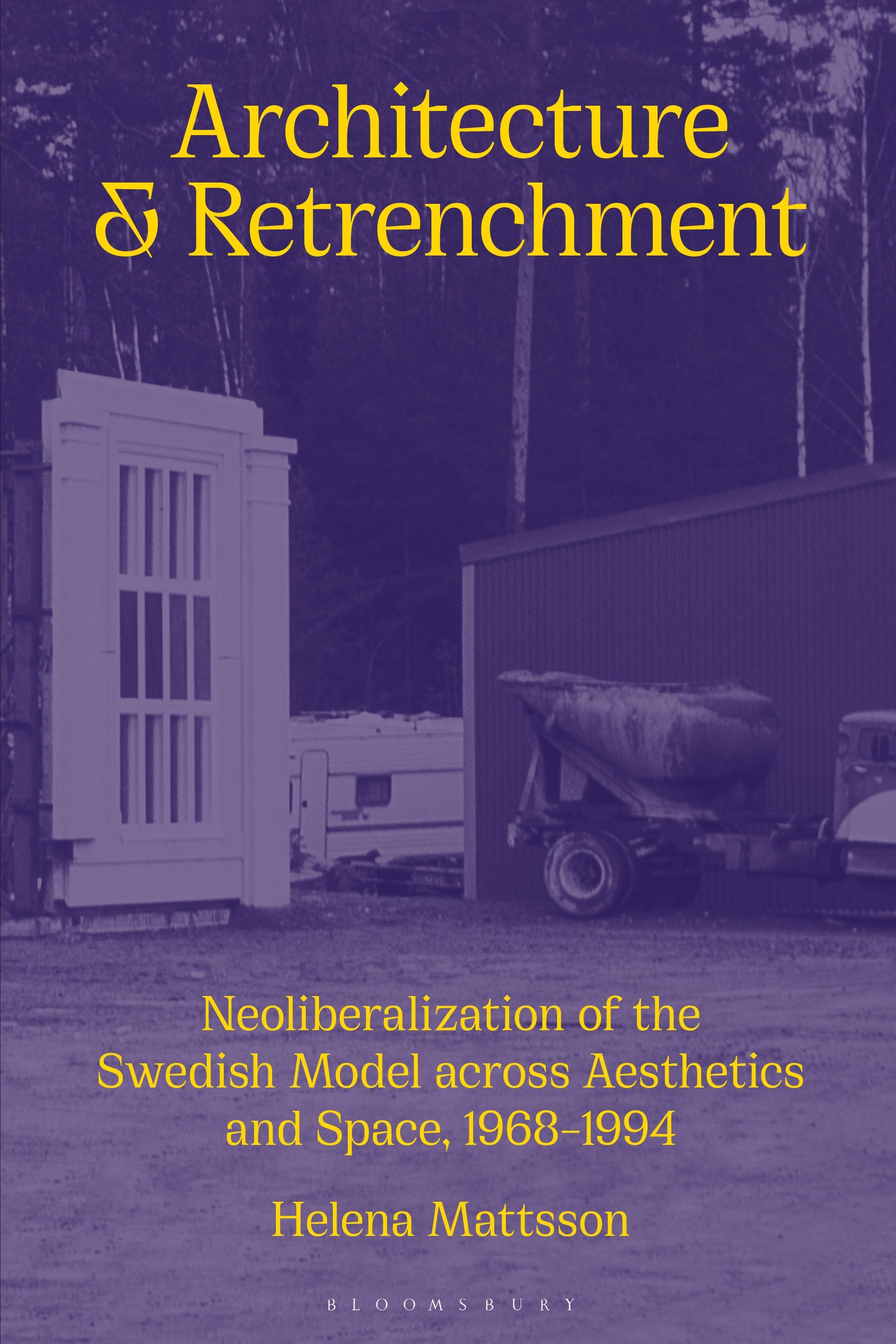
Architecture and Retrenchment brings one such case to the fore – investigating the relation between architecture and the Swedish Model of the welfare state. It tracks the response of architecture to the gradual retrenchment and ultimate dismantling of the Swedish welfare state – which was, in its heyday, world-famous for its integration of architecture and the built environment into the welfare system. Ultimately, neoliberal economics prevailed, yet this book reveals how new architectural strategies and techniques were developed in order to protect the agency of architecture in the newly reorganised society of the 1980s and 1990s.
Through eight in-depth case-studies, the book situates the often abstract, generalised discourse of neoliberalism and privatisation in specific architectural sites, and provides an original interpretation of how architecture, space, aesthetics, and politics converged at the end of the twentieth century.
Scholars in architectural and urban history have, over the last decade, been trying to come to terms with architecture's 'neoliberal turn' and its various impacts - from municipal policy to the artistic imagination. However most scholarship has focussed on generalizations, with very little work to date focussing on specific cases.
Architecture and Retrenchment brings one such case to the fore – investigating the relation between architecture and the Swedish Model of the welfare state. It tracks the response of architecture to the gradual retrenchment and ultimate dismantling of the Swedish welfare state – which was, in its heyday, world-famous for its integration of architecture and the built environment into the welfare system. Ultimately, neoliberal economics prevailed, yet this book reveals how new architectural strategies and techniques were developed in order to protect the agency of architecture in the newly reorganised society of the 1980s and 1990s.
Through eight in-depth case-studies, the book situates the often abstract, generalised discourse of neoliberalism and privatisation in specific architectural sites, and provides an original interpretation of how architecture, space, aesthetics, and politics converged at the end of the twentieth century.
Pay easily by card, Klarna, Apple Pay or Google Pay. Not happy? You always have a 14-day money-back guarantee. Read more in our terms. If you have any questions, email us at hello@memmo.org.
Memmo makes studying easier – wherever you are in the world. We bring your course books and smart study tools together in one place: summaries, quizzes, podcasts and flashcards. Plus Ted, your study buddy who answers anything you wonder. Over 50,000 students already study here – built to help you learn faster and stress less.