
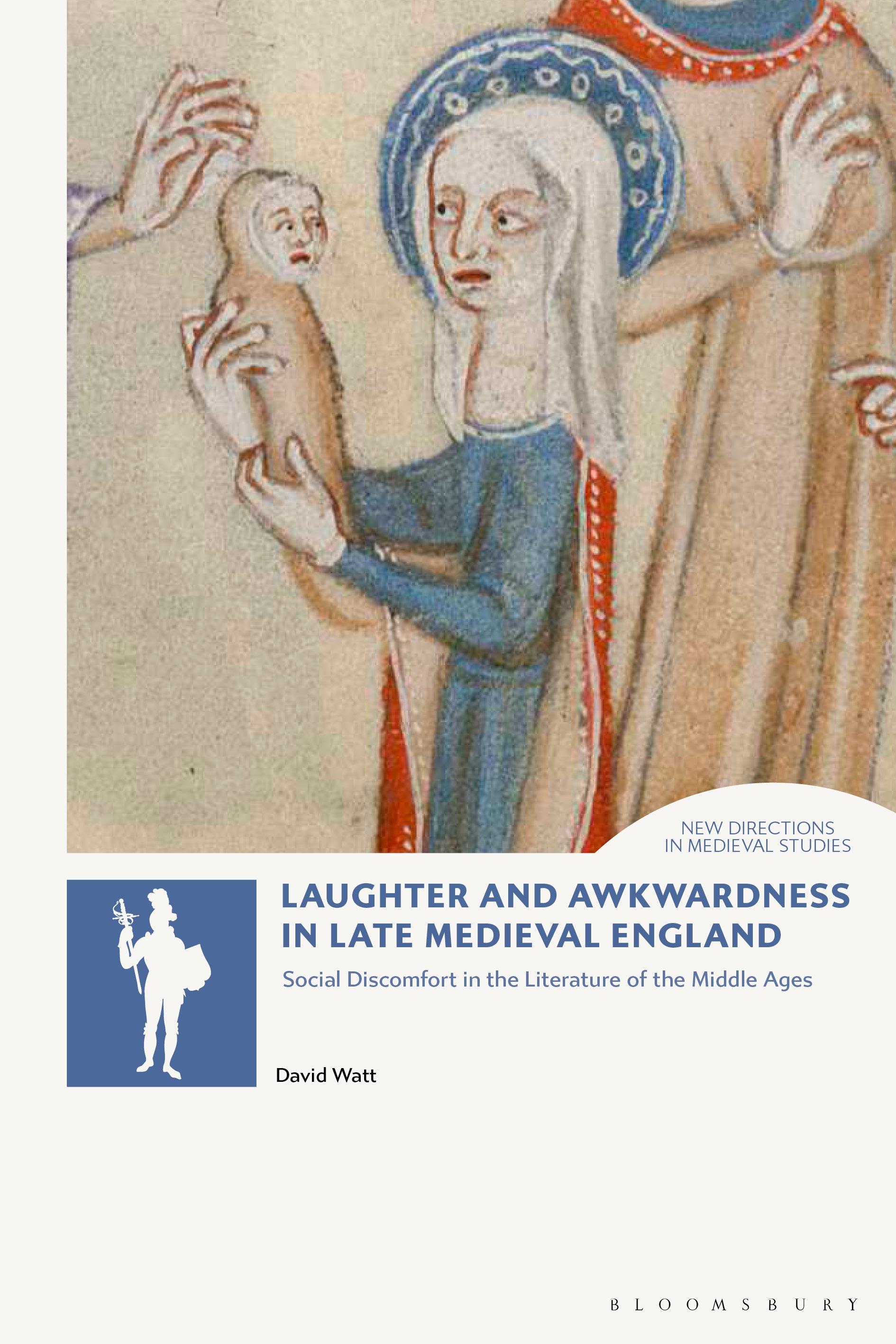
'We live,' according to Adam Kotsko, 'in an awkward age.' While this condition may present some challenges, it may also help us to be more attuned to awkwardness in other ages. This book pairs medieval texts with twenty-first century films or television programmes to explore what the resonance between them can tell us about living together in an awkward age.
In this nuanced and engaging study, David Watt focuses especially, but not exclusively, on the 15th century, which seems to intervene awkwardly in the literary trajectory between Chaucer and the Renaissance. This book's hypothesis is that the social discomfort depicted and engendered by writers as diverse as Thomas Hoccleve, Margery Kempe, and Sir Thomas Malory is a feature rather than a flaw. Laughter and Awkwardness in Late Medieval England explains that these authors have a great deal in common with other fifteenth-century authors, who generated embodied experiences of social discomfort in a range of genres by adopting and adapting literary techniques used by their predecessors and successors in slightly different ways. Like the twenty-first century texts with which they are paired, the late-medieval texts that feature in this book use the relationship between laughter and awkwardness to ask what it means to live with each other and how we can learn to live with ourselves.
In this nuanced and engaging study, David Watt focuses especially, but not exclusively, on the 15th century, which seems to intervene awkwardly in the literary trajectory between Chaucer and the Renaissance. This book's hypothesis is that the social discomfort depicted and engendered by writers as diverse as Thomas Hoccleve, Margery Kempe, and Sir Thomas Malory is a feature rather than a flaw. Laughter and Awkwardness in Late Medieval England explains that these authors have a great deal in common with other fifteenth-century authors, who generated embodied experiences of social discomfort in a range of genres by adopting and adapting literary techniques used by their predecessors and successors in slightly different ways. Like the twenty-first century texts with which they are paired, the late-medieval texts that feature in this book use the relationship between laughter and awkwardness to ask what it means to live with each other and how we can learn to live with ourselves.
Pay easily by card, Klarna, Apple Pay or Google Pay. Not happy? You always have a 14-day money-back guarantee. Read more in our terms. If you have any questions, email us at hello@memmo.org.
Memmo makes studying easier – wherever you are in the world. We bring your course books and smart study tools together in one place: summaries, quizzes, podcasts and flashcards. Plus Ted, your study buddy who answers anything you wonder. Over 50,000 students already study here – built to help you learn faster and stress less.