
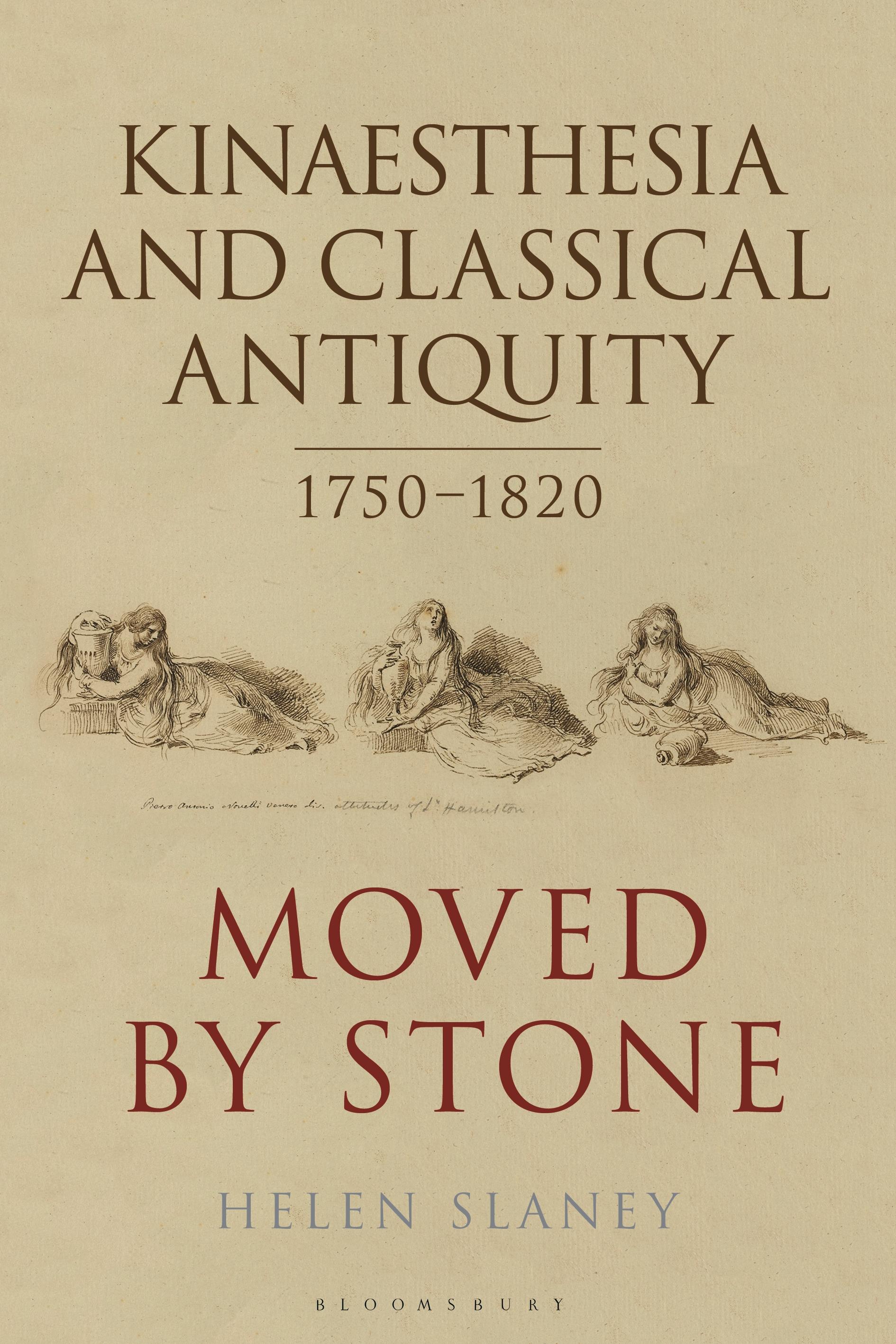
This book argues that touch and movement played a significant role, long overlooked, in generating perceptions of ancient material culture in the late 18th century. At this time the reception of classical antiquity had been transformed. Interactions with material culture – ruins, sculpture, and artefacts – formed the core of this transformation. Some such interactions were proto-archaeological, such as the Dilettanti expeditions to Athens and Asa Minor; others were touristic, seen in the guidebooks consulted by travellers to Rome and the diaries they composed; and others creative, resulting in novels, poetry, and dance performances. Some involved the reproduction of experience in a gallery or museum setting. What all encounters with ancient material culture had in common, however, is their haptic sensory basis.
The sense typically associated with the Enlightenment is vision, but this has obscured the equally important contribution made by touch and movement to the way in which a newly materialised Graeco-Roman world was perceived. Kinaesthesia, or the sense of self-movement, is rarely recognised in its own right, but because all encounters with sites and objects are embodied, and all embodiment takes place in motion, this sense is vital to forming more abstract or imaginative impressions. Theories of embodied cognition propose that all intellectual processes are also physical. This book shows how ideas about classical antiquity in the volatile milieu of the late 18th century developed as a result of diverse kinaesthetic relationships.
The sense typically associated with the Enlightenment is vision, but this has obscured the equally important contribution made by touch and movement to the way in which a newly materialised Graeco-Roman world was perceived. Kinaesthesia, or the sense of self-movement, is rarely recognised in its own right, but because all encounters with sites and objects are embodied, and all embodiment takes place in motion, this sense is vital to forming more abstract or imaginative impressions. Theories of embodied cognition propose that all intellectual processes are also physical. This book shows how ideas about classical antiquity in the volatile milieu of the late 18th century developed as a result of diverse kinaesthetic relationships.
Pay easily by card, Klarna, Apple Pay or Google Pay. Not happy? You always have a 14-day money-back guarantee. Read more in our terms. If you have any questions, email us at hello@memmo.org.
Memmo makes studying easier – wherever you are in the world. We bring your course books and smart study tools together in one place: summaries, quizzes, podcasts and flashcards. Plus Ted, your study buddy who answers anything you wonder. Over 75,000 students already study here – built to help you learn faster and stress less.