
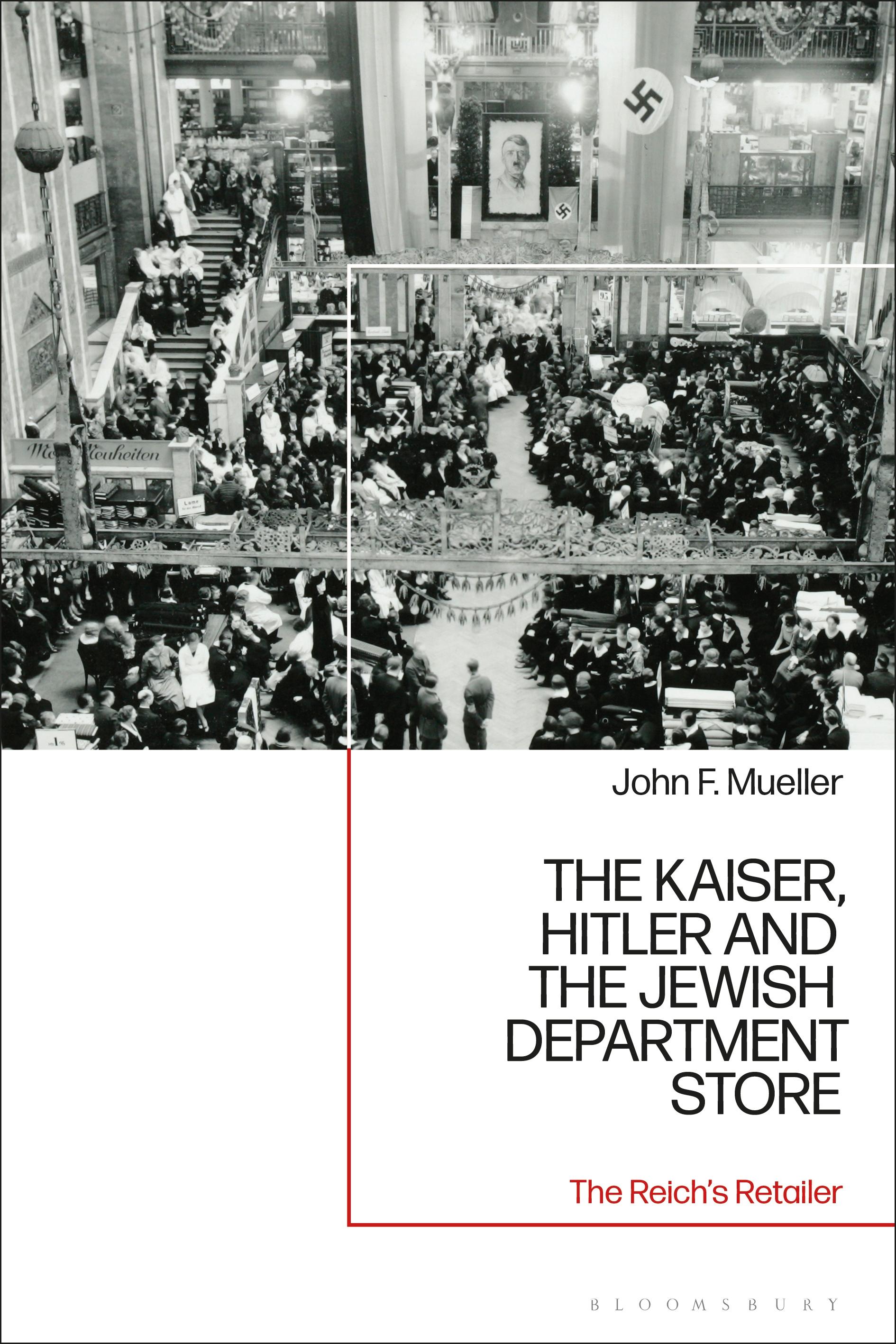
From the emergence of department stores in the late 19th century to the financial disasters of the years following the end of World War I, the history of large-scale retailing in Germany was dominated by a pioneering generation of German-Jewish entrepreneurs who found fortune and influence only to have their livelihoods taken by Hitler and the Nazis in the 1930s.
Drawing on a range of archival sources and private collections, The Kaiser, Hitler and the Jewish Department Store reveals how, contrary to Nazi claims, Jewish-owned department stores were decent employers, popular with customers, and well integrated into the economy. In fact, such institutions were so integral to German society that, when Hitler came to power in 1933, the Nazis were forced to abandon their pledge to abolish them. As this revelatory history argues, the end of the Jewish-run store cannot solely be attributed to the rise of antisemitism: it was also the consequence of financial mismanagement and the indifference of the German people.
John F. Mueller reveals the German-Jewish department store as a powerful force in society and politics as well as a leader in architecture and design. His book challenges common assumptions about the relationship between consumer culture, the German-Jewish business community and the rise of Nazism, providing fresh insights into the social history of modern Germany.
Drawing on a range of archival sources and private collections, The Kaiser, Hitler and the Jewish Department Store reveals how, contrary to Nazi claims, Jewish-owned department stores were decent employers, popular with customers, and well integrated into the economy. In fact, such institutions were so integral to German society that, when Hitler came to power in 1933, the Nazis were forced to abandon their pledge to abolish them. As this revelatory history argues, the end of the Jewish-run store cannot solely be attributed to the rise of antisemitism: it was also the consequence of financial mismanagement and the indifference of the German people.
John F. Mueller reveals the German-Jewish department store as a powerful force in society and politics as well as a leader in architecture and design. His book challenges common assumptions about the relationship between consumer culture, the German-Jewish business community and the rise of Nazism, providing fresh insights into the social history of modern Germany.
Pay easily by card, Klarna, Apple Pay or Google Pay. Not happy? You always have a 14-day money-back guarantee. Read more in our terms. If you have any questions, email us at hello@memmo.org.
Memmo makes studying easier – wherever you are in the world. We bring your course books and smart study tools together in one place: summaries, quizzes, podcasts and flashcards. Plus Ted, your study buddy who answers anything you wonder. Over 50,000 students already study here – built to help you learn faster and stress less.