
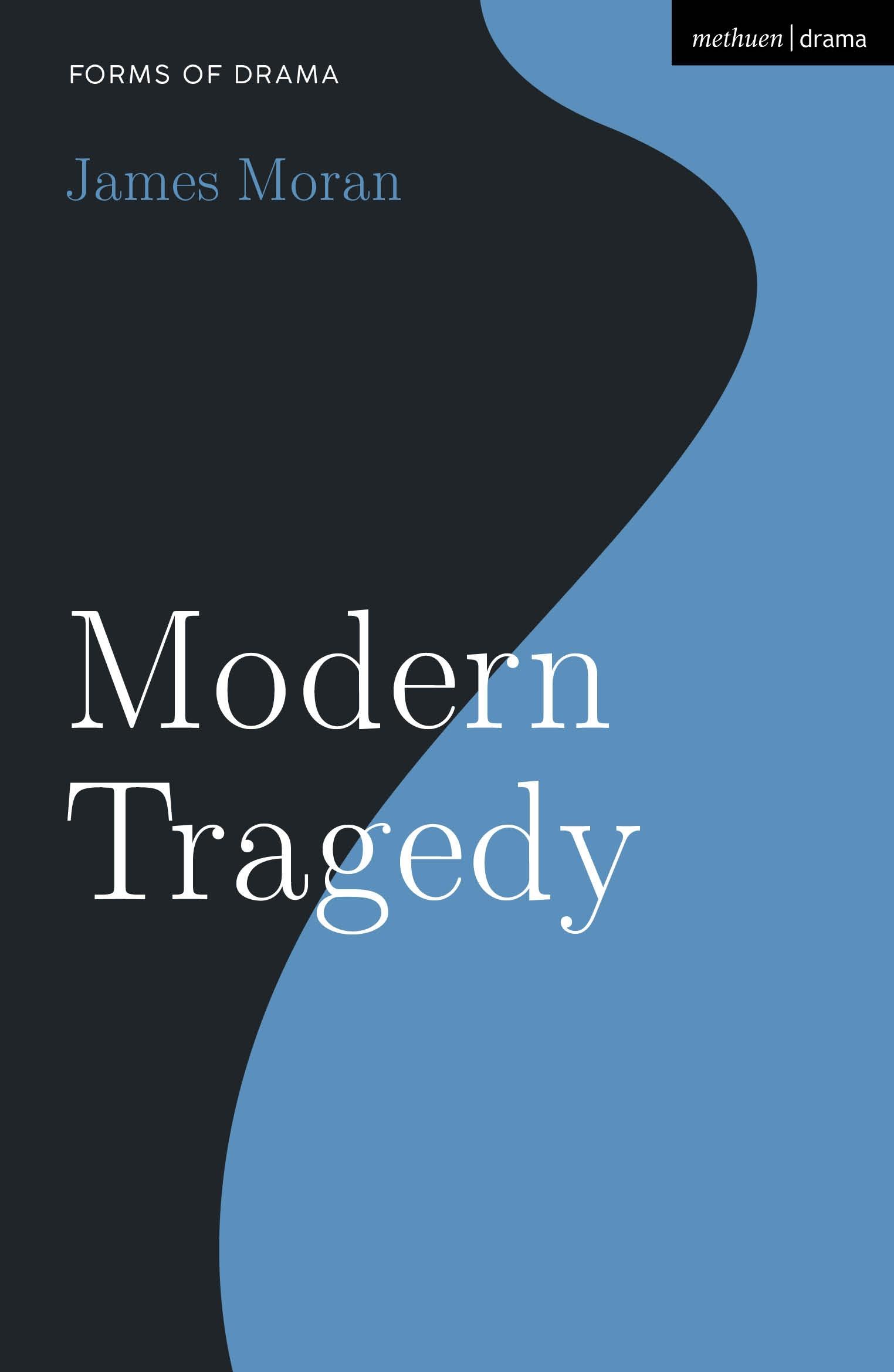
What distinguishes modern tragedy from other forms of drama? How does it relate to contemporary political and social conditions? To what ends have artists employed the tragic form in different locations during the 20th century?
Partly motivated by the urgency of our current situation in an age of ecocidal crisis, Modern Tragedy encompasses a variety of drama from throughout the 20th century. James Moran begins this book with John Millington Synge's Riders to the Sea (1904), which shows how environmental awareness might be expressed through tragic drama. Moran also looks at Brecht's reworking of Synge's drama in the 1937 play Señora Carrar's Rifles, and situates Brecht's script in the light of the theatre practitioner's broader ideas about tragedy. Brecht's tragic thinking – informed by Hegel and Marx – is contrasted with the Schopenhauerian approach of Samuel Beckett. The volume goes on to examine theatre makers whose ideas were partly motivated by applying an understanding of the tragic narrative of Synge's Riders to the Sea to postcolonial contexts. Looking at Derek Walcott's The Sea at Dauphin (1954), and J.P. Clark's The Goat (1961), Modern Tragedy explores how tragedy, a form that is often associated with regressive assumptions about hegemony, might be rethought, and how aspects of the tragic may coincide with the experiences and concerns of authors and audiences of colour.
Partly motivated by the urgency of our current situation in an age of ecocidal crisis, Modern Tragedy encompasses a variety of drama from throughout the 20th century. James Moran begins this book with John Millington Synge's Riders to the Sea (1904), which shows how environmental awareness might be expressed through tragic drama. Moran also looks at Brecht's reworking of Synge's drama in the 1937 play Señora Carrar's Rifles, and situates Brecht's script in the light of the theatre practitioner's broader ideas about tragedy. Brecht's tragic thinking – informed by Hegel and Marx – is contrasted with the Schopenhauerian approach of Samuel Beckett. The volume goes on to examine theatre makers whose ideas were partly motivated by applying an understanding of the tragic narrative of Synge's Riders to the Sea to postcolonial contexts. Looking at Derek Walcott's The Sea at Dauphin (1954), and J.P. Clark's The Goat (1961), Modern Tragedy explores how tragedy, a form that is often associated with regressive assumptions about hegemony, might be rethought, and how aspects of the tragic may coincide with the experiences and concerns of authors and audiences of colour.
Pay easily by card, Klarna, Apple Pay or Google Pay. Not happy? You always have a 14-day money-back guarantee. Read more in our terms. If you have any questions, email us at hello@memmo.org.
Memmo makes studying easier – wherever you are in the world. We bring your course books and smart study tools together in one place: summaries, quizzes, podcasts and flashcards. Plus Ted, your study buddy who answers anything you wonder. Over 75,000 students already study here – built to help you learn faster and stress less.