
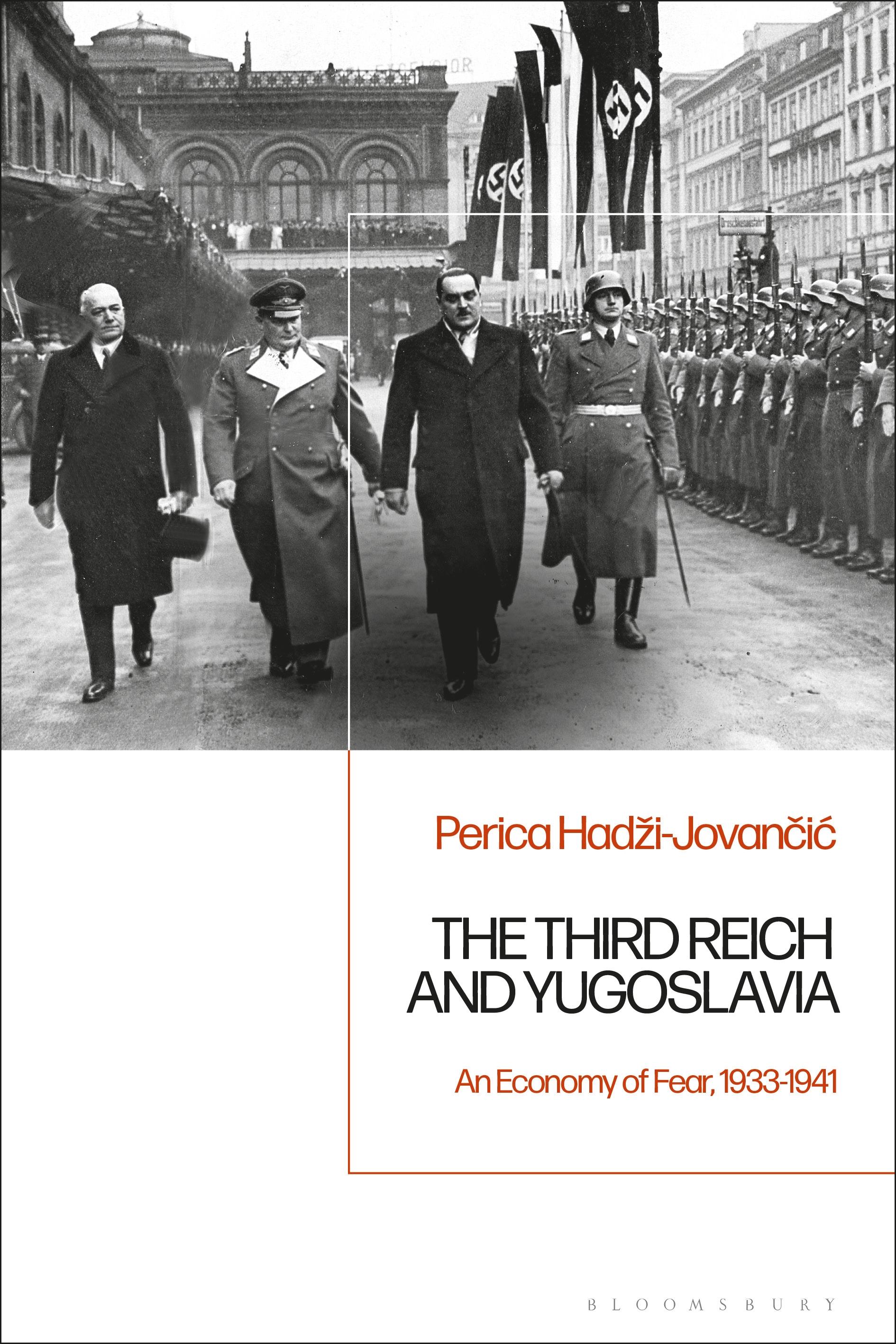
The Third Reich and Yugoslavia focuses on economic and political affairs between the Third Reich and Yugoslavia before Germany attacked in April 1941. It observes the relations between the two countries primarily from an economic perspective, with the political dimension forming a backdrop within which the economy operated.
Perica Hadzi-Jovancic challenges the conventional scholarly wisdom which recognises economics as mainly being a tool of German foreign policy towards Yugoslavia. Instead, he successfully places economic dealings on both sides within the broader context of both the German economic and financial plans and policies of the 1930s, as well as the existing trading ties between the two countries as they had been developing since the 1920s. At the same time, through detailed analysis of unpublished archival material, Hadzi-Jovancic explores the shared political relations from a new perspective; one from which there is a much deeper understanding of Yugoslavia's motives and the resulting implications for the other great powers and the wider regional framework. The book concludes that, contrary to the traditional view in historiography and despite the dependency of Yugoslavia's foreign trade on the German market at the dawn of the Second World War, Yugoslavia maintained both its economic and political agency in the shadow of the Third Reich. It was only international political developments beyond Yugoslavia's control in the years ahead that lead to a more receptive stance towards German demands.
Perica Hadzi-Jovancic challenges the conventional scholarly wisdom which recognises economics as mainly being a tool of German foreign policy towards Yugoslavia. Instead, he successfully places economic dealings on both sides within the broader context of both the German economic and financial plans and policies of the 1930s, as well as the existing trading ties between the two countries as they had been developing since the 1920s. At the same time, through detailed analysis of unpublished archival material, Hadzi-Jovancic explores the shared political relations from a new perspective; one from which there is a much deeper understanding of Yugoslavia's motives and the resulting implications for the other great powers and the wider regional framework. The book concludes that, contrary to the traditional view in historiography and despite the dependency of Yugoslavia's foreign trade on the German market at the dawn of the Second World War, Yugoslavia maintained both its economic and political agency in the shadow of the Third Reich. It was only international political developments beyond Yugoslavia's control in the years ahead that lead to a more receptive stance towards German demands.
Pay easily by card, Klarna, Apple Pay or Google Pay. Not happy? You always have a 14-day money-back guarantee. Read more in our terms. If you have any questions, email us at hello@memmo.org.
Memmo makes studying easier – wherever you are in the world. We bring your course books and smart study tools together in one place: summaries, quizzes, podcasts and flashcards. Plus Ted, your study buddy who answers anything you wonder. Over 50,000 students already study here – built to help you learn faster and stress less.