
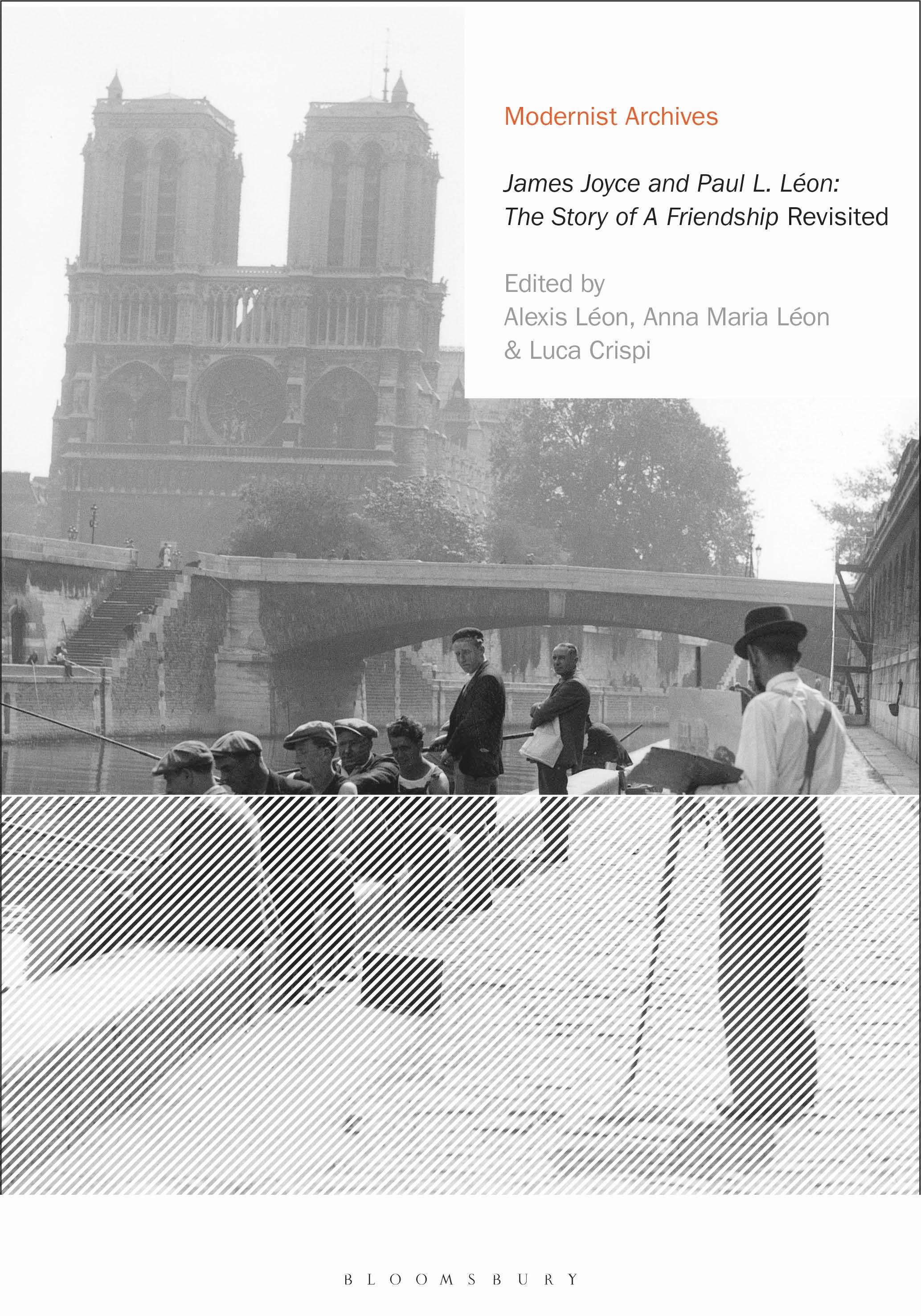
James Joyce spent the last decade of his life in Paris, struggling to finish his great final work Finnegans Wake amidst personal and financial hardship and just as Europe was being engulfed by the rising tide of fascism. Bringing together new archival discoveries and personal accounts, this book explores one of the central relationships of his final years: that with his friend, confidant and adviser Paul L. Léon.
Providing first-hand accounts of Joyce's Paris circle – which included Samuel Beckett and Vladimir Nabokov – the book makes available again the text of Lucie (Léon) Noel's personal memoir of the relationship between her husband and the Irish writer (published as James Joyce and Paul L. Léon: The Story of Friendship in 1950), including his valiant rescue of Joyce's Paris archives from occupying Nazi forces. The book also collects for the first time Leon's clandestine letters to his wife from August to December 1941, chronicling his desperate state of body and mind while interned in Drancy, France's main Nazi transit camp, and then in Compiègne, just before he was deported to Auschwitz-Birkenau. Joyce died suddenly on 13 January 1941 in Zurich and Léon was murdered by the Nazis on 4 April 1942 in Silesia.
Annotated throughout with contextual commentary by Luca Crispi and Mary Gallagher, this is an essential resource for scholars of James Joyce and of the literary culture of Paris in the 1930s and first years of World War II in France.
Providing first-hand accounts of Joyce's Paris circle – which included Samuel Beckett and Vladimir Nabokov – the book makes available again the text of Lucie (Léon) Noel's personal memoir of the relationship between her husband and the Irish writer (published as James Joyce and Paul L. Léon: The Story of Friendship in 1950), including his valiant rescue of Joyce's Paris archives from occupying Nazi forces. The book also collects for the first time Leon's clandestine letters to his wife from August to December 1941, chronicling his desperate state of body and mind while interned in Drancy, France's main Nazi transit camp, and then in Compiègne, just before he was deported to Auschwitz-Birkenau. Joyce died suddenly on 13 January 1941 in Zurich and Léon was murdered by the Nazis on 4 April 1942 in Silesia.
Annotated throughout with contextual commentary by Luca Crispi and Mary Gallagher, this is an essential resource for scholars of James Joyce and of the literary culture of Paris in the 1930s and first years of World War II in France.
Pages: 264
Category: Biografi & Memoarer
e-ISBN: 9781350133846
Shipping weight: 1.2 kg
Ships in: 1-2 days
Pay easily by card, Klarna, Apple Pay or Google Pay. Not happy? You always have a 14-day money-back guarantee. Read more in our terms. If you have any questions, email us at hello@memmo.org.
Memmo makes studying easier – wherever you are in the world. We bring your course books and smart study tools together in one place: summaries, quizzes, podcasts and flashcards. Plus Ted, your study buddy who answers anything you wonder. Over 50,000 students already study here – built to help you learn faster and stress less.