
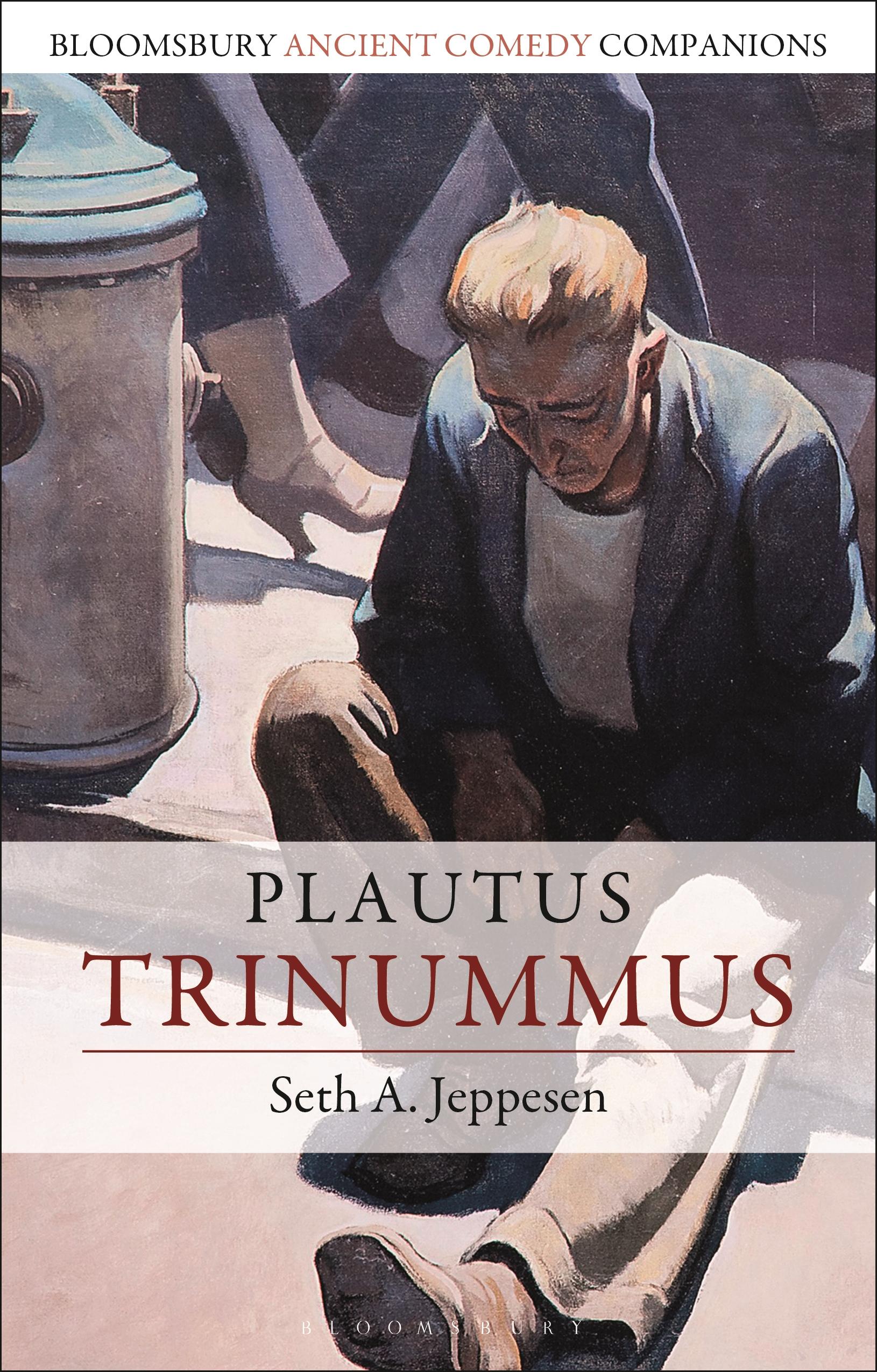
In this first introduction to Plautus' Trinummus, students and non-specialists alike are guided through the themes, context, and enduring humor of this Roman comedy. The play portrays the story of an elaborate game of keep-away involving a hidden treasure, a hot-blooded spendthrift youth, his pious sister, her would-be fiancee, a con-artist, and the most unlikely of comic schemers-a group of overly pious old men.
The conflict of the plot focuses on whether a pair of old men can help their absent friend Charmides by getting a dowry to his daughter without Charmides' wastrel son Lesbonicus first spending the money on the usual comic debauchery. The money is taken from a treasure hidden by Charmides when he left and a sycophant is hired to pretend to bring letters from Charmides along with the cash for the dowry. Comic confusion ensues when Charmides returns from abroad just in time to intercept the con-artist and overturn the scheming of his friends.
Long neglected, Trinummus is one of many Plautine plays that is experiencing a resurgence. This volume elucidates the humor of the play, which is largely based on parody and clever inversions of typical characters and situations from Roman comedy. This discussion is accompanied by an examination of the religious, social, and historical context of the play, as well as its modern reception. The genuine humor of Trinummus has something to say to modern readers, as it showcases how parody can skewer those engaged in pompous moral posturing and presents readers with a playwright who astutely views issues of imperialism and moral justification through a comic lens.
The conflict of the plot focuses on whether a pair of old men can help their absent friend Charmides by getting a dowry to his daughter without Charmides' wastrel son Lesbonicus first spending the money on the usual comic debauchery. The money is taken from a treasure hidden by Charmides when he left and a sycophant is hired to pretend to bring letters from Charmides along with the cash for the dowry. Comic confusion ensues when Charmides returns from abroad just in time to intercept the con-artist and overturn the scheming of his friends.
Long neglected, Trinummus is one of many Plautine plays that is experiencing a resurgence. This volume elucidates the humor of the play, which is largely based on parody and clever inversions of typical characters and situations from Roman comedy. This discussion is accompanied by an examination of the religious, social, and historical context of the play, as well as its modern reception. The genuine humor of Trinummus has something to say to modern readers, as it showcases how parody can skewer those engaged in pompous moral posturing and presents readers with a playwright who astutely views issues of imperialism and moral justification through a comic lens.
Pay easily by card, Klarna, Apple Pay or Google Pay. Not happy? You always have a 14-day money-back guarantee. Read more in our terms. If you have any questions, email us at hello@memmo.org.
Memmo makes studying easier – wherever you are in the world. We bring your course books and smart study tools together in one place: summaries, quizzes, podcasts and flashcards. Plus Ted, your study buddy who answers anything you wonder. Over 75,000 students already study here – built to help you learn faster and stress less.