
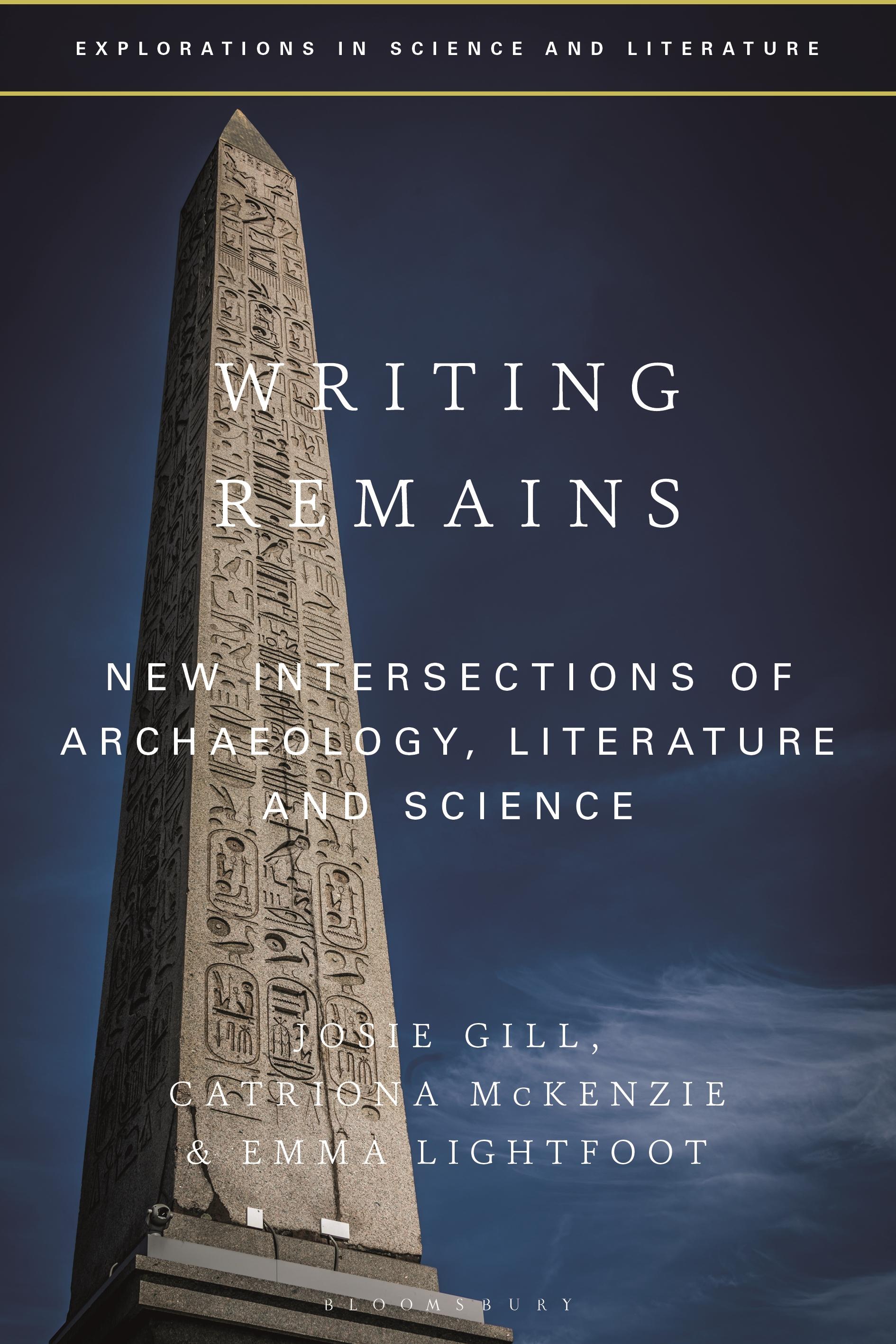
Writing Remains brings together a wide range of leading archaeologists and literary scholars to explore emerging intersections in archaeological and literary studies. Drawing upon a wide range of literary texts from the nineteenth century to the present, the book offers new approaches to understanding storytelling and narrative in archaeology, and the role of archaeological knowledge in literature and literary criticism.
The book's eight chapters explore a wide array of archaeological approaches and methods, including scientific archaeology, identifying intersections with literature and literary studies which are textual, conceptual, spatial, temporal and material. Examining literary authors from Thomas Hardy and Bram Stoker to Sarah Moss and Paul Beatty, scholars from across disciplines are brought into dialogue to consider fictional narrative both as a site of new archaeological knowledge and as a source and object of archaeological investigation.
The book's eight chapters explore a wide array of archaeological approaches and methods, including scientific archaeology, identifying intersections with literature and literary studies which are textual, conceptual, spatial, temporal and material. Examining literary authors from Thomas Hardy and Bram Stoker to Sarah Moss and Paul Beatty, scholars from across disciplines are brought into dialogue to consider fictional narrative both as a site of new archaeological knowledge and as a source and object of archaeological investigation.
Pay easily by card, Klarna, Apple Pay or Google Pay. Not happy? You always have a 14-day money-back guarantee. Read more in our terms. If you have any questions, email us at hello@memmo.org.
Memmo makes studying easier – wherever you are in the world. We bring your course books and smart study tools together in one place: summaries, quizzes, podcasts and flashcards. Plus Ted, your study buddy who answers anything you wonder. Over 75,000 students already study here – built to help you learn faster and stress less.