
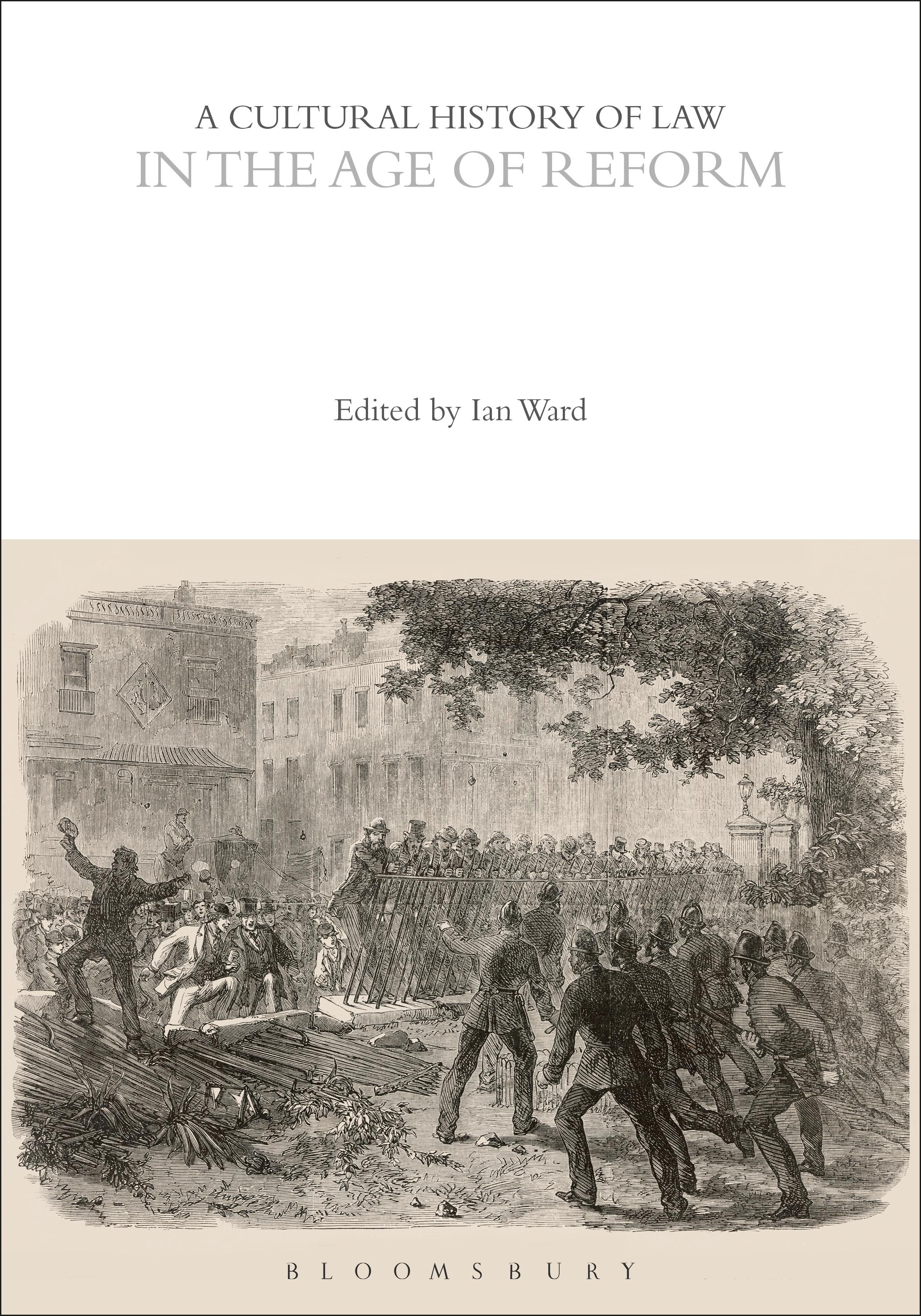
The Age of Reform – the hundred years from 1820 to 1920 - has become synonymous with innovation and change but this period was also in many ways a deeply conservative and cautious one. With reform came reaction and revolution and this was as true of the law as it was of literature, art and technology. The age of Great Exhibitions and Great Reform Acts was also the age of newly systemized police forces, courts and prisons. A Cultural History of Law in the Age of Reform presents an overview of the period with a focus on human stories located in the crush between legal formality and social reform: the newly uniformed police, criminal mugshots, judge and jury, the shame of child labor, and the need for neighborliness in the crowded urban and increasingly industrial landscapes of Europe and the United States.
Drawing upon a wealth of visual and textual sources, A Cultural History of Law in the Age of Reform presents essays that examine key cultural case studies of the period on the themes of justice, constitution, codes, agreements, arguments, property and possession, wrongs, and the legal profession.
Drawing upon a wealth of visual and textual sources, A Cultural History of Law in the Age of Reform presents essays that examine key cultural case studies of the period on the themes of justice, constitution, codes, agreements, arguments, property and possession, wrongs, and the legal profession.
Pay easily by card, Klarna, Apple Pay or Google Pay. Not happy? You always have a 14-day money-back guarantee. Read more in our terms. If you have any questions, email us at hello@memmo.org.
Memmo makes studying easier – wherever you are in the world. We bring your course books and smart study tools together in one place: summaries, quizzes, podcasts and flashcards. Plus Ted, your study buddy who answers anything you wonder. Over 50,000 students already study here – built to help you learn faster and stress less.