
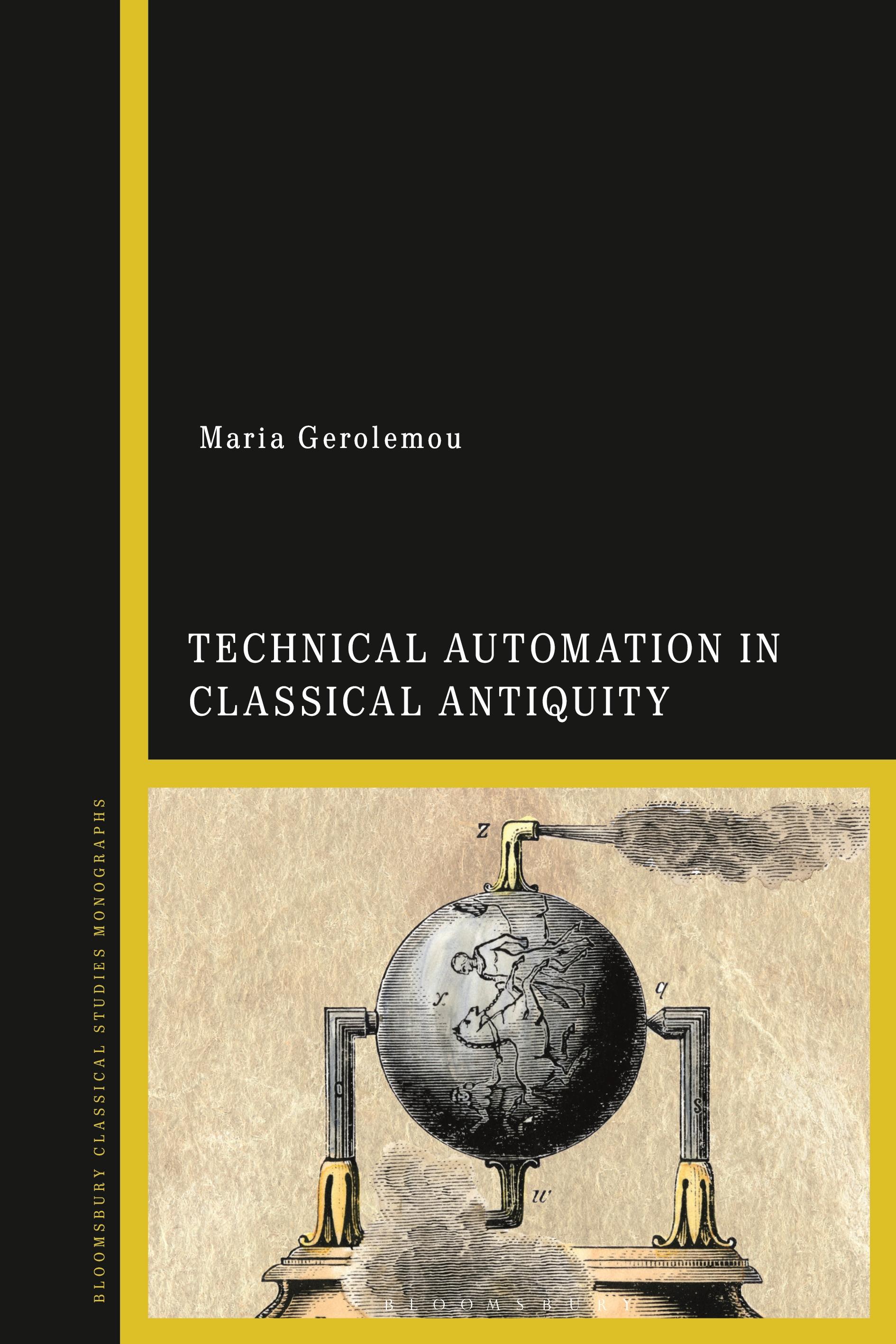
Technical automation – the ability of man-made (or god-made) objects to move and act autonomously – is not just the province of engineering or science fiction. In this book, Maria Gerolemou, by taking as her starting point the close semantic and linguistic relevance of technical automation to natural automatism, demonstrates how ancient literature, performance and engineering were often concerned with the way nature and artifice interacted. Moving across epic, didactic, tragedy, comedy, philosophy and ancient science, this is a brilliant assembly of evidence for the power of 'automatic theatre' in ancient literature.
Gerolemou starts with the earliest Greek literature of Homer and Hesiod, where Hephaestus' self-moving artefacts in the Iliad reflect natural forces of motion and the manufactured Pandora becomes an autonomous woman. Her second chapter looks at Greek drama, where technical automation is used to augment and undermine nature not only through staging and costume but also in plot devices where statues come to life and humans behave as automatic devices. In the third chapter, Gerolemou considers how the philosophers of the 4th century BCE and the engineers of the Hellenistic period with their mechanical devices contributed to a growing dialogue around technical automation and how it could help its audience glance and marvel at the hidden mechanisms of self-motion. Finally, the book explores the ways technical automation is employed as an ekphrastic technique in late antiquity and early Byzantium.
Gerolemou starts with the earliest Greek literature of Homer and Hesiod, where Hephaestus' self-moving artefacts in the Iliad reflect natural forces of motion and the manufactured Pandora becomes an autonomous woman. Her second chapter looks at Greek drama, where technical automation is used to augment and undermine nature not only through staging and costume but also in plot devices where statues come to life and humans behave as automatic devices. In the third chapter, Gerolemou considers how the philosophers of the 4th century BCE and the engineers of the Hellenistic period with their mechanical devices contributed to a growing dialogue around technical automation and how it could help its audience glance and marvel at the hidden mechanisms of self-motion. Finally, the book explores the ways technical automation is employed as an ekphrastic technique in late antiquity and early Byzantium.
Pay easily by card, Klarna, Apple Pay or Google Pay. Not happy? You always have a 14-day money-back guarantee. Read more in our terms. If you have any questions, email us at hello@memmo.org.
Memmo makes studying easier – wherever you are in the world. We bring your course books and smart study tools together in one place: summaries, quizzes, podcasts and flashcards. Plus Ted, your study buddy who answers anything you wonder. Over 75,000 students already study here – built to help you learn faster and stress less.