
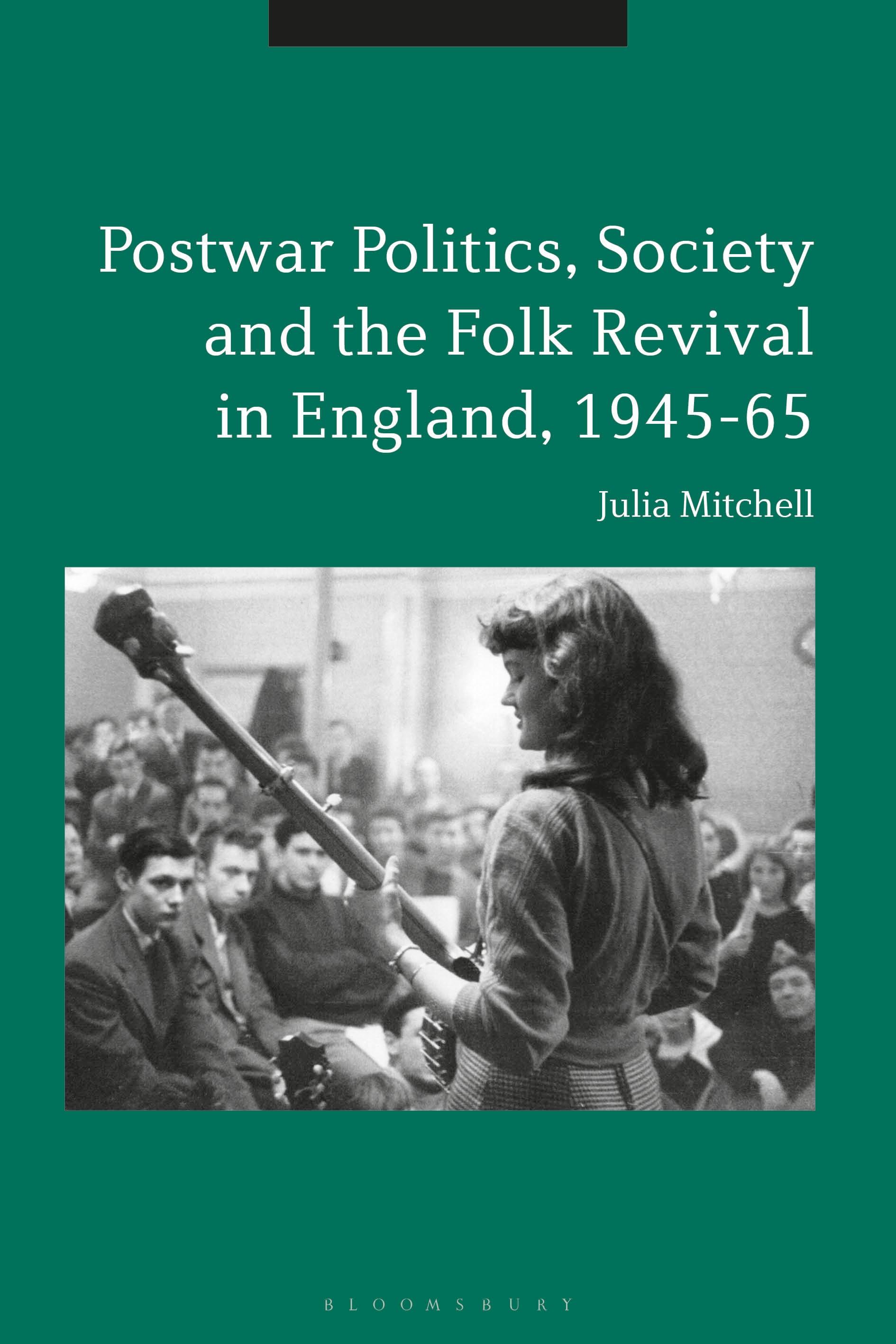
The English folk revival cannot be understood when divorced from the history of post-war England, yet the existing scholarship fails to fully engage with its role in the social and political fabric of the nation. Postwar Politics, Society and the Folk Revival in England is the first study to interweave the story of a gentrifying folk revival with the socio-political tensions inherent in England's postwar transition from austerity to affluence.
Julia Mitchell skillfully situates the English folk revival in the context of the rise of the new left, the decline of heavy industry, the rise of local, regional and national identities, the 'Americanisation' of English culture and the development of mass culture. In doing so, she demonstrates that the success of the English folk revival derived from its sense of authenticity and its engagement with topical social and political issues, such as the conflicted legacy of the Welfare State, the fight for nuclear disarmament and the fallout of nationalization. In addition, she shrewdly compares the US and British revival to identify the links but also what was distinctive about the movement in Britain.
Drawing on primary sources from folk archives, the BBC, the music press and interviews with participants, this is a theoretically engaged and sophisticated analysis of how postwar culture shaped the folk revival in England.
Julia Mitchell skillfully situates the English folk revival in the context of the rise of the new left, the decline of heavy industry, the rise of local, regional and national identities, the 'Americanisation' of English culture and the development of mass culture. In doing so, she demonstrates that the success of the English folk revival derived from its sense of authenticity and its engagement with topical social and political issues, such as the conflicted legacy of the Welfare State, the fight for nuclear disarmament and the fallout of nationalization. In addition, she shrewdly compares the US and British revival to identify the links but also what was distinctive about the movement in Britain.
Drawing on primary sources from folk archives, the BBC, the music press and interviews with participants, this is a theoretically engaged and sophisticated analysis of how postwar culture shaped the folk revival in England.
Pay easily by card, Klarna, Apple Pay or Google Pay. Not happy? You always have a 14-day money-back guarantee. Read more in our terms. If you have any questions, email us at hello@memmo.org.
Memmo makes studying easier – wherever you are in the world. We bring your course books and smart study tools together in one place: summaries, quizzes, podcasts and flashcards. Plus Ted, your study buddy who answers anything you wonder. Over 50,000 students already study here – built to help you learn faster and stress less.