
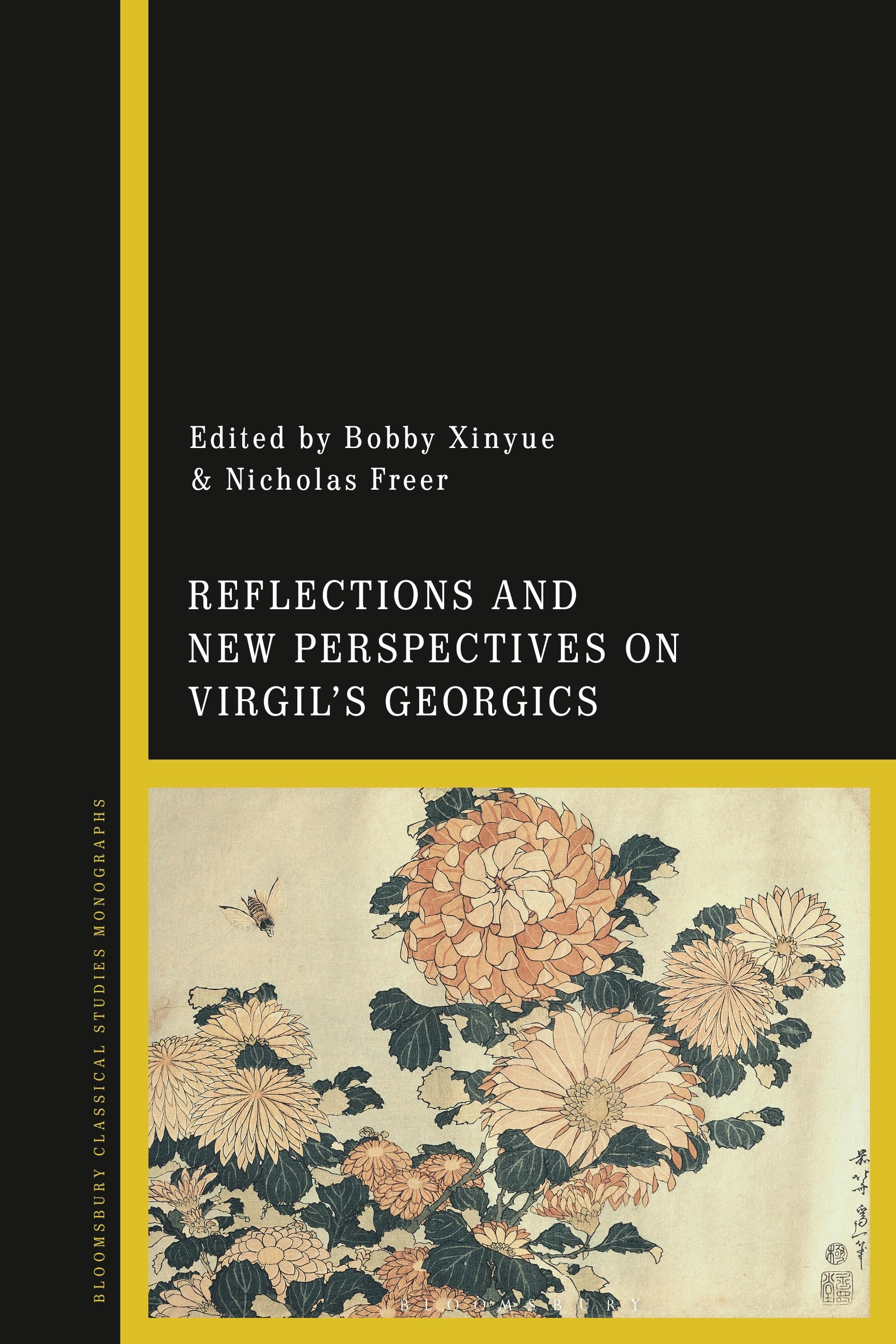
Virgil's Georgics, the most neglected of the poet's three major works, is brought to life and infused with fresh meanings in this dynamic collection of new readings. The Georgics is shown to be a rich field of inherited and varied literary forms, actively inviting a wide range of interpretations as well as deep reflection on its place within the tradition of didactic poetry.
The essays contained in this volume – contributed by scholars from Australia, Europe and North America – offer new approaches and interpretive methods that greatly enhance our understanding of Virgil's poem. In the process, they unearth an array of literary and philosophical sources which exerted a rich influence on the Georgics but whose impact has hitherto been underestimated in scholarship. A second goal of the volume is to examine how the Georgics – with its profound meditations on humankind, nature, and the socio-political world of its creation – has been (re)interpreted and appropriated by readers and critics from antiquity to the modern era. The volume opens up a number of exciting new research avenues for the study of the reception of the Georgics by highlighting the myriad ways in which the poem has been understood by ancient readers, early modern poets, explorers of the 'New World', and female translators of the twentieth and twenty-first centuries.
The essays contained in this volume – contributed by scholars from Australia, Europe and North America – offer new approaches and interpretive methods that greatly enhance our understanding of Virgil's poem. In the process, they unearth an array of literary and philosophical sources which exerted a rich influence on the Georgics but whose impact has hitherto been underestimated in scholarship. A second goal of the volume is to examine how the Georgics – with its profound meditations on humankind, nature, and the socio-political world of its creation – has been (re)interpreted and appropriated by readers and critics from antiquity to the modern era. The volume opens up a number of exciting new research avenues for the study of the reception of the Georgics by highlighting the myriad ways in which the poem has been understood by ancient readers, early modern poets, explorers of the 'New World', and female translators of the twentieth and twenty-first centuries.
Pay easily by card, Klarna, Apple Pay or Google Pay. Not happy? You always have a 14-day money-back guarantee. Read more in our terms. If you have any questions, email us at hello@memmo.org.
Memmo makes studying easier – wherever you are in the world. We bring your course books and smart study tools together in one place: summaries, quizzes, podcasts and flashcards. Plus Ted, your study buddy who answers anything you wonder. Over 75,000 students already study here – built to help you learn faster and stress less.