
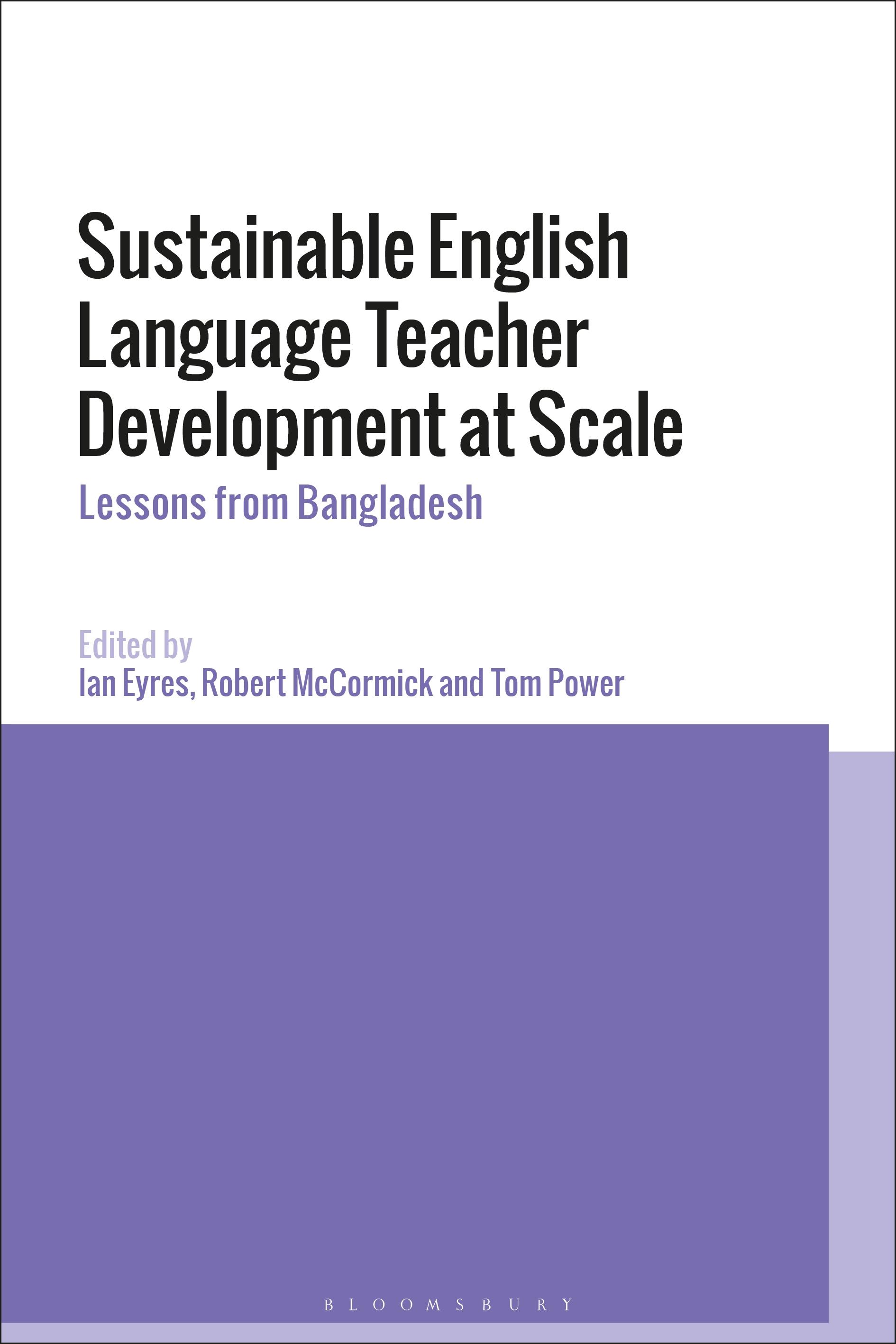
This book offers a thorough and comprehensive review of the lessons learnt from the award-winning 'English in Action' English language teacher development programme, which ran in government primary and secondary schools across Bangladesh from 2008 to 2017. Over the course of nine years the programme involved 51,000 teachers and 20 million school students, demonstrably raising standards of teachers' classroom practice and students' English language attainment, and won the British Council ELTON Award for Local innovation (2013) and Times Higher Education Award for International Impact (2107).
The sixteen chapters explore the programme in detail, looking at both the successes and the challenges encountered throughout its course, including the strategies used to address the challenges. The key innovative factors of the programme include:
· a positive choice to build on the existing context, such as the lives and experiences of local teachers and the demands of a nationally determined curriculum;
· teacher learning taking place in the teachers' own classrooms;
· a focus on learning the 'how' of communicative language teaching through reflective practice and peer support;
· the use - within a carefully constructed pedagogy - of affordable, readily-available mobile phone technology;
· the use of mediated authentic video
· a model of teacher development at very large scale that provided a successful alternative to the'cascade'model;
· a partnership with government institutions to ensure that improved practices are maintained beyond the life of the Programme.
The sixteen chapters explore the programme in detail, looking at both the successes and the challenges encountered throughout its course, including the strategies used to address the challenges. The key innovative factors of the programme include:
· a positive choice to build on the existing context, such as the lives and experiences of local teachers and the demands of a nationally determined curriculum;
· teacher learning taking place in the teachers' own classrooms;
· a focus on learning the 'how' of communicative language teaching through reflective practice and peer support;
· the use - within a carefully constructed pedagogy - of affordable, readily-available mobile phone technology;
· the use of mediated authentic video
· a model of teacher development at very large scale that provided a successful alternative to the'cascade'model;
· a partnership with government institutions to ensure that improved practices are maintained beyond the life of the Programme.
Pay easily by card, Klarna, Apple Pay or Google Pay. Not happy? You always have a 14-day money-back guarantee. Read more in our terms. If you have any questions, email us at hello@memmo.org.
Memmo makes studying easier – wherever you are in the world. We bring your course books and smart study tools together in one place: summaries, quizzes, podcasts and flashcards. Plus Ted, your study buddy who answers anything you wonder. Over 50,000 students already study here – built to help you learn faster and stress less.