
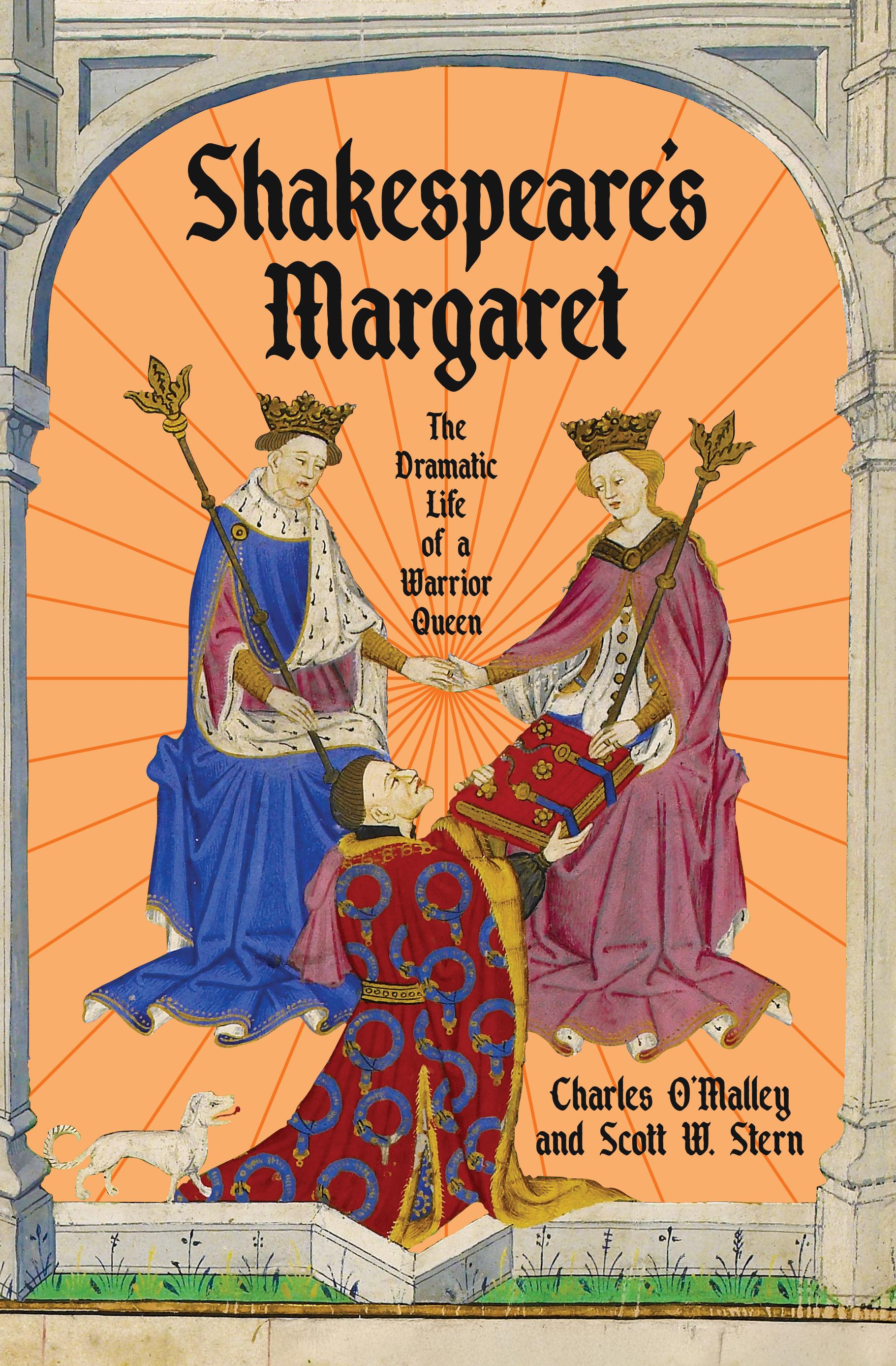
Shakespeare's most powerful female character, her historical inspiration, and her reinventions in performance through the centuries.
She is more violent than Lady Macbeth, more complex than Ophelia, more strategic than King Lear’s daughters. She is the only Shakespearean character, male or female, whose entire life—from youth to old age—appears on stage. She is a wealth of insight into Shakespeare’s understanding of, and influence on, ideas of gender and sexuality, and she speaks by far the most lines of any of his female characters. She has allowed the likes of Peggy Ashcroft, Helen Mirren, and Sophie Okonedo full range for their stunning talents. Yet today, most audiences have still never heard of Margaret of Anjou.
But who was Margaret? In the fifteenth century, she was a fourteen-year-old French princess married to an English king, soon thrust into command amid a bloody civil war. A hundred and fifty years later, she was resurrected on the Elizabethan stage in four of Shakespeare’s earliest plays, Henry VI, Parts 1, 2, and 3 and Richard III.
And in every era since the Bard’s, actors, directors, and producers have recast their own Margaret, slicing, dicing, and rearranging the original Shakespeare to highlight or diminish Margaret’s role depending on the sensibilities of the time. It is this evolution of Margaret’s portrayal that Charles O’Malley and Scott W. Stern track in Shakespeare’s Margaret, from Elizabethan boy-actors in wigs enacting misogynist fears of witchy women to feminist celebrations of Margaret’s uninhibited grasp of power and clever commentaries on global politics and world leaders such as Margaret Thatcher. Her story, as it has changed over the centuries across the page and on the stage, brings to life the evolution of theatre and shows how Shakespeare’s plays have always been living collaborations among actors, directors, writers, critics, and history itself, still unfolding.
Pay easily by card, Klarna, Apple Pay or Google Pay. Not happy? You always have a 14-day money-back guarantee. Read more in our terms. If you have any questions, email us at hello@memmo.org.
Memmo makes studying easier – wherever you are in the world. We bring your course books and smart study tools together in one place: summaries, quizzes, podcasts and flashcards. Plus Ted, your study buddy who answers anything you wonder. Over 75,000 students already study here – built to help you learn faster and stress less.