
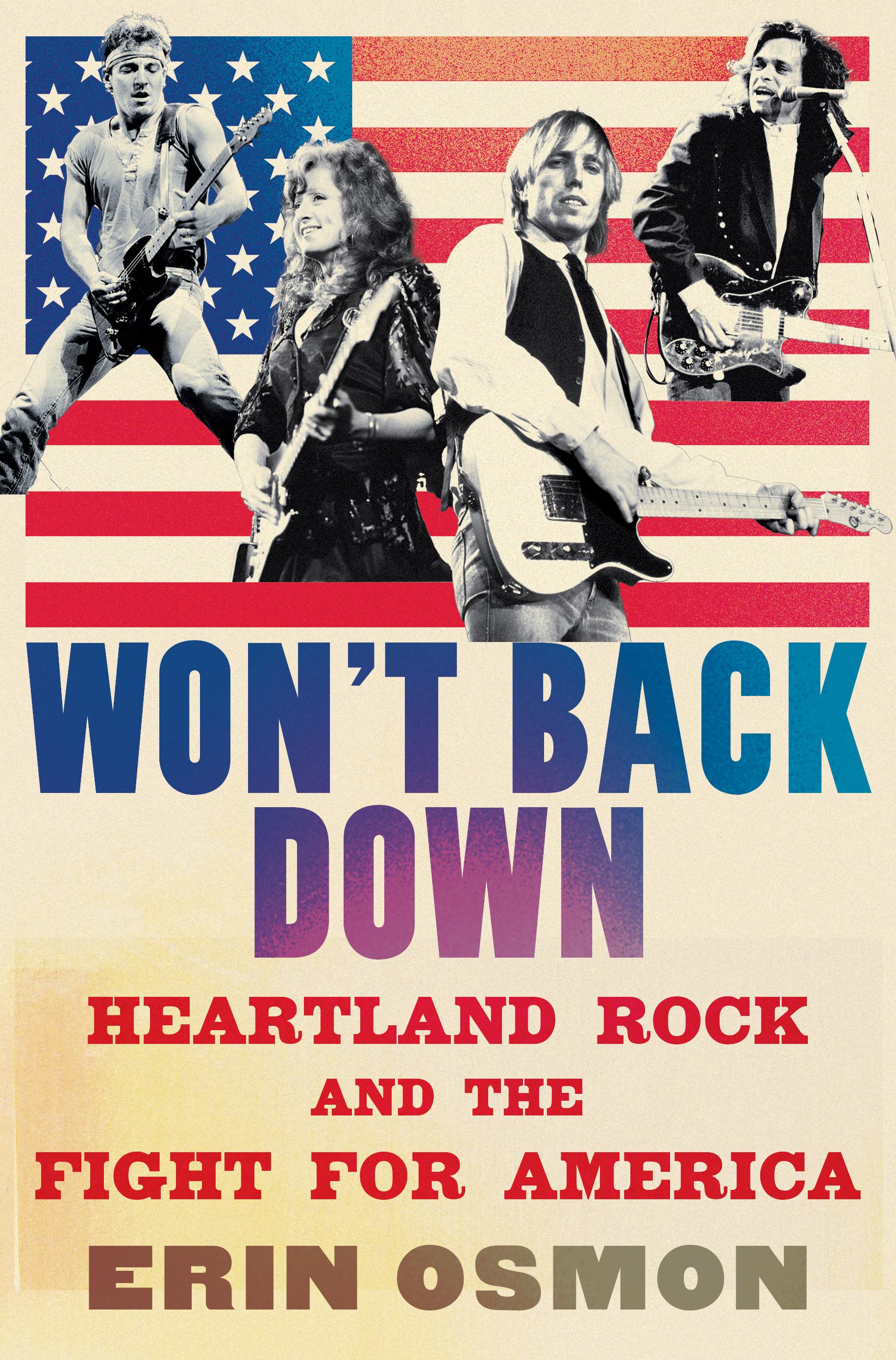
One of America’s leading music journalists on heartland rock’s glory days and its role in the populist politics of the 1980s.
Hear “American Girl” or “Born in the U.S.A.” and, like it or not, chances are you begin to hum along. The soundtrack of grocery stores, pool halls, bowling alleys, flea markets, chain restaurants, drug stores, and political rallies—heartland rock, while beloved by some and derided by others, is inescapable even today. As rollicking as the music it describes, acclaimed music critic Erin Osmon’s Won’t Back Down tells the story of the origins, chart-topping development, and tangled legacy of heartland rock, the music that ruled the airwaves of the 1980s and remains instantly recognizable to millions.
Spinning an entertaining and eye-opening account, Osmon delves into the complicated afterlife of heartland rock’s classic albums and songs, including Bruce Springsteen’s “Born to Run,” Bob Seger’s “Against the Wind,” John Mellencamp’s “Small Town,” and Tom Petty’s “I Won’t Back Down.” She demonstrates the centrality of often-overlooked women like Melissa Etheridge, Bonnie Raitt, and Lucinda Williams—explaining how some of the most popular music of the time was made beyond its white-male stereotypes. She traces the genre’s connections to country and Americana, and reveals how legendary figures like Prince were inspired by and expanded heartland rock. And she shows how its success revitalized the careers of figures like Bob Dylan and Neil Young. Through it all, she explores the ’80s cultural developments that fostered the genre—such as the rise of MTV and the switch to CDs—and argues that the music played a vital role in opposition to ’80s conservatism and in support of LGBTQ rights, labor issues, and the environmental movement.
A fair-minded critic with an ear for a great behind-the-scenes story, Osmon makes clear that at its best, heartland rock connected with millions of overlooked people longing to be heard.
Pay easily by card, Klarna, Apple Pay or Google Pay. Not happy? You always have a 14-day money-back guarantee. Read more in our terms. If you have any questions, email us at hello@memmo.org.
Memmo makes studying easier – wherever you are in the world. We bring your course books and smart study tools together in one place: summaries, quizzes, podcasts and flashcards. Plus Ted, your study buddy who answers anything you wonder. Over 50,000 students already study here – built to help you learn faster and stress less.