
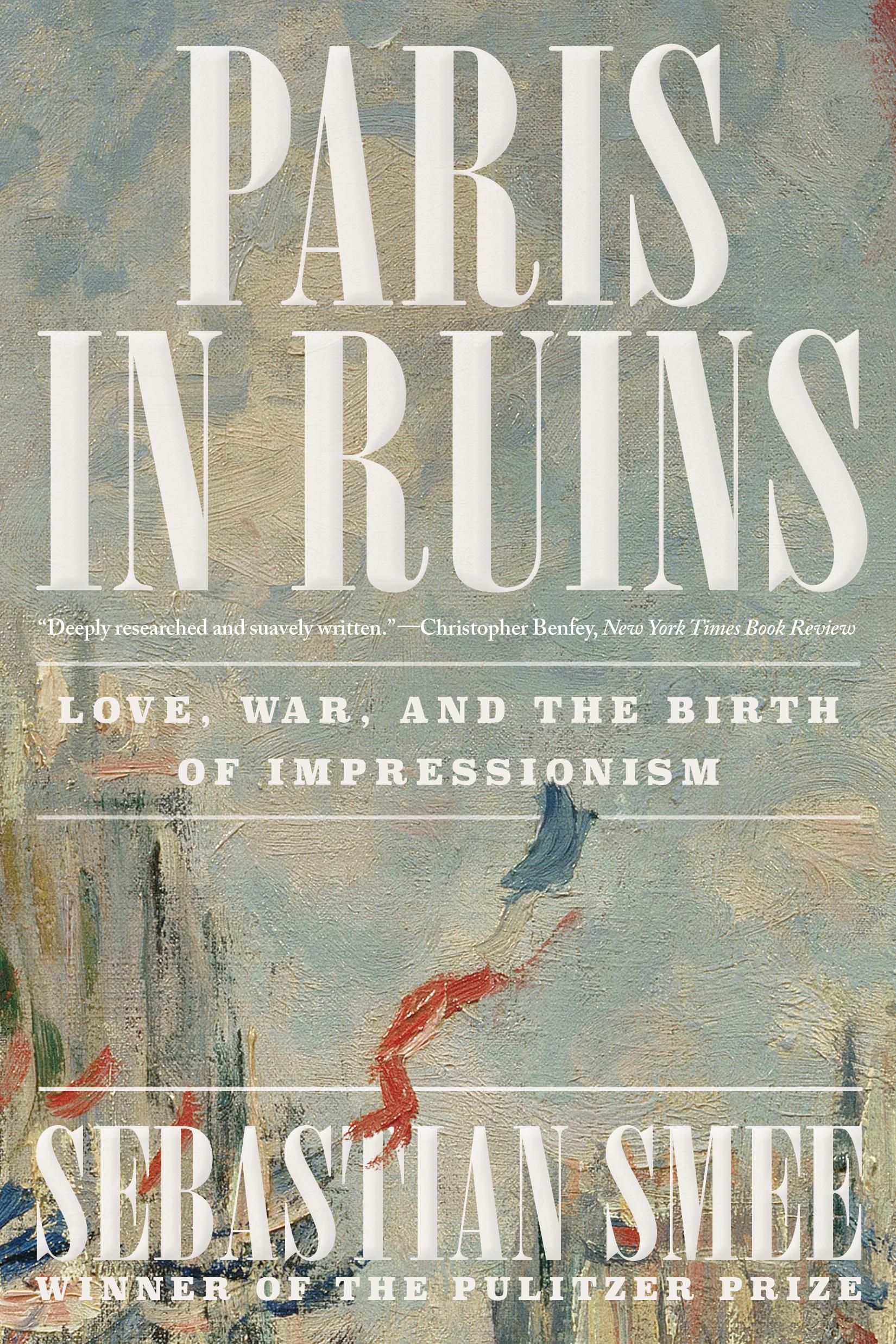
A New York Times Book Review Editors’ Choice
A Washington Post Notable Nonfiction Book of the Year
"[Reveals] how the brilliance of Impressionism emerged from a backdrop of tragedy and violence.” —Ross King, author of Mad Enchantment
The Pulitzer Prize–winning art critic’s gripping account of the “Terrible Year” in Paris and its monumental impact on the rise of Impressionism.
From the summer of 1870 to the spring of 1871, famously dubbed the “Terrible Year” by Victor Hugo, Paris and its people were besieged, starved, and forced into surrender by Germans—then imperiled again as radical republicans established a breakaway Commune, ultimately crushed by the French Army after bloody street battles and the burning of central Paris. As renowned art critic Sebastian Smee shows, it was against the backdrop of these tumultuous times that the Impressionist movement was born—in response to violence, civil war, and political intrigue.
In stirring and exceptionally vivid prose, Smee tells the story of those dramatic days through the eyes of great figures of Impressionism. Édouard Manet, Berthe Morisot, and Edgar Degas were trapped in Paris during the siege and deeply enmeshed in its politics. Others, including Pierre-August Renoir and Frédéric Bazille, joined regiments outside of the capital, while Claude Monet and Camille Pissarro fled the country just in time. In the aftermath, these artists developed a newfound sense of the fragility of life. That feeling for transience—reflected in Impressionism’s emphasis on fugitive light, shifting seasons, glimpsed street scenes, and the impermanence of all things—became the movement’s great contribution to the history of art.
At the heart of it all is a love story; that of Manet, by all accounts the father of Impressionism, and Morisot, the only woman to play a central role in the movement from the start. Smee poignantly depicts their complex relationship, their tangled effect on each other, and their great legacy, while bringing overdue attention to the woman at the heart of Impressionism.
Incisive and absorbing, Paris in Ruins captures the shifting passions and politics of the art world, revealing how the pressures of the siege and the chaos of the Commune had a profound impact on modern art, and how artistic genius can emerge from darkness and catastrophe.
Pay easily by card, Klarna, Apple Pay or Google Pay. Not happy? You always have a 14-day money-back guarantee. Read more in our terms. If you have any questions, email us at hello@memmo.org.
Memmo makes studying easier – wherever you are in the world. We bring your course books and smart study tools together in one place: summaries, quizzes, podcasts and flashcards. Plus Ted, your study buddy who answers anything you wonder. Over 50,000 students already study here – built to help you learn faster and stress less.