
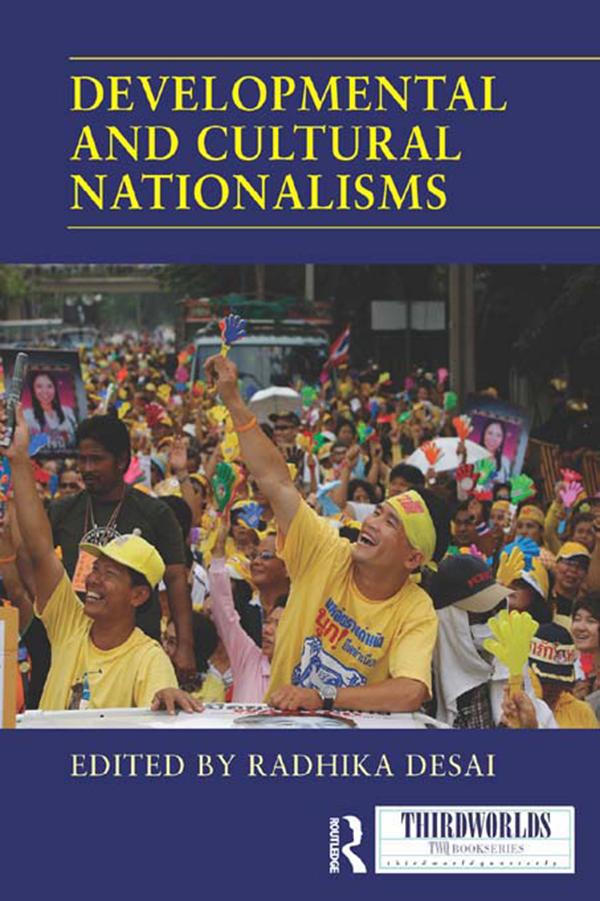
Premature announcements of the eclipse of nation states under 'globalization' and 'empire' stand exposed as the 21st century's first economic crisis underlines their continuing importance. A predominantly cultural study of nationalism was unable to resist the 'globalization' thesis. Focusing on selected Asian cases, this book argues that nationalisms have always contained political economies as well as cultural politics. Placing nation-states centrally in our understanding of modern capitalism, it challenges the 'globalization' thesis. Rather than eclipse, nations and nationalisms have undergone changes under the impact of neoliberalism since the 1970s.
Classical 20th century developmental nationalisms emphasised citizenship, economy and future orientations. Later cultural nationalisms - 'Asian values', 'Hindutva', 'Confucianism' or 'Nihonjiron' - stressed identity, culture and past orientations. Amid neoliberalism's flagrantly unequal political economy, not primarily concerned with material production or productivity, they glorified static conceptions of 'original' cultures and identities - whether religious, ethnic or other - and justified inequality as cultural difference. In contrast to the popular mobilizations which powered developmental nationalisms, cultural nationalisms throve on neoliberalism's disengagement and disenfranchisement, albeit partially compensated by the political baptism of newly enriched groups. Extremist wings of cultural nationalism in some countries were a function of this lack of popular support.
This book was published as a special issue of Third World Quarterly.
Pay easily by card, Klarna, Apple Pay or Google Pay. Not happy? You always have a 14-day money-back guarantee. Read more in our terms. If you have any questions, email us at hello@memmo.org.
Memmo makes studying easier – wherever you are in the world. We bring your course books and smart study tools together in one place: summaries, quizzes, podcasts and flashcards. Plus Ted, your study buddy who answers anything you wonder. Over 50,000 students already study here – built to help you learn faster and stress less.