
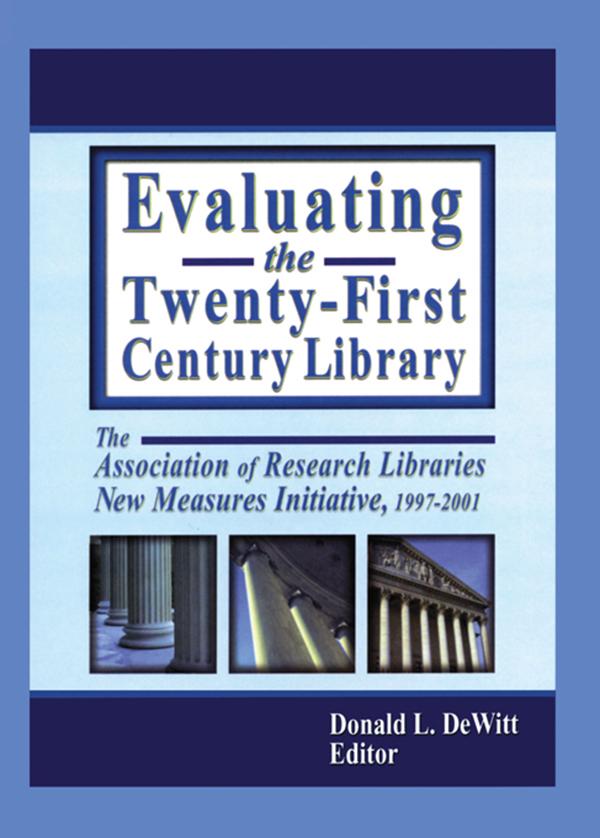
Explore the ARL’s initiatives for identifying, formulating, and testing new criteria for evaluating academic libraries in the digital age!
The proliferation of electronic information resources in the past decade has changed the ways in which research libraries evaluate their service and holdings. This collection of articles (thirteen of which previously appeared in ARL’s bimonthly newsletter/report on research issues and actions) examines new measures for library evaluation that are being developed by the Association of Research Libraries. It presents an overview of how the Association of Research Libraries’ “new measures” initiative developed, plus insightful reports on the details of the SERVQUAL, LibQUAL+, and E-metrics projects. Handy flow charts and tables make the information easily accessible and understandable.
From the editor: “The profound changes in library management and collection development brought about by digital technology in the closing decade of the twentieth century have changed the way we think about libraries. If we were to ask librarians who have been in the profession for more than a decade how they evaluated a library, we probably would hear statistics about the number of volumes held and added annually, the number of serial subscriptions, how much money a library has to spend, and how many professionals are on staff. These are the traditional criteria by which libraries have been judged throughout much of the twentieth century. Newer librarians, however, especially those who entered the profession in the late 1980s and 1990s, use a different yardstick and frequently recite different statistics that include terms such as user satisfaction, spending on electronic resources and services, document delivery services, numbers of databases and electronic journals available, and services provided to distance learners.”
In Evaluating the Twenty-First Century Library, you’ll find valuable information on:
- current performance measures for academic libraries
- the continuing search for accurate new performance measures
- the uses of learning outcomes assessment
- SERVQUAL, LibQUAL+, and the ARL LibQUAL+ Pilot Project
- the results of the 2000 Symposium on Measuring Library Service Quality
- the uses of E-metrics in assessing the academic networked environment and accurately measuring use, users, services, resources, and other factors
- an insightful discussion of the rise in spending on electronic information by research libraries
Pay easily by card, Klarna, Apple Pay or Google Pay. Not happy? You always have a 14-day money-back guarantee. Read more in our terms. If you have any questions, email us at hello@memmo.org.
Memmo makes studying easier – wherever you are in the world. We bring your course books and smart study tools together in one place: summaries, quizzes, podcasts and flashcards. Plus Ted, your study buddy who answers anything you wonder. Over 50,000 students already study here – built to help you learn faster and stress less.