
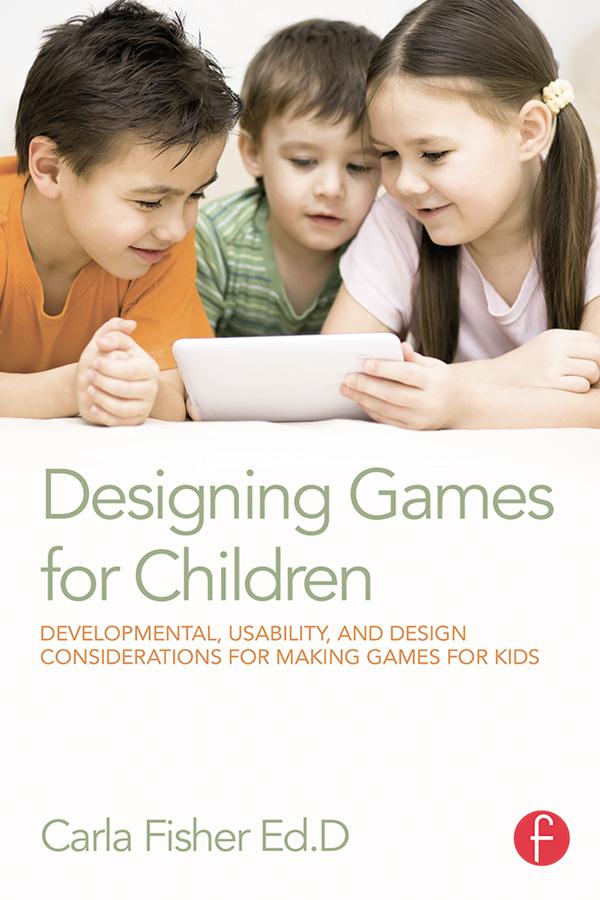
When making games for kids, it’s tempting to simply wing-it on the design. We were all children once, right? The reality is that adults are far removed from the cognitive changes and the motor skill challenges that are the hallmark of the developing child. Designing Games for Children, helps you understand these developmental needs of children and how to effectively apply them to games.
Whether you’re a seasoned game designer, a children's media professional, or an instructor teaching the next generation of game designers, Designing Games for Children is the first book dedicated to service the specific needs of children's game designers. This is a hands-on manual of child psychology as it relates to game design and the common challenges designers face.
Designing Games for Children is the definitive, comprehensive guide to making great games for kids, featuring:
- Guidelines and recommendations divided by the most common target audiences – babies and toddlers (0-2), preschoolers (3-5), early elementary students (6-8), and tweens (9-12).
- Approachable and actionable breakdown of child developmental psychology, including cognitive, physical, social, and emotional development, as it applies to game design
- Game design insights and guidelines for all aspects of game production, from ideation to marketing
Pay easily by card, Klarna, Apple Pay or Google Pay. Not happy? You always have a 14-day money-back guarantee. Read more in our terms. If you have any questions, email us at hello@memmo.org.
Memmo makes studying easier – wherever you are in the world. We bring your course books and smart study tools together in one place: summaries, quizzes, podcasts and flashcards. Plus Ted, your study buddy who answers anything you wonder. Over 50,000 students already study here – built to help you learn faster and stress less.