
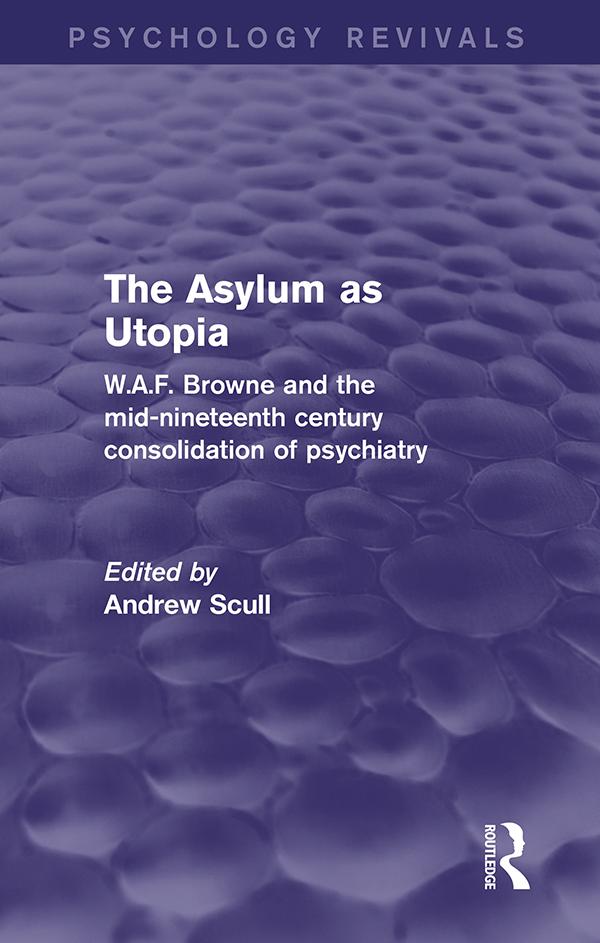
What Asylums Were, Are, and Ought to Be, first published in 1837, was of considerable significance in the history of lunacy reform in Britain. It contains perhaps the single most influential portrait by a medical author of the horrors of the traditional madhouse system. Its powerful and ideologically resonant description of the contrasting virtues of the reformed asylum, a hive of therapeutic activity under the benevolent but autocratic guidance and control of its medical superintendent, provided within a brief compass a strikingly attractive alternative vision of an apparently attainable utopia. Browne’s book thus provided important impetus to the efforts then under way to make the provision of county asylums compulsory, and towards the institution of a national system of asylum inspection and supervision.
This edition, originally published in 1991 as part of the Tavistock Classics in the History of Psychiatry series, contains a lengthy introductory essay by Andrew Scull. Scull discusses the social context within which What Asylums Were, Are, and Ought to Be came to be written, examines the impact of the book on the progress of lunacy reform, and places its author’s career in the larger framework of the development of Victorian psychiatry as an organised profession. Through an examination of Browne’s tenure as superintendent of the Crichton Royal Asylum in Dumfries, Scull compares the theory and practice of asylum care in the moral treatment era, revealing the remorseless processes through which such philanthropic foundations degenerated into more or less well-tended cemeteries for the still-breathing – institutions almost startlingly remote from Browne’s earlier visions of what they ought to be.
Pay easily by card, Klarna, Apple Pay or Google Pay. Not happy? You always have a 14-day money-back guarantee. Read more in our terms. If you have any questions, email us at hello@memmo.org.
Memmo makes studying easier – wherever you are in the world. We bring your course books and smart study tools together in one place: summaries, quizzes, podcasts and flashcards. Plus Ted, your study buddy who answers anything you wonder. Over 50,000 students already study here – built to help you learn faster and stress less.