
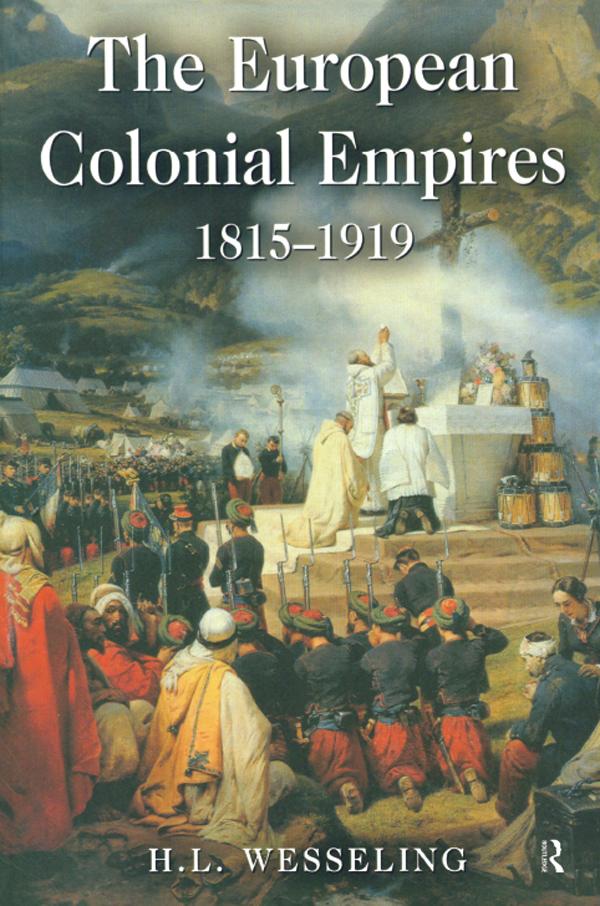
The nineteenth century was Europe's colonial century. At the beginning of the period, the only colonial empire that existed was the British Empire. By the end of the century the situation was completely different and Europe's colonial possessions had come to constitute a large part of the world. The French had acquired an immense colonial empire and the Dutch had extended their control over Indonesia. Germany and Italy, unified only in the latter half of the century, had claimed their place under the sun. Even the tiny Kingdom of Belgium had acquired a huge colonial territory in Africa: the Belgian Congo.
This is the first book to describe the whole process of colonization from conquest to pacification, and to analyze it in the light of administrative, cultural and economic developments. The European Colonial Empires discusses a uniquely long period instead of merely focussing on the shorter, accepted age of classical imperialism. Wesseling argues that European colonial expansion can be understood only by putting it into this long-term perspective and by comparing the differences between the colonies in Africa, Asia, Oceania and the Caribbean.
This book redresses the balance that privileges the British colonial and imperial experience. It emphasizes the continental European experience while relating developments to the British enterprise.
Pay easily by card, Klarna, Apple Pay or Google Pay. Not happy? You always have a 14-day money-back guarantee. Read more in our terms. If you have any questions, email us at hello@memmo.org.
Memmo makes studying easier – wherever you are in the world. We bring your course books and smart study tools together in one place: summaries, quizzes, podcasts and flashcards. Plus Ted, your study buddy who answers anything you wonder. Over 50,000 students already study here – built to help you learn faster and stress less.